 +919325609388

 +919325609388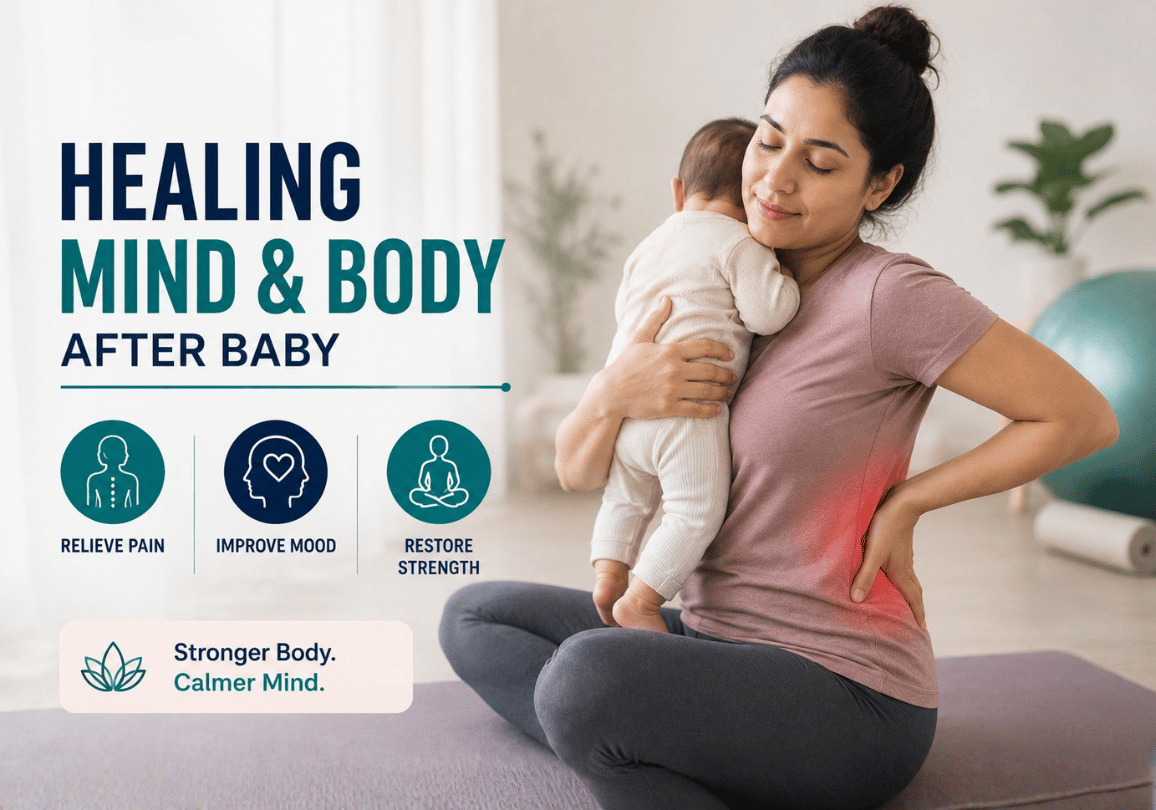
Postnatal Depression and Body Pain: How Physiotherapy Supports Mental and Physical Healing
Postnatal depression and postpartum body pain are not separate problems. Research now shows they are deeply interconnected, each one amplifying the other in a cycle that leaves many new mothers feeling physically broken and emotionally invisible at the same time. Understanding this connection is the first step to getting the right help, because treating only the pain or only the depression without addressing both leaves most women only partially recovered.
According to a systematic study, postnatal depression is prevalent in India at 23.5%. By conservative estimates, roughly 1 in 5 new mothers in India experiences postnatal depression. Yet it remains significantly underdiagnosed because a new mother’s chronic pain is routinely dismissed as a normal postpartum experience.
This guide explains how postnatal depression and chronic postpartum pain are linked, what physiotherapy for postnatal depression and body pain involves, and why structured physical rehabilitation is one of the most evidence-backed tools available to new mothers navigating both at once. It also addresses how postnatal physiotherapy works alongside, not instead of, medical and psychological care.
Pain and Postnatal Depression: A Bidirectional Relationship
One of the most important clinical insights in postnatal care is that pain and depression do not simply coexist. They actively worsen each other through shared biological and psychological mechanisms.
A meta-analysis in the Journal of Obstetrics and Gynaecology Research (2024) found a significant association between postpartum pain and postnatal depression. A separate study, reported by ScienceDaily, found that mothers with postnatal depression had significantly higher postpartum pain scores, more pain-related complaints, and a greater need for pain medication during recovery than mothers without depression.
The mechanisms behind this bidirectional relationship include:
- Neurobiological overlap: Depression alters central pain processing, reducing the threshold of pain signals perceived as distressing. A mother experiencing depression will often feel pain more acutely than her physiological injury alone would predict.
- Inflammatory pathways: Both chronic pain and depression are associated with elevated inflammatory cytokines. The postpartum period already involves significant inflammatory activity as the body recovers from delivery, creating a biological environment where both conditions can escalate together.
- Physical inactivity: Depression reduces motivation to move, which in turn leads to musculoskeletal deconditioning, increased joint stiffness, and heightened pain sensitivity. Physical inactivity also removes one of the most effective natural antidepressants available to new mothers.
- Sleep deprivation: Disrupted sleep, universal in new mothers, is an independent risk factor for both heightened pain sensitivity and depression. Poor sleep amplifies both the emotional and physical burden simultaneously.
- Loss of identity and bodily trust: When a mother’s body does not function as expected after birth, whether through pain, weakness, incontinence, or altered appearance, it undermines her sense of physical competence. This loss of bodily trust deepens psychological distress and reduces engagement with recovery activities.
Physical Symptoms New Mothers Should Not Ignore
Many physical symptoms that accompany postnatal depression are normalised, delayed in presentation, or attributed to other causes. Recognising the full physical picture helps mothers and their families understand when professional input is needed.
- Persistent lower back and pelvic pain: Lower back pain is strongly associated with depressive symptoms. Women with chronic low back pain are likely to develop postnatal depression.
- Fatigue beyond sleep deprivation: Physical exhaustion that does not lift with rest is a symptom of postnatal depression and musculoskeletal deterioration. Persistent fatigue reduces postural muscle activation, leading to secondary neck, shoulder, and back pain.
- Neck and shoulder tension: Repeated feeding postures create sustained myofascial tension. In mothers with low mood, the natural protective muscle guarding response to emotional distress compounds this tension significantly.
- Pelvic floor dysfunction: Urinary incontinence, pelvic heaviness, and pelvic pain affect a large proportion of postnatal women and are a major source of embarrassment and social withdrawal.
- Tension headaches: Persistent headaches in postnatal women are frequently musculoskeletal in origin, arising from cervical tension and poor posture, but are also listed among the somatic symptoms of postnatal depression.
- Generalised muscle aching: Diffuse body aching without a clear injury source is a recognised somatic manifestation of depression, occurring as the nervous system expresses psychological distress through the body.
How Physiotherapy Addresses Postnatal Depression and Body Pain Together
Physiotherapy is uniquely positioned to address both the physical and mental dimensions of postnatal recovery because it treats the body as the pathway to both. Unlike medication or talking therapy, mental health physiotherapy works directly on the tissues, posture, movement patterns, and physical function that are simultaneously producing pain and limiting the activity that supports mental health.
A systematic review in PubMed (2018) assessed exercise for postnatal depression and found significant improvements in depressive symptoms across multiple randomised controlled trials. A systematic review found that low-intensity exercises were particularly effective for postnatal depressive symptoms, and that higher levels of physical activity during pregnancy were consistently associated with improved mental health outcomes.
| Area of Intervention | Physical Benefit | Mental Health Benefit |
| Pelvic floor rehabilitation | Restores continence, reduces pelvic pain and pressure, supports core stability | Reduces shame and distress around incontinence; restores bodily confidence |
| Lower back and postural correction | Relieves chronic back, neck, and shoulder pain from feeding and carrying postures | Reducing persistent pain directly lowers depression and anxiety scores |
| Diaphragmatic breathing and relaxation | Reduces musculoskeletal tension, improves oxygen delivery, calms the nervous system | Activates parasympathetic response; clinically reduces anxiety and low mood |
| Graduated aerobic exercise | Restores cardiovascular fitness, reduces fatigue, promotes healthy weight | Exercise significantly reduces depressive symptoms (SMD -0.47, RCT meta-analysis) |
| Core and functional strength | Rebuilds abdominal and gluteal strength; improves daily movement capacity | Improved physical function raises self-efficacy and sense of control |
| Manual therapy and soft tissue work | Relieves myofascial pain, tension headaches, and joint restriction | Reduction in physical pain burden reduces overall psychological distress |
Warning Signs: When to Seek Professional Help
Many new mothers delay seeking help because they believe their symptoms are normal, temporary, or not severe enough to warrant attention. Seek assessment from a physiotherapist and your doctor in Pune if any of the following are present for more than two weeks:
- Persistent sadness, emptiness, or tearfulness that does not lift.
- Body pain, headaches, or fatigue that continues beyond expected recovery timelines.
- Difficulty bonding with or caring for the baby due to physical pain or low mood.
- Anxiety, fear, or intrusive thoughts that interfere with daily functioning.
- Social withdrawal, loss of interest in activities previously enjoyed.
- Urinary leakage, pelvic pain, or pelvic heaviness that has not improved by 6 weeks postpartum.
- Back, neck, or shoulder pain that is present at rest, worsening, or significantly limiting daily activity.
If there are any thoughts of self-harm or harming the baby, seek immediate medical attention. Contact your obstetrician, general practitioner, or a mental health crisis service without delay. Physiotherapy is an important part of postnatal recovery but is not a substitute for medical and psychological care in cases of moderate to severe postnatal depression.
Getting Support for Postnatal Recovery
Postnatal recovery physiotherapy should be a standard part of every new mother’s recovery plan, not an afterthought. Physical recovery and mental health recovery are not sequential; they are simultaneous, and a physiotherapist who understands the postnatal body treats both at once. At Healyos in Pune, our physiotherapists provide personalised postnatal physiotherapy designed around the specific physical and emotional demands of new motherhood. Every programme begins with a thorough assessment of pain, pelvic health, posture, and functional capacity, and is built to work alongside any medical or psychological treatment the mother is receiving.
Key Takeaways
- Postnatal depression affects approximately 25% of new mothers in India. It frequently presents with physical symptoms that delay or prevent correct diagnosis.
- Postnatal depression and pain are bidirectionally linked: pain worsens depression, and depression amplifies pain perception through shared neurobiological and inflammatory pathways.
- Physical symptoms, including chronic lower back pain, pelvic floor dysfunction, persistent fatigue, neck and shoulder tension, and tension headaches, are as much a part of postnatal depression as emotional symptoms.
- Exercise significantly reduces postnatal depressive symptoms as it is one of the most evidence-supported interventions available to new mothers.
- Physiotherapy in Pune treats both dimensions of postnatal suffering simultaneously, addressing pain and improving mental health through movement, breathing, and restored physical confidence.
- Physical symptoms that persist beyond 2 weeks, limit daily infant care, or show no signs of improvement warrant a professional physiotherapy assessment alongside medical and psychological review.
Frequently Asked Questions
Q1. Is it normal to feel body pain alongside postnatal depression?
Yes, and it is more common than most mothers are told. Research consistently shows that postnatal depression and postpartum body pain co-occur at high rates and intensify each other. Persistent headaches, back pain, muscle aching, and fatigue are recognised somatic symptoms of postnatal depression and are not separate problems to be managed independently. Treating both together, as physiotherapy does, produces better outcomes than addressing one in isolation.
Q2. Can physiotherapy actually help with depression, or only with physical pain?
Physiotherapy helps with both, and the evidence is clear on this point. Physiotherapy produces mental health benefits through pain reduction, physical activity, improved body confidence, restored physical function, and the neurobiological effects of exercise on serotonin and endorphin systems. It is not a replacement for psychological therapy or medication; it is a powerful and evidence-supported solution that complements both.
Q3. How soon after delivery can postnatal physiotherapy begin?
Some interventions, such as diaphragmatic breathing, pelvic floor awareness, and gentle postural guidance, can begin within 24 to 48 hours of delivery. A full physiotherapy assessment typically takes place at 6 weeks postpartum for normal deliveries and 8 weeks for caesarean deliveries. However, earlier assessment is appropriate if significant pain or dysfunction is present before those milestones.
Q4. What types of exercises help with postnatal depression?
Low-to-moderate intensity exercises are most consistently supported by research for reducing postnatal depressive symptoms. Walking, postnatal yoga, swimming, and supervised aerobic programmes have all demonstrated measurable benefits in clinical trials. A systematic review found that low-intensity exercise, such as yoga, was particularly effective for postnatal depressive symptoms. The most important factor is that exercise is graduated, appropriate to the individual’s recovery stage, and not so demanding as to cause pain or exhaustion that reinforces avoidance.
Q5. How is postnatal depression different from baby blues?
Baby blues are brief emotional fluctuations affecting up to 80% of new mothers within the first 3 to 5 days after birth, typically resolving within two weeks without treatment. Postnatal depression is more persistent, more disabling, and involves both psychological and physical symptoms that significantly impair daily functioning. It can begin at any time within the first year postpartum. If symptoms have not resolved within two weeks of onset, or if they are interfering with the ability to care for the baby or yourself, professional assessment is warranted.
Q6. Should physiotherapy and mental health treatment be separate or combined?
They should be combined wherever possible. The most effective approach to postnatal depression with physical symptoms is to treat both simultaneously through a coordinated care team. A physiotherapist addresses the physical pain and deconditioning that sustain depression, while a psychologist, counsellor, or psychiatrist addresses the psychological dimensions. In practice, many new mothers find that as their physical pain reduces through physiotherapy, their mood improves substantially, and their ability to engage with psychological therapy also increases.
Q7. Does Healyos in Pune provide postnatal physiotherapy at home for mothers experiencing both pain and low mood?
Yes, Healyos provides postnatal physiotherapy through home visits, in-clinic sessions, and online consultations. Our physiotherapists are experienced in assessing and treating postpartum body pain, pelvic floor dysfunction, postural problems, and fatigue, and they work sensitively within the full context of a new mother’s recovery, including emotional wellbeing. For mothers with postnatal depression and physical pain, physiotherapy at home removes the barrier of travel during a period when leaving the house can itself feel overwhelming.

Leave a Reply