 +919325609388

 +919325609388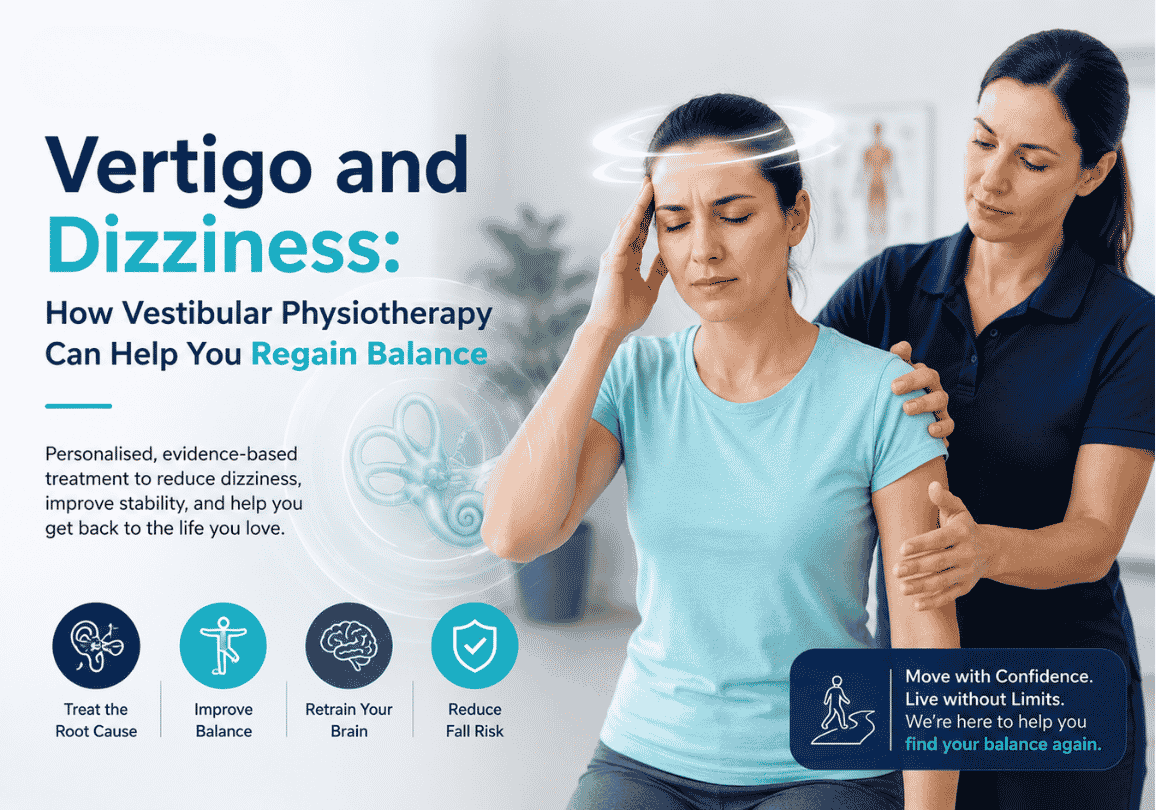
Vertigo and Dizziness: How Vestibular Physiotherapy Can Help You Regain Balance
Have you ever stood up too quickly and felt the room spinning around you? Or experienced a sudden wave of dizziness that made it impossible to walk in a straight line? If so, you are not alone. Millions of people worldwide live with vertigo and dizziness — conditions that are often misunderstood, misdiagnosed, or simply left untreated. The good news is that vestibular physiotherapy offers a highly effective, evidence-based path to recovery.
Understanding Vertigo and Dizziness
Before diving into treatment, it helps to understand what these terms actually mean.
Dizziness is a broad term that describes sensations of lightheadedness, unsteadiness, or spatial disorientation. Vertigo, on the other hand, is a specific type of dizziness where you feel as though you — or your surroundings — are spinning or moving, even when you are perfectly still.
Vertigo is not a diagnosis in itself; it is a symptom of an underlying condition. The most common causes include:
- Benign Paroxysmal Positional Vertigo (BPPV) — the most prevalent cause, triggered by small calcium crystals becoming displaced in the inner ear
- Vestibular neuritis — inflammation of the vestibular nerve, often following a viral infection
- Labyrinthitis — inflammation of the inner ear affecting both hearing and balance
- Menière’s disease — a condition involving fluid build-up in the inner ear
- Concussion or traumatic brain injury — which can disrupt the vestibular system
Symptoms can range from mild and occasional to severe and debilitating — affecting your ability to work, drive, exercise, and carry out everyday activities.
What Is the Vestibular System?
Your vestibular system is the body’s internal GPS for balance and spatial orientation. Located in the inner ear, it works in close coordination with your vision and sensory receptors in the muscles and joints to keep you upright and stable.
When any part of this system is disrupted — whether through injury, infection, aging, or neurological changes — the brain receives conflicting signals. This miscommunication is what produces the uncomfortable sensations of dizziness, vertigo, and imbalance.
What Is Vestibular Physiotherapy?
Vestibular physiotherapy (also called vestibular rehabilitation therapy or VRT) is a specialised form of physiotherapy designed to address disorders of the vestibular system. It involves a structured programme of exercises and techniques aimed at retraining the brain and body to process balance-related information more effectively.
Unlike medication, which may only mask symptoms temporarily, vestibular physiotherapy targets the root cause of the problem. A trained vestibular physiotherapist will begin with a thorough assessment — evaluating your eye movements, posture, balance, gait, and specific triggers — before developing a personalised treatment plan.
At Healyos, our physiotherapists take an individualised, patient-centred approach to vestibular care. Whether you are dealing with BPPV, post-concussion dizziness, or chronic imbalance, the goal is the same: to help you feel steady, confident, and in control again.
How Does Vestibular Rehabilitation Work?
Vestibular rehabilitation works through a concept known as neuroplasticity — the brain’s remarkable ability to adapt and reorganise itself. By repeatedly challenging the balance system in a safe, controlled manner, the brain gradually learns to compensate for vestibular dysfunction.
A typical vestibular physiotherapy programme may include:
1. Canalith Repositioning Manoeuvres (for BPPV)
The most well-known is the Epley Manoeuvre — a series of guided head movements that reposition displaced calcium crystals in the inner ear. This technique has a high success rate and can often resolve BPPV symptoms within one to three sessions.
2. Gaze Stabilisation Exercises
These exercises train the eyes and vestibular system to work together more efficiently, reducing visual disturbances during head movement — a common complaint among those with vestibular disorders.
3. Balance and Gait Training
Progressive exercises are used to improve your stability on different surfaces, in various lighting conditions, and during everyday movements like turning, bending, and walking through busy environments.
4. Habituation Exercises
Designed for patients whose dizziness is triggered by specific movements or visual stimuli, habituation exercises gradually desensitise the nervous system to those triggers through repeated, controlled exposure.
5. Education and Self-Management Strategies
Understanding your condition is a powerful part of recovery. Your physiotherapist will guide you through activity modifications, home exercise programmes, and strategies to reduce fall risk.
Who Can Benefit from Vestibular Physiotherapy?
Vestibular physiotherapy is suitable for a wide range of individuals, including:
- Those diagnosed with BPPV, vestibular neuritis, or labyrinthitis
- Patients recovering from a concussion or head injury
- Older adults experiencing age-related balance decline
- Individuals with Menière’s disease or acoustic neuroma
- Anyone who has noticed a persistent fear of falling or reduced confidence in movement
It is worth noting that vestibular dysfunction can sometimes present subtly — through brain fog, difficulty concentrating, neck tension, or motion sensitivity — and may not always feel like “classic” dizziness. If you have been struggling with any of these symptoms, a vestibular assessment could be the missing piece.
Healyos Approach to Vestibular Care
At Healyos, we understand how significantly balance disorders can impact your quality of life. Our team of experienced physiotherapists combines clinical expertise with compassionate care to help you navigate your recovery — from the very first assessment through to full rehabilitation.
We offer telehealth physiotherapy services as well as home physiotherapy services, allowing patients to begin their recovery from the comfort of their own space. Our practitioners use the latest evidence-based techniques and collaborate with other healthcare providers when needed to ensure comprehensive, coordinated care.
Key Takeaways
- Vertigo and dizziness are common but treatable conditions that affect balance and everyday function.
- The vestibular system in the inner ear plays a central role in spatial orientation and balance — when disrupted, it can cause a range of debilitating symptoms.
- Vestibular physiotherapy (VRT) is an evidence-based treatment that retrains the brain and body to compensate for vestibular dysfunction.
- Techniques such as the Epley Manoeuvre, gaze stabilisation exercises, and balance training are used to address specific causes and symptoms.
- VRT is suitable for BPPV, concussion, vestibular neuritis, age-related imbalance, and more.
- Early intervention leads to faster recovery — if you are experiencing persistent dizziness or vertigo, seek a professional assessment.
Frequently Asked Questions (FAQs)
Q1: How many sessions of vestibular physiotherapy will I need?
The number of sessions varies depending on the cause and severity of your condition. BPPV, for example, can often be resolved in one to three sessions with canalith repositioning manoeuvres. More complex vestibular disorders — such as those following concussion or chronic vestibular dysfunction — may require six to twelve sessions or more. Your physiotherapist will provide a realistic timeline after your initial assessment.
Q2: Is vestibular physiotherapy safe?
Yes. Vestibular physiotherapy is a non-invasive, evidence-based treatment with a strong safety profile. While some exercises may temporarily provoke mild dizziness as part of the habituation process, your physiotherapist will ensure you are progressing at a safe and comfortable pace.
Q3: Can vestibular physiotherapy help with Menière’s disease?
While vestibular physiotherapy cannot cure Menière’s disease, it can significantly help manage symptoms — particularly imbalance, falls risk, and the anxiety that often accompanies the condition. VRT is typically used as part of a broader management plan in collaboration with an ear, nose, and throat (ENT) specialist.
Q4: What is the difference between vertigo and dizziness?
Dizziness is a general term for any sensation of unsteadiness or lightheadedness. Vertigo is a specific type of dizziness characterised by a false sense of spinning or movement — either of yourself or your surroundings. Vertigo is usually caused by an inner ear or neurological problem, and vestibular physiotherapy is one of the most effective treatments available.
Q5: Can I do vestibular exercises at home?
Yes — many vestibular rehabilitation exercises can be performed at home as part of your prescribed programme. However, it is important to have these exercises properly assessed and guided by a qualified vestibular physiotherapist before attempting them independently, as incorrect technique can slow progress or worsen symptoms.
Q6: Should I see a doctor before starting vestibular physiotherapy?
It is advisable to consult your GP or a specialist if you are experiencing new or sudden-onset dizziness, hearing loss, severe headaches, or neurological symptoms (such as slurred speech or visual disturbances), as these may require medical investigation first. For many common vestibular conditions, however, you can be assessed directly by a physiotherapist without a referral.

Leave a Reply