 +919325609388

 +919325609388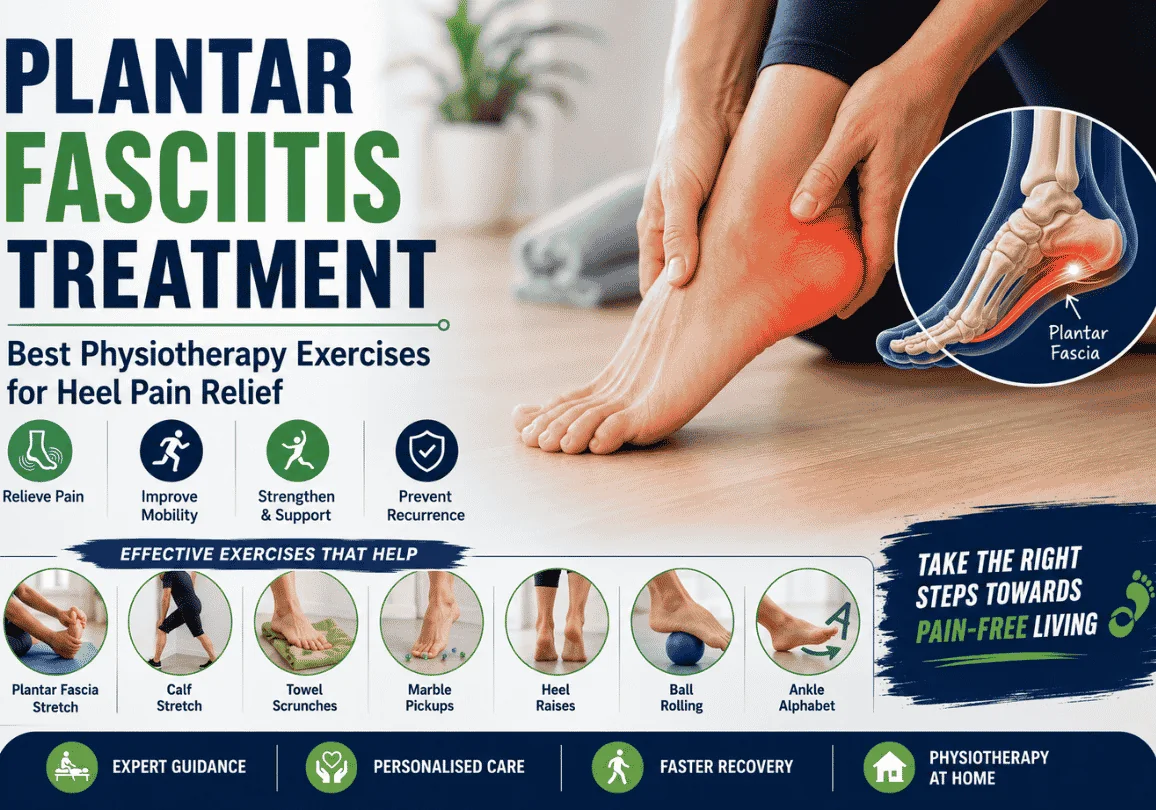
Plantar Fasciitis Treatment: Best Physiotherapy Exercises for Heel Pain Relief
That sharp, stabbing pain in your heel the moment you take your first step in the morning — if it sounds familiar, you may be dealing with plantar fasciitis. It is one of the most common causes of heel pain, affecting millions of people each year, from athletes to desk workers. The good news? With the right physiotherapy exercises and professional guidance, most people experience significant relief without the need for surgery or long-term medication.
In this blog, we walk you through what plantar fasciitis is, why physiotherapy is the gold standard for treatment, and the best exercises you can start doing today to get back on your feet pain-free.
What Is Plantar Fasciitis?
The plantar fascia is a thick band of tissue that runs along the bottom of your foot, connecting your heel bone to your toes. When this tissue becomes inflamed typically due to overuse, poor footwear, or excessive strain, it results in a condition called plantar fasciitis.
Common symptoms include:
- Intense heel pain, especially during the first few steps in the morning
- Pain after long periods of standing or physical activity
- Stiffness and tenderness along the arch of the foot
- Discomfort that worsens after (not during) exercise
Plantar fasciitis is particularly common in runners, people who are on their feet all day, those with flat feet or high arches, and individuals who are overweight.
Why Physiotherapy Is the Most Effective Treatment for Plantar Fasciitis
Many people make the mistake of ignoring plantar fasciitis or simply relying on pain relief medication. While rest and ice can help manage acute pain, they do not address the root cause. Physiotherapy, on the other hand, targets the underlying biomechanical issues – tight calf muscles, weak foot intrinsics, poor ankle mobility that put excessive stress on the plantar fascia in the first place.
A structured physiotherapy treatment plan for plantar fasciitis focuses on
- Reducing inflammation and pain
- Stretching tight muscles and tissues
- Strengthening the foot and lower leg
- Correcting faulty movement patterns
- Preventing recurrence
Best Physiotherapy Exercises for Plantar Fasciitis
Here are the most clinically recommended exercises for plantar fasciitis treatment. These can be performed at home, ideally under the supervision of a qualified physiotherapist for proper technique and progression.
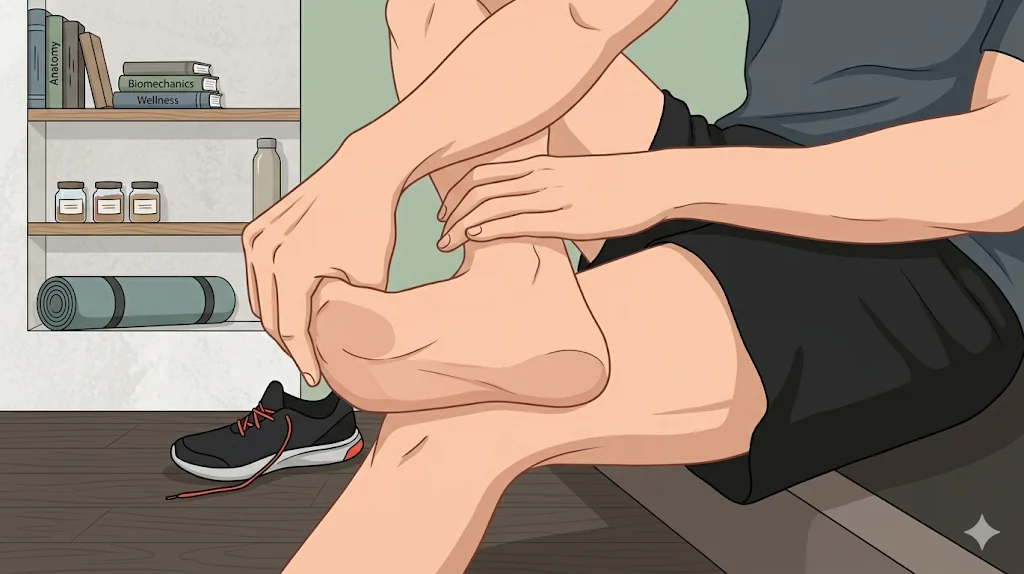
1. Plantar Fascia Stretch (Seated Toe Stretch)
This is one of the most effective exercises for plantar fasciitis and is best performed before your first step out of bed in the morning.
How to do it:
- Sit on the edge of your bed or a chair
- Cross the affected foot over your opposite knee
- Hold your toes and gently pull them back toward your shin
- You should feel a stretch along the arch of your foot and heel
- Hold for 20–30 seconds, repeat 3 times
2. Calf Stretch (Gastrocnemius and Soleus)
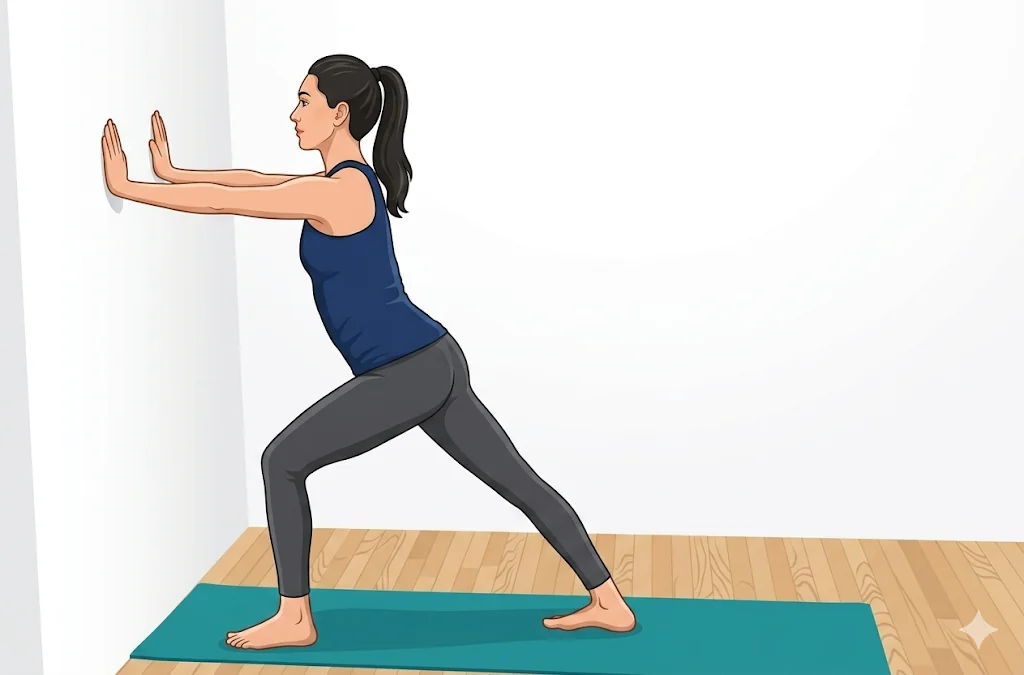
Tight calf muscles are a major contributing factor to plantar fasciitis. Stretching both the gastrocnemius and soleus muscles relieves tension on the plantar fascia.
Gastrocnemius stretch:
- Stand facing a wall, place both hands on it
- Step the affected foot back and keep both heels flat on the floor
- Keep the back knee straight and lean forward until you feel a stretch in the upper calf
- Hold 30 seconds, repeat 3 times
Soleus stretch:
- Same position, but this time bend the back knee slightly
- This stretches the deeper soleus muscle closer to the heel
- Hold 30 seconds, repeat 3 times
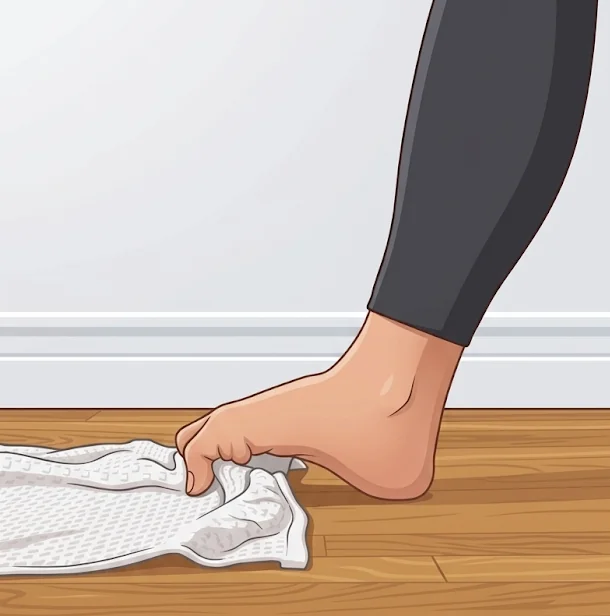
3. Intrinsic Foot Strengthening — Towel Scrunches
Weak foot muscles reduce the arch’s ability to absorb impact, increasing load on the plantar fascia.
How to do it:
- Sit on a chair with a small towel laid flat on the floor
- Use only your toes to scrunch the towel toward you
- Repeat 10–15 times, 2–3 sets per day
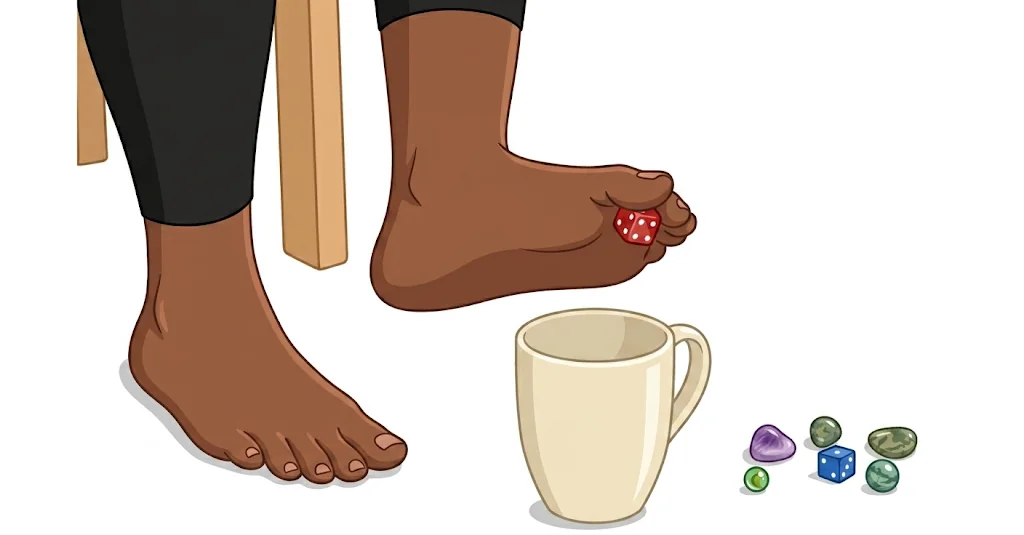
4. Marble Pickups
This exercise targets the small intrinsic muscles of the foot that support the arch.
How to do it:
- Place 10–15 marbles on the floor next to a cup
- Using only your toes, pick up each marble and drop it into the cup
- Perform with the affected foot, 2 sets per session
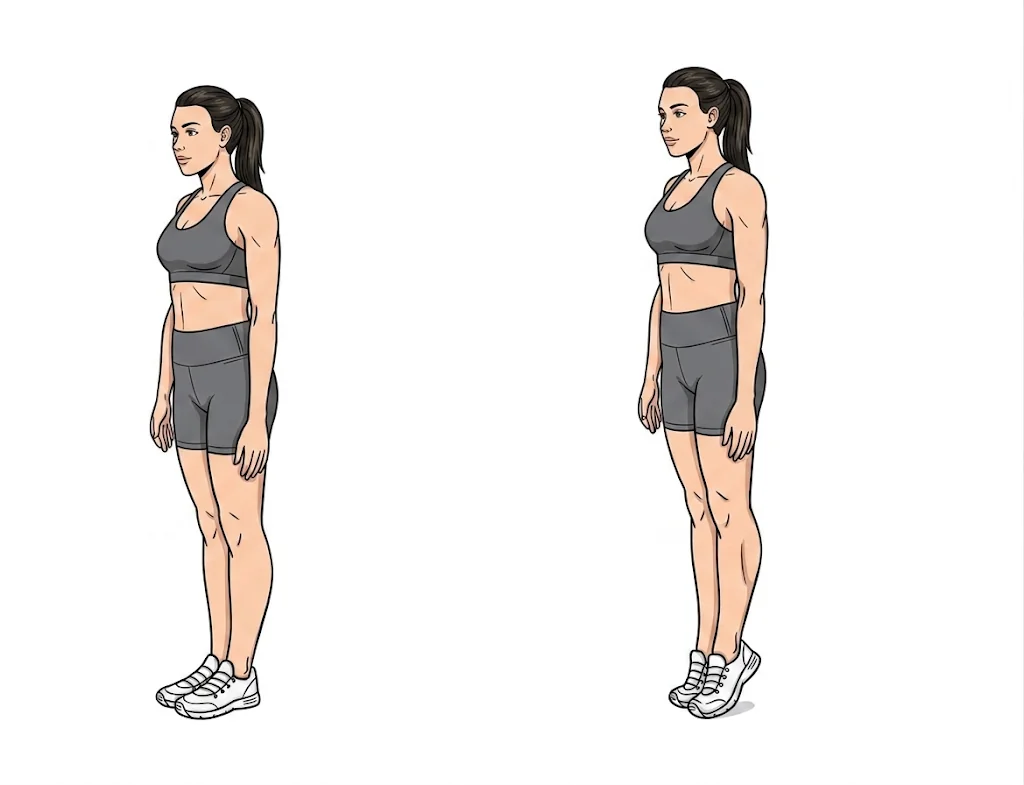
5. Heel Raises (Calf Raises)
Strengthening the calf complex is essential for reducing plantar fascia load during walking and running.
How to do it:
- Stand with feet hip-width apart, near a wall or chair for balance
- Slowly rise onto your toes, hold for 2–3 seconds at the top
- Lower back down slowly and in a controlled manner
- Perform 3 sets of 15 repetitions
- Progress to single-leg heel raises as strength improves
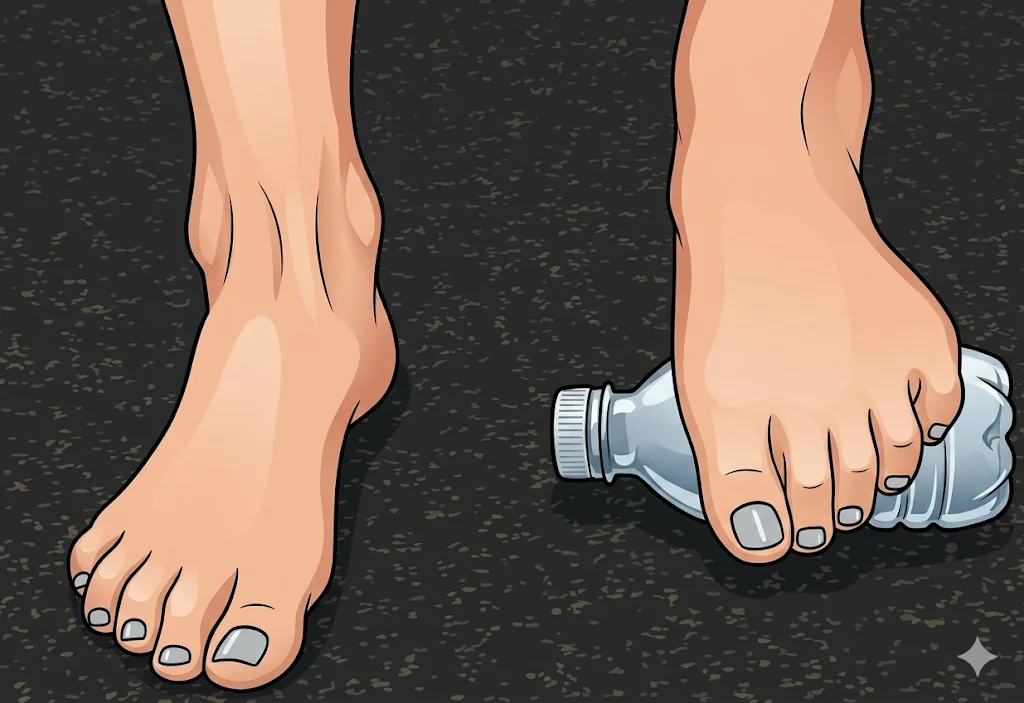
6. Frozen Water Bottle or Ball Rolling
This provides a gentle myofascial release for the sole of the foot and helps manage pain and tightness.
How to do it:
- Sit on a chair and place a frozen water bottle (or a tennis ball) under your foot
- Apply gentle pressure and roll it from the heel to the ball of the foot
- Perform for 2–3 minutes on the affected foot
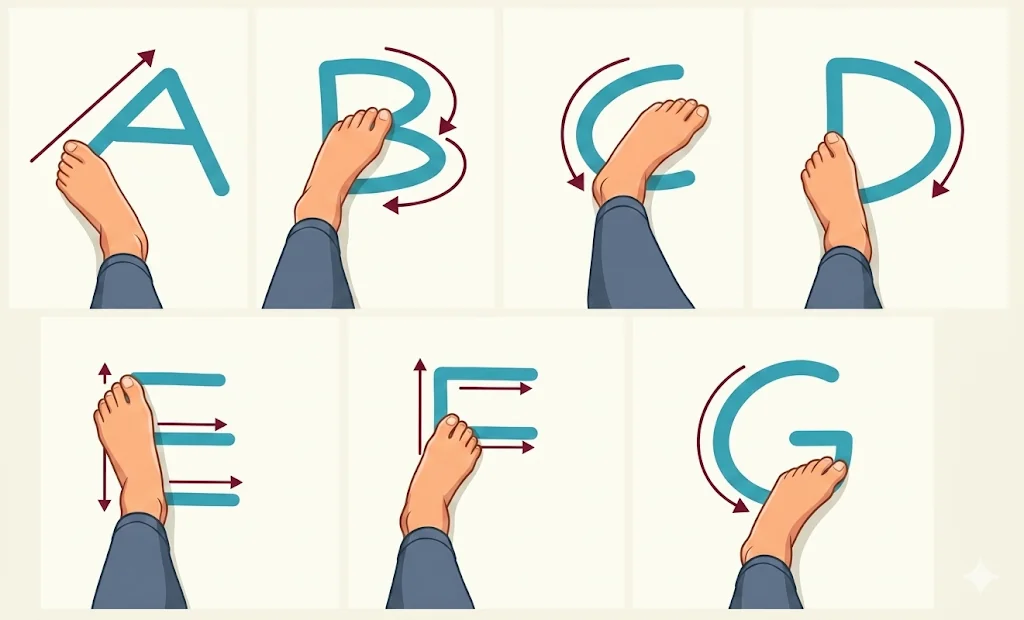
7. Ankle Alphabet Exercise
Improving ankle mobility helps distribute load more evenly across the foot and reduces stress at the heel.
How to do it:
- Sit down and lift the affected foot slightly off the floor
- Use your big toe as a “pen” and trace each letter of the alphabet
- Perform once daily
Additional Physiotherapy Approaches for Heel Pain Relief
Beyond exercises, a professional physiotherapist may use additional techniques as part of a comprehensive plantar fasciitis treatment plan:
- Manual therapy — Joint mobilisation and soft tissue techniques to restore normal movement
- Taping — Low-Dye taping or kinesio taping to offload the plantar fascia during daily activities
- Ultrasound therapy — To reduce deep inflammation
- Custom orthotics advice — Guidance on appropriate footwear and insoles to correct biomechanical faults
- Dry needling — Targeted to trigger points in the calf and plantar fascia
If you are unsure where to start, our team at Healyos offers physiotherapy at home in Pune so that you can receive expert care without stepping out. Alternatively, you can connect via online physiotherapy consultation from the comfort of your home.
Key Takeaways
- Plantar fasciitis is a common and treatable cause of heel pain caused by inflammation of the plantar fascia.
- Physiotherapy is the most evidence-based, non-invasive approach to long-term heel pain relief.
- Stretching the plantar fascia and calf muscles daily is the cornerstone of recovery.
- Strengthening the intrinsic foot muscles and calf complex reduces the load on the plantar fascia.
- Consistency is key: most patients see significant improvement within 6–8 weeks of a structured physiotherapy programme.
- Professional guidance from a qualified physiotherapist ensures exercises are performed correctly and progressed appropriately.
- Healyos offers expert orthopaedic physiotherapy for conditions like plantar fasciitis.
Frequently Asked Questions (FAQs)
Q1. How long does plantar fasciitis take to heal with physiotherapy?
With a consistent physiotherapy programme, most patients experience significant improvement within 6-8 weeks. More chronic cases may take 3-6 months. Early intervention leads to faster recovery, so it is advisable not to delay seeking professional assessment.
Q2. Can I exercise with plantar fasciitis?
Yes, but with modifications. High-impact activities like running and jumping should be reduced or avoided during the acute phase. Low-impact activities such as swimming or cycling are generally well-tolerated. Your physiotherapist will guide you on a return-to-activity plan suited to your condition.
Q3. What is the single best stretch for plantar fasciitis?
Doing plantar fascia-specific stretches first thing in the morning before taking any steps, is consistently rated as one of the most effective stretches for reducing heel pain in plantar fasciitis. Calf stretching is equally important as part of a complete programme.
Q4. Is walking bad for plantar fasciitis?
Moderate walking in supportive footwear is generally acceptable and may even aid recovery. However, prolonged walking on hard surfaces, barefoot walking, or walking in unsupportive flat shoes can aggravate the condition. Listen to your pain levels and consult your physiotherapist for personalised advice.
Q5. Can plantar fasciitis come back after treatment?
Yes, recurrence is possible, particularly if the underlying contributing factors such as tight calves, poor footwear, or training errors.. A maintenance exercise programme and footwear awareness go a long way in preventing recurrence.

Leave a Reply