 +919325609388

 +919325609388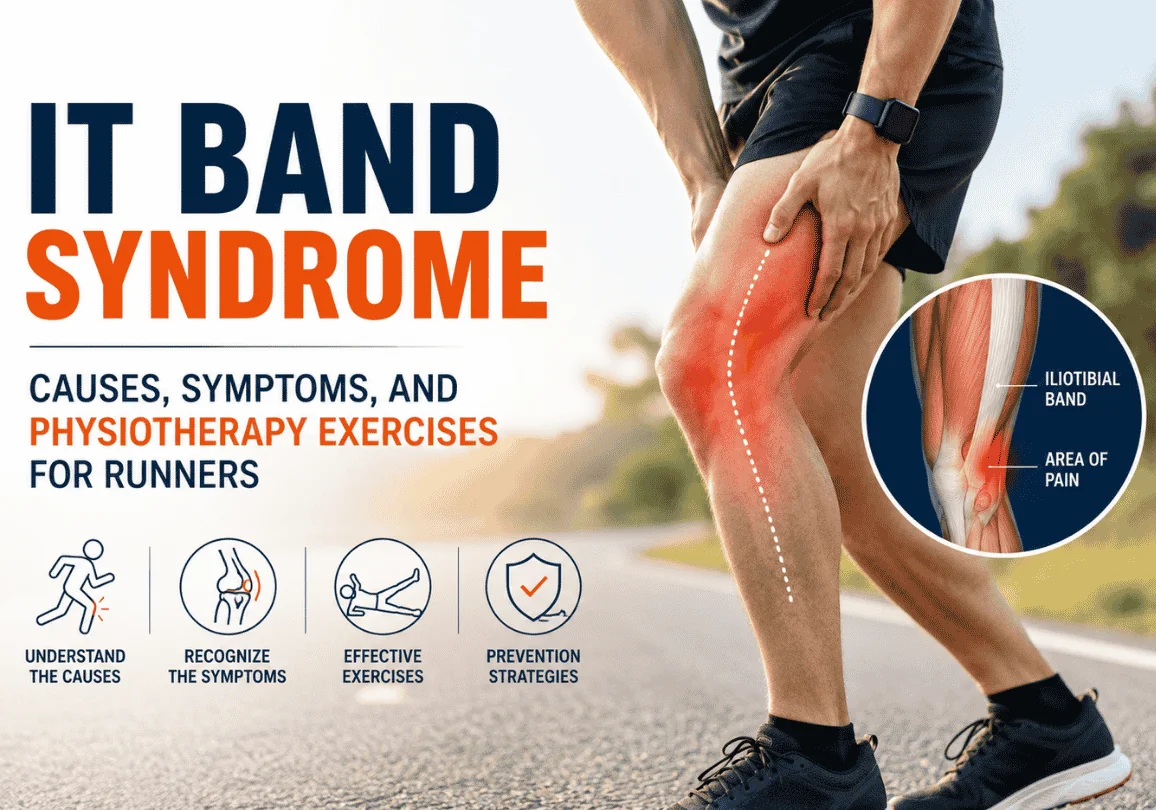
IT Band Syndrome: Causes, Symptoms, and Physiotherapy Exercises for Runners
If you’re a runner who’s suddenly felt a sharp, burning pain on the outer side of your knee that worsens with every stride—especially on downhills—you’re not alone. This frustrating issue is often IT band syndrome (also called iliotibial band syndrome or ITBS), one of the most common overuse injuries among runners. It accounts for up to 12% of all running-related complaints and can sideline even the most dedicated athletes if left unaddressed.
At Healyos, we see countless runners struggling with IT band pain every season. The good news? With the right understanding of its causes, early recognition of symptoms, and targeted physiotherapy exercises for IT band syndrome, most people recover fully and return to pain-free running. In this guide, we’ll break it down step by step so you can get back on the road stronger than before.
What is IT Band Syndrome?
The iliotibial (IT) band is a thick strip of connective tissue that runs along the outside of your thigh, from the hip bone down to just below the knee. It helps stabilize your knee during movement. In IT band syndrome, the band becomes tight, inflamed, or irritated as it repeatedly rubs over the bony prominence on the outer knee (lateral femoral epicondyle), especially when the knee bends between 20° and 30°—a motion that happens constantly while running.
Contrary to older beliefs that the IT band simply “snaps” or gets overly stretched, modern understanding points to compression and friction caused by poor hip control and repetitive overload. This makes ITBS more of a hip-and-core stability issue than a simple knee problem.
Causes of IT Band Syndrome in Runners
IT band syndrome rarely appears out of nowhere. It’s usually the result of a perfect storm of training errors and muscle imbalances:
- Sudden increases in training volume or intensity — ramping up mileage, adding hill repeats, or running more downhill routes too quickly.
- Weak hip muscles (especially the gluteus medius and minimus) — these muscles control pelvic stability. When they’re weak, the knee collapses inward slightly with each step, increasing tension on the IT band.
- Tight tensor fascia latae (TFL) or hip flexors — common in runners who sit a lot or do repetitive forward-motion activities.
- Biomechanical factors — overpronation, leg-length differences, or poor running form.
- External triggers — worn-out shoes, running on cambered roads, or inadequate recovery between sessions.
Women tend to be slightly more prone due to wider hips, which can naturally increase IT band stress. But anyone can develop it with the wrong training load.
Recognizing the Symptoms of IT Band Syndrome
The hallmark symptom is sharp or burning pain on the outside of the knee, usually 1–2 cm above the joint line. You might notice:
- Pain that starts mild at the beginning of a run but worsens as you continue (or eases slightly once warmed up, only to return stronger later).
- Discomfort that intensifies when running downhill, climbing stairs, or sitting with knees bent for long periods.
- Occasional swelling, warmth, or a “clicking” sensation on the outer knee.
- Pain that may radiate up the outer thigh toward the hip.
If the pain is right under the kneecap or behind the knee, it’s more likely another issue (like patellofemoral pain). True IT band syndrome pain is distinctly lateral.
Effective Physiotherapy Exercises for IT Band Syndrome
The most evidence-based approach isn’t aggressive IT band stretching (which can sometimes irritate it further). Instead, physiotherapy focuses on strengthening the hip abductors and improving neuromuscular control to reduce compression on the band. Start with rest, ice, compression and elevation (RICE) for the first 1–2 weeks, then progress to these exercises. Perform them 3–4 times per week. Always stop if pain increases sharply.
-
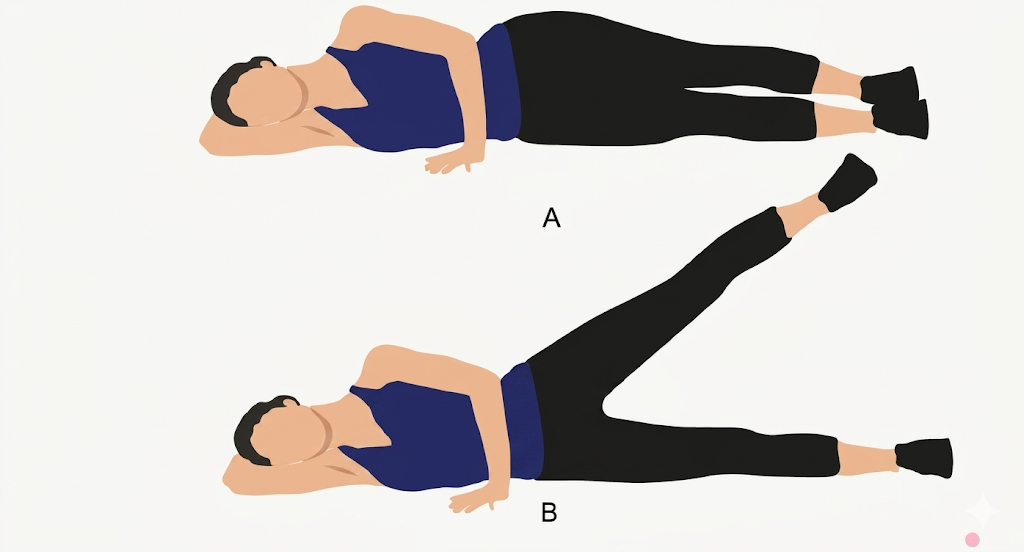
Side-Lying Hip Abduction
Lie on your unaffected side with legs straight. Lift the top leg 30–45 cm while keeping the foot facing forward (no rotation). Hold for 2 seconds at the top, then lower slowly. Do 3 sets of 12–15 reps per side. This directly targets the gluteus medius—the key stabilizer for runners.
-
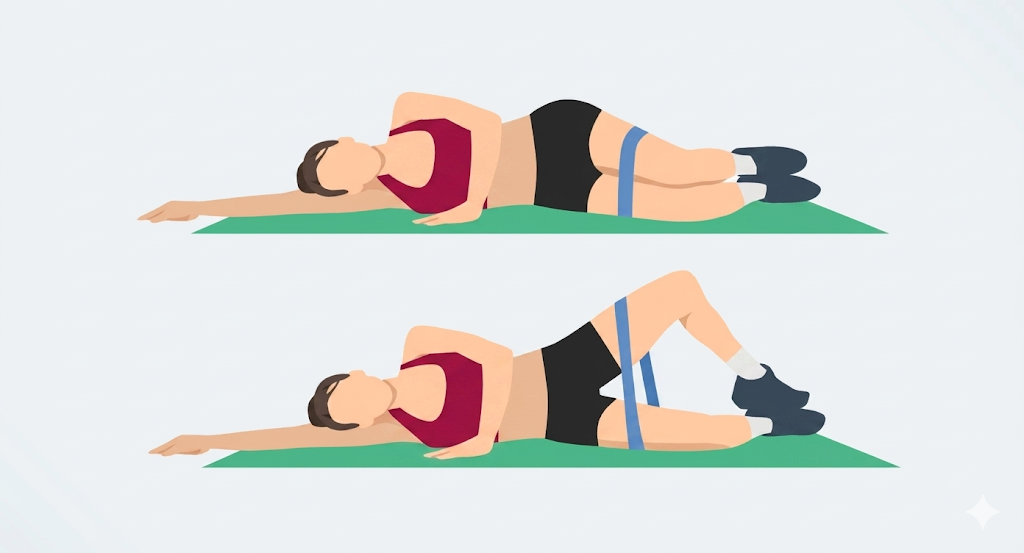
Clamshells (with or without resistance band)
Lie on your side with knees bent at 45° and a band just above your knees. Keeping feet together, lift the top knee like opening a clamshell. Do 3 sets of 15 reps. Great for activating deep glute muscles without stressing the knee.
-
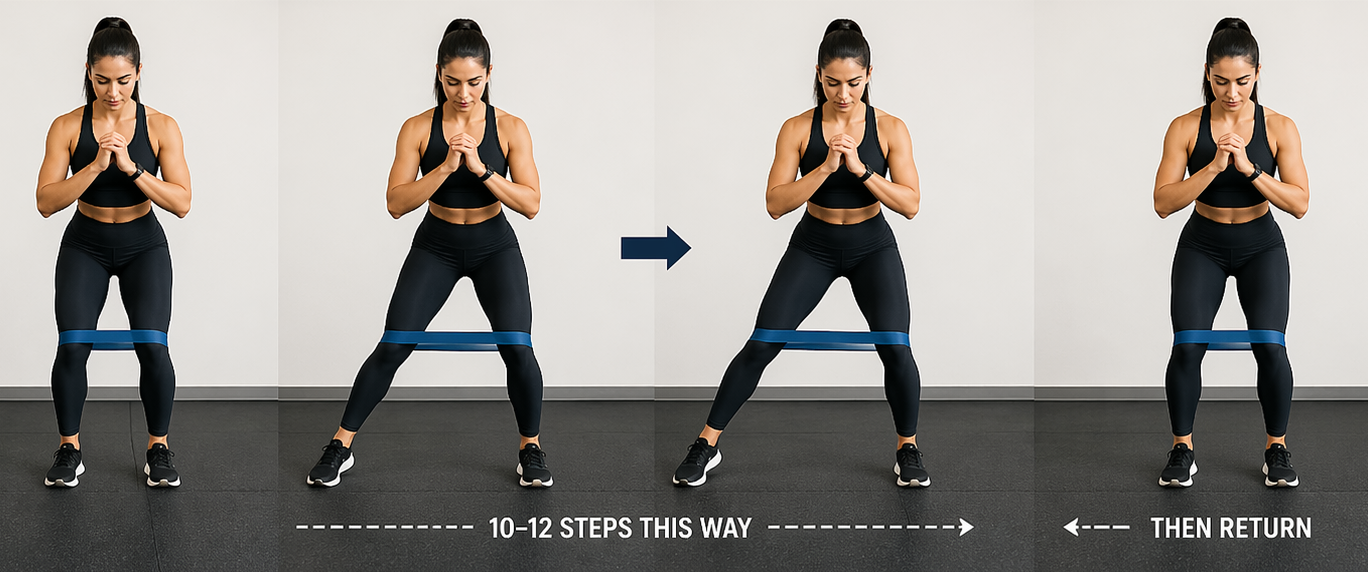
Lateral Band Walks
Place a resistance band around your ankles or just above the knees. Step sideways in a slight squat position, keeping tension on the band. Take 10–12 steps one way, then return. Do 3 sets. This mimics the side-to-side stability needed in running.
-
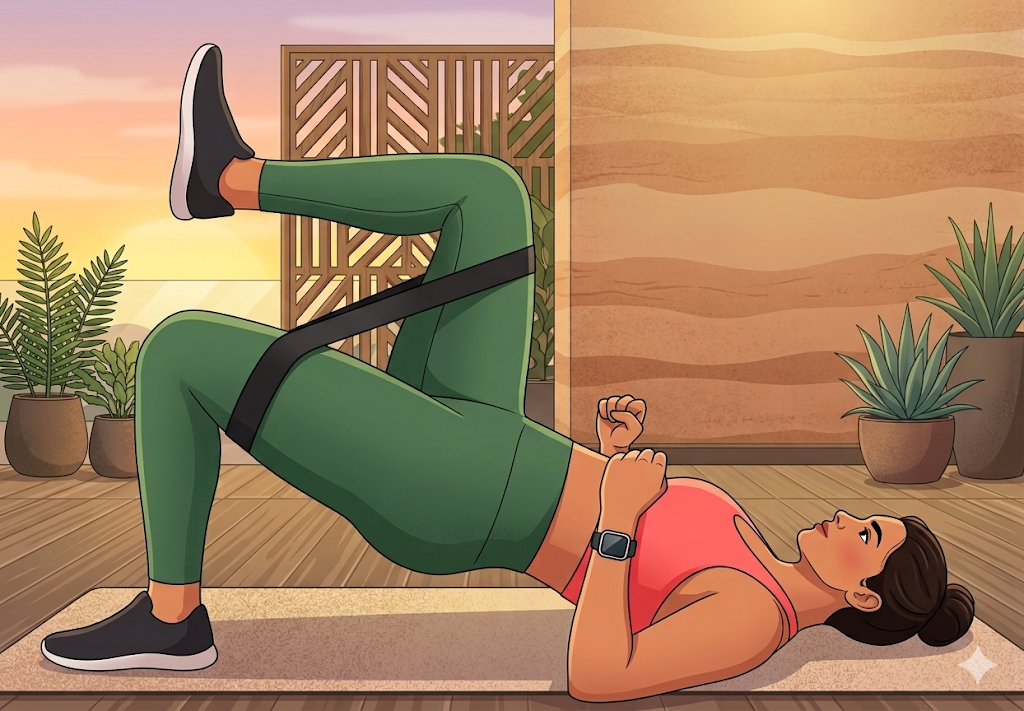
Single-Leg Glute Bridge
Lie on your back, one knee bent and foot flat. Lift hips while keeping the other leg straight or bent. Hold 3 seconds at the top. 3 sets of 10–12 reps per side. Builds posterior chain strength and pelvic control.
-
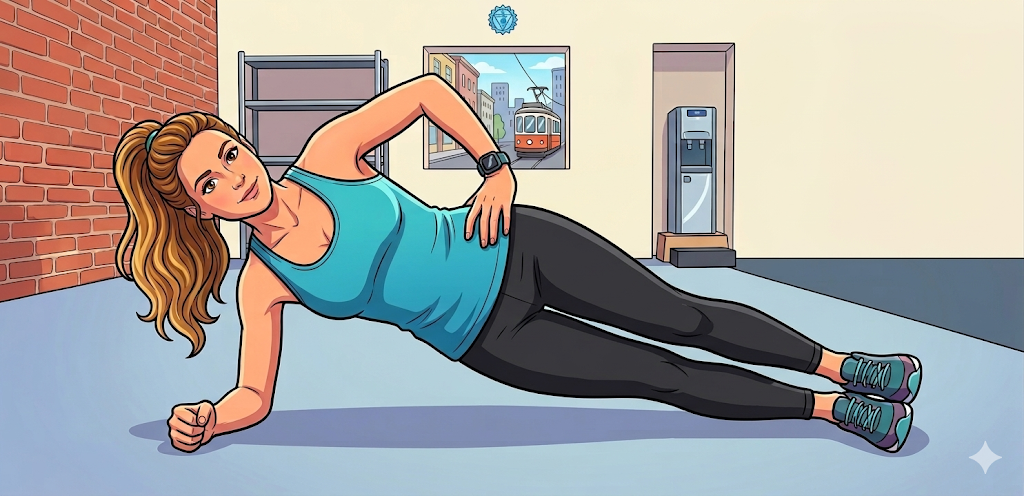
Side Plank with Hip Abduction
In a side plank position (on elbow or hand), lift the top leg slowly. Hold 20–30 seconds per side, building up. Excellent for core and hip stability together.
Prevention Strategies for Runners
Prevention is always better than cure. Follow these habits to keep IT band syndrome at bay:
- Increase weekly mileage by no more than 10% at a time.
- Incorporate hip-strengthening drills 2–3 times weekly (even when pain-free).
- Replace running shoes every 500–800 km.
- Include cross-training (swimming, cycling with proper bike fit, or strength sessions).
- Warm up properly and cool down with dynamic stretches.
- Run on even surfaces when possible.
Our guide: how to prevent knee pain while running offers more runner-specific tips.
When to Seek Professional Help
If pain persists beyond 2 weeks despite rest and self-care, or if you notice swelling, instability, or inability to run at all, consult a physiotherapist. At Healyos, our sports physiotherapy and online physiotherapy services provide tailored plans – whether you prefer home visits in Pune or virtual guidance from anywhere.
Key Takeaways
- IT band syndrome is an overuse injury caused primarily by weak hips and training errors, not just a “tight band.”
- Early symptoms include outer knee pain that worsens with continued running—don’t ignore it.
- Physiotherapy exercises focusing on glute and hip strength are the gold standard for recovery and prevention.
- Rest smartly, strengthen consistently, and gradually return to running to avoid recurrence.
- Professional guidance from a physiotherapist speeds up healing and gets you back stronger.
Frequently Asked Questions (FAQs)
- Can I keep running with IT band syndrome?
Only if the pain is very mild and doesn’t increase during or after the run. Otherwise, switch to pain-free cross-training until symptoms settle. Continuing through significant pain often prolongs recovery.
- How long does it take to recover from ITBS?
Most runners see major improvement in 4–6 weeks with consistent physiotherapy and load management. Full return to previous mileage usually takes 6–12 weeks, depending on severity and how long you’ve had symptoms.
- Is foam rolling the IT band helpful?
It can provide temporary relief by releasing surrounding muscles (like the TFL), but it’s not a cure. Focus more on hip strengthening than aggressive rolling of the band itself.
- What’s the difference between IT band syndrome and runner’s knee?
Runner’s knee (patellofemoral pain) causes pain under or around the kneecap. IT band syndrome is specifically on the outer knee and stems from different mechanics.
- Do I need surgery for IT band syndrome?
Almost never. Over 90% of cases resolve with conservative physiotherapy. Surgery is extremely rare and only considered after months of failed non-surgical treatment.
Struggling with IT band pain or any running-related knee issue? Book a consultation with our expert team at Healyos today—whether at home, in-clinic, or online. Your pain-free miles are waiting. Run smart, recover stronger!

Leave a Reply