 +919325609388

 +919325609388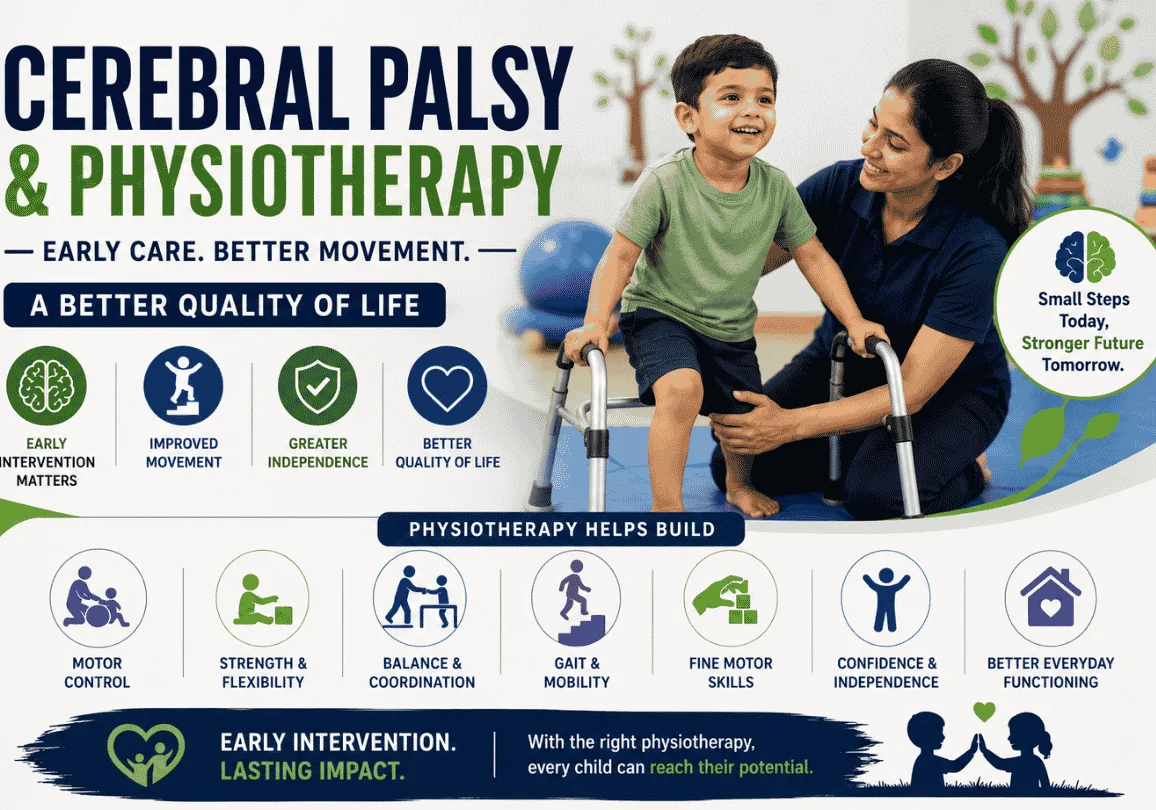
Cerebral Palsy and Physiotherapy: How Early Intervention Improves Quality of Life
Raising a child with cerebral palsy (CP) comes with a unique set of challenges, but it also comes with real hope. One of the most powerful tools available to families today is early physiotherapy intervention. When started at the right time and guided by experienced professionals, physiotherapy for cerebral palsy can make a meaningful difference in a child’s movement, independence, and overall quality of life.
In this blog, we’ll walk you through what cerebral palsy is, how physiotherapy helps, why early intervention matters, and what you can expect from a structured treatment plan.
What Is Cerebral Palsy?
Cerebral palsy is a group of neurological disorders that affect movement, muscle tone, and motor skills. It results from damage to the developing brain – most commonly before or during birth, though it can also occur in early infancy. CP is the most common motor disability in childhood worldwide.
The condition varies widely in severity. Some children experience mild coordination difficulties, while others may have limited mobility and require ongoing support. Common challenges associated with CP include muscle stiffness or spasticity, poor balance, difficulty with fine motor tasks, and in some cases, speech and swallowing impairments.
While cerebral palsy has no cure, it is not progressive – the brain injury itself does not worsen over time. This is precisely why early, consistent physiotherapy can be so transformative.
Why Early Physiotherapy Intervention Matters
The brain is remarkably adaptable in the early years of life — a property known as neuroplasticity. During infancy and early childhood, the brain is actively forming new neural connections. When a child with cerebral palsy receives targeted physiotherapy during this window, therapy can help redirect and strengthen those neural pathways, supporting better motor function over time.
Early physiotherapy for CP focuses on:
- Improving muscle tone and reducing spasticity
- Encouraging normal movement patterns
- Building core strength and stability
- Preventing secondary complications like joint contractures or scoliosis
- Supporting developmental milestones such as sitting, standing, and walking
At Healyos, our experienced physiotherapists understand that every child’s CP presentation is unique. Treatment plans are designed around the individual, not a one-size-fits-all approach.
Key Physiotherapy Techniques Used for Cerebral Palsy
Physiotherapy for cerebral palsy draws on a variety of evidence-based techniques, selected based on the child’s age, motor abilities, and treatment goals.
1. Neurodevelopmental Therapy (NDT)
Also known as the Bobath approach, NDT focuses on reducing abnormal movement patterns and facilitating more typical posture and movement. It helps the child develop better motor control through guided, repetitive practice.
2. Strength Training and Resistance Exercises
Children with CP often have weaker muscles on one side of the body or in specific muscle groups. Targeted strengthening exercises help build muscle capacity and improve functional movement.
3. Stretching and Range of Motion Exercises
Muscle tightness is common in CP, especially in the legs. Regular stretching helps maintain joint flexibility and prevents painful contractures that can develop over time.
4. Gait Training
For children who can walk or are working toward walking, gait training focuses on improving the quality and safety of each step. This may be done with or without assistive devices.
5. Functional Task Training
Rather than isolating movements, functional training focuses on real-world activities — climbing stairs, picking up objects, transitioning from sitting to standing. This approach directly improves daily independence.
6. Aquatic Therapy
Water reduces the effect of gravity on the body, making it easier for children with CP to practise movement with less effort and more freedom. Hydrotherapy can be especially beneficial for children with significant spasticity.
Our neuro physiotherapy services in Pune are specifically structured to address the neurological dimensions of conditions like CP, ensuring a comprehensive and clinically grounded approach to rehabilitation.
Role of Home-Based Physiotherapy in CP Management
For many families, consistency is the biggest challenge. Travel to a clinic multiple times a week can be exhausting, especially with a young child who has complex needs. This is where physiotherapy at home becomes invaluable.
Home-based physiotherapy allows treatment to happen in the child’s natural environment, which is often more comfortable and less stressful for them. It also allows the physiotherapist to observe the child’s actual living space, provide tailored exercises using available furniture, and educate parents and caregivers directly on how to support therapy goals throughout the day.
Key Takeaways
- Cerebral palsy is a lifelong but non-progressive neurological condition that affects movement and motor skills.
- Physiotherapy is one of the most effective tools for improving function and quality of life in children with CP.
- Early intervention – ideally before age two – leverages the brain’s neuroplasticity for the best possible outcomes.
- Common physiotherapy techniques include NDT, stretching, strengthening, gait training, and aquatic therapy.
- Home-based physiotherapy ensures consistency and empowers caregivers to actively support the child’s progress.
- A multidisciplinary, goal-oriented approach yields the most meaningful long-term results.
Frequently Asked Questions (FAQs)
Q1. At what age should physiotherapy begin for a child with cerebral palsy?
Physiotherapy should begin as early as possible, ideally in infancy, once a diagnosis is suspected or confirmed. The earlier therapy starts, the better the opportunity to harness neuroplasticity and support healthy motor development. Even if a diagnosis is delayed, beginning therapy as soon as concerns are identified is beneficial.
Q2. Can physiotherapy cure cerebral palsy?
No, physiotherapy cannot cure cerebral palsy as it is a permanent condition. However, it plays a critical role in improving movement, reducing disability, preventing complications, and enhancing the child’s ability to participate in everyday life. With consistent therapy, many children with CP achieve significant functional improvements.
Q3. How often should a child with CP attend physiotherapy sessions?
The frequency of sessions depends on the severity of the condition and the child’s specific goals. Many children benefit from two to three sessions per week, combined with daily home exercises. A qualified physiotherapist will recommend a schedule suited to the child’s needs.
Q4. What is the difference between physiotherapy and occupational therapy for CP?
Physiotherapy focuses primarily on gross motor skills – movement, posture, balance, and walking. Occupational therapy focuses on fine motor skills and daily living tasks such as dressing, feeding, and writing. Both are often recommended together for children with cerebral palsy.
Q5. Can adults with cerebral palsy benefit from physiotherapy?
Absolutely. While early intervention has the greatest impact, physiotherapy remains beneficial throughout life for people with CP. In adults, it helps maintain mobility, manage pain, prevent secondary complications, and support an active lifestyle.

Leave a Reply