

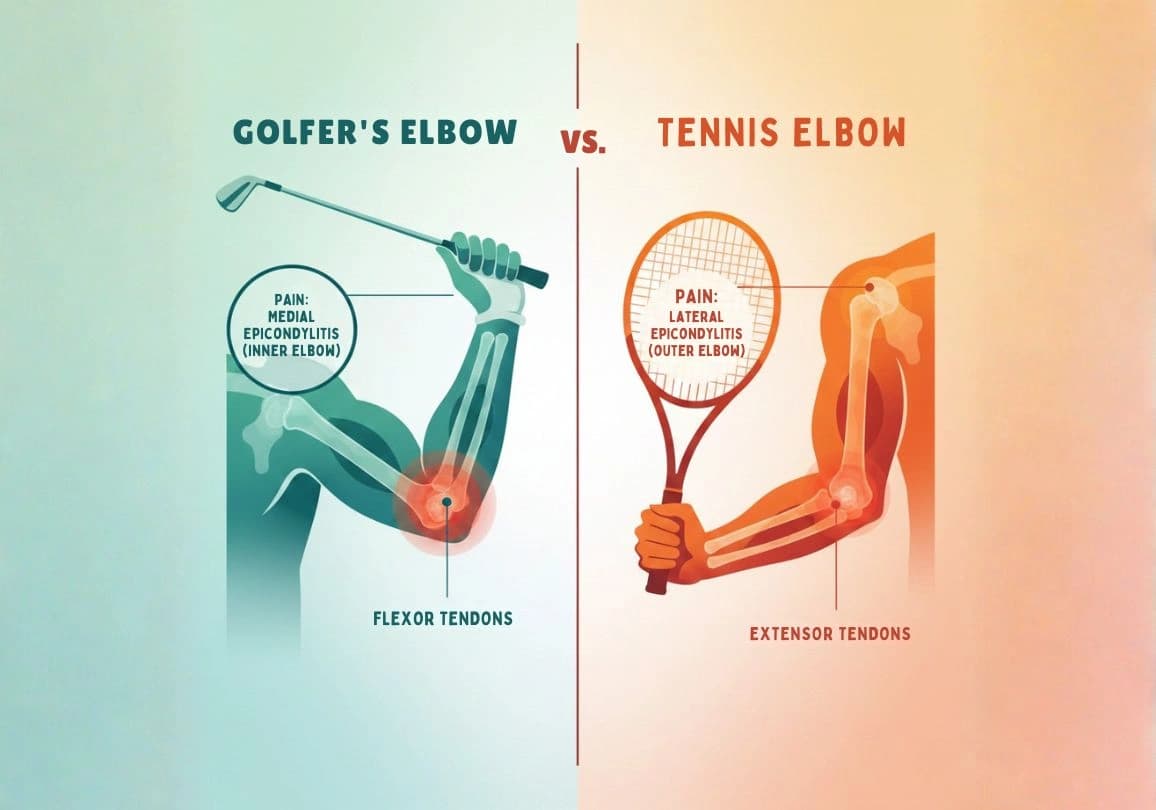
If you’re experiencing elbow pain, you might be wondering whether you have a golfer’s elbow or tennis elbow. While both conditions cause discomfort around the elbow joint, they affect different sides: tennis elbow causes pain on the outer (lateral) part of the elbow, while golfer’s elbow affects the inner (medial) side. Understanding the location of your pain, along with your symptoms and activities, can help you identify which condition you have and pursue the right treatment approach.
At Healyos Physiotherapy in Pune, we see patients with both conditions regularly—and the good news is that with proper diagnosis and treatment, most people recover fully. Whether you prefer visiting our clinic or receiving care in the comfort of your home, our team is here to guide you through effective, evidence-based recovery strategies.
Both tennis elbow (lateral epicondylitis) and golfer’s elbow (medial epicondylitis) are overuse injuries that affect the tendons connecting your forearm muscles to your elbow. Despite their sports-related names, you don’t need to play tennis or golf to develop these conditions.
Tennis elbow affects the tendons on the outside of your elbow. These tendons connect to the muscles that extend your wrist and fingers. When these tendons become inflamed or develop small tears from repetitive stress, you experience pain on the lateral (outer) side of your elbow.
Common causes include:
Golfer’s elbow affects the tendons on the inside of your elbow. These tendons attach to the muscles that flex your wrist and fingers. When damaged through overuse, they cause pain on the medial (inner) side of your elbow.
Common causes include:
Understanding the differences between tennis elbow and golfer’s elbow helps you seek appropriate treatment.
The most obvious difference is where the pain occurs:
Different activities worsen each condition:
Tennis elbow symptoms worsen with:
Golfer’s elbow symptoms worsen with:
At Healyos Physiotherapy, our thorough assessment includes:
The good news? Both conditions respond well to conservative treatment. Surgery is rarely needed.
When symptoms first appear:
Physiotherapy is the cornerstone of effective treatment for both conditions. At Healyos, we create personalized treatment plans that include:
Manual Therapy
Therapeutic Exercises
Pain Management Techniques
Ergonomic Assessment
Between physiotherapy sessions, you can support your recovery:
If conservative treatment doesn’t provide relief after 6-12 months, your physiotherapist may recommend:
Whether you’re recovering from tennis elbow or golfer’s elbow, or want to prevent these conditions, follow these strategies:
Strengthen Your Forearms
Use Proper Technique
Take Breaks
Ergonomic Adjustments
Gradual Progression
Can I still exercise with tennis elbow or golfer’s elbow?
Yes, but with modifications. Avoid activities that directly aggravate your elbow pain while maintaining overall fitness through activities like walking, cycling, or lower body exercises. Your physiotherapist can design a safe exercise program that promotes healing while keeping you active. As symptoms improve, you’ll gradually reintroduce arm activities under professional guidance.
How long does recovery typically take?
Recovery time varies depending on severity and adherence to treatment. Mild cases may improve in 6-8 weeks, while more severe or chronic conditions might take 3-6 months. Consistency with physiotherapy exercises and activity modifications significantly influences healing time. Most patients see noticeable improvement within the first few weeks of starting proper treatment.
Is surgery ever necessary for these conditions?
Surgery is rarely needed—approximately 95% of patients recover with conservative treatment. Surgery might be considered only after 6-12 months of comprehensive non-surgical treatment fails to provide relief. The procedure involves removing damaged tissue and reattaching a healthy tendon. However, with proper physiotherapy and patience, most people avoid surgery altogether.
Can both tennis elbow and golfer’s elbow occur simultaneously?
While uncommon, it’s possible to have both conditions at the same time, especially if you engage in activities involving repetitive arm movements. Some people also develop one condition after compensating for the other. A thorough physiotherapy assessment will identify all affected areas and create a comprehensive treatment plan addressing both sides of the elbow if necessary.
Will wearing an elbow brace help my condition?
Yes, counterforce braces can be helpful, especially during activities that stress your elbow. These braces work by distributing pressure away from the affected tendon. However, they’re most effective when combined with physiotherapy—not as a standalone treatment. Your physiotherapist will show you proper brace placement and advise when to wear it. Long-term recovery depends on strengthening exercises, not just bracing.