
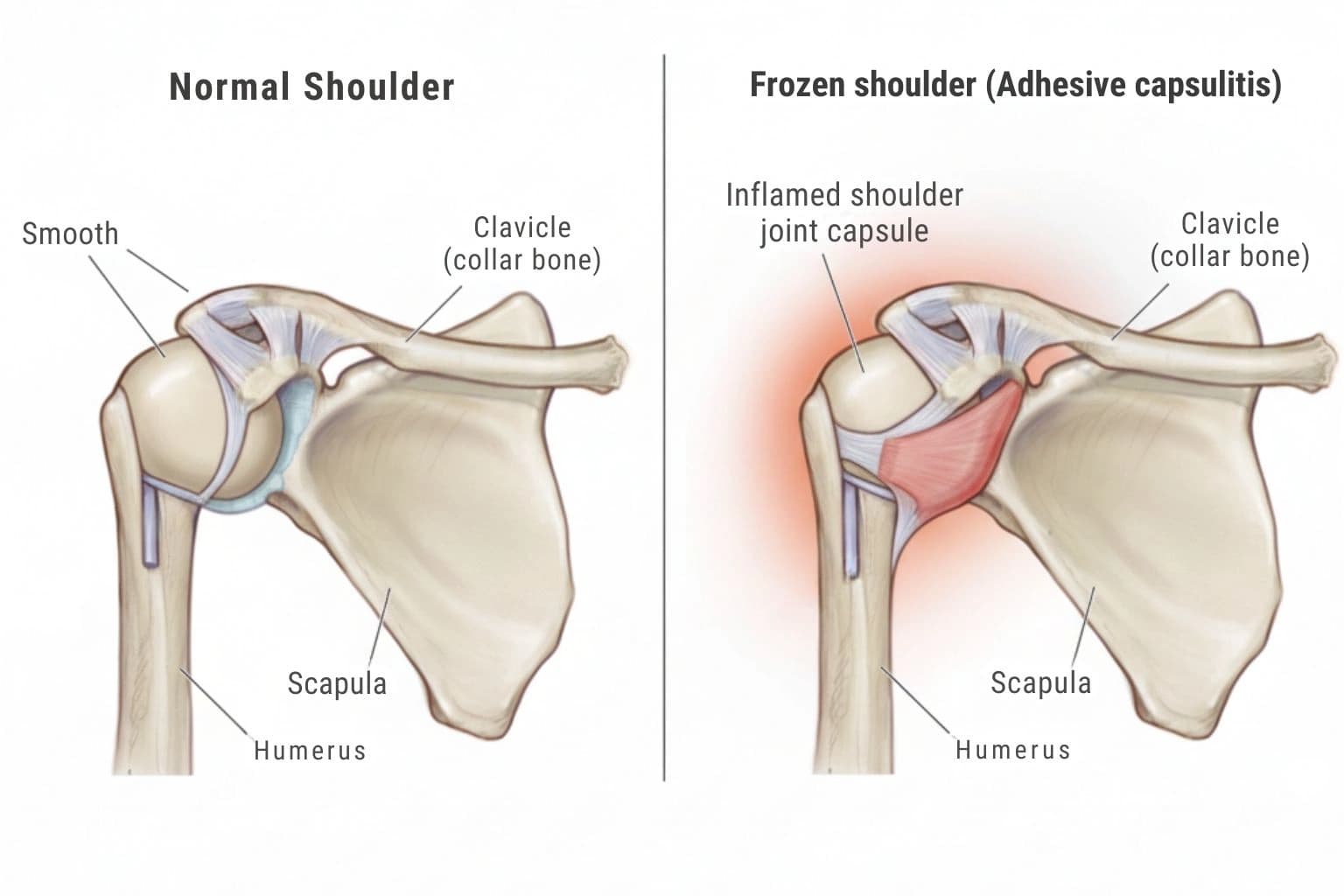
Frozen shoulder (adhesive capsulitis) is a common and often misunderstood shoulder condition marked by pain, stiffness, and a progressive loss of range of motion. It typically evolves slowly through distinct stages – freezing, frozen, and thawing – and can take many months to resolve.
This guide explains frozen shoulder symptoms, common frozen shoulder causes, the reasons for frozen shoulder in many patients, and what to expect during recovery. You’ll also find practical frozen shoulder treatment strategies and a clear recovery timeline to help you plan therapy and daily self-care.
Frozen shoulder occurs when the connective tissue surrounding the shoulder joint, called the capsule, becomes inflamed, thickened, and tight. Adhesions form within the capsule, restricting the joint’s normal sliding and gliding motion.
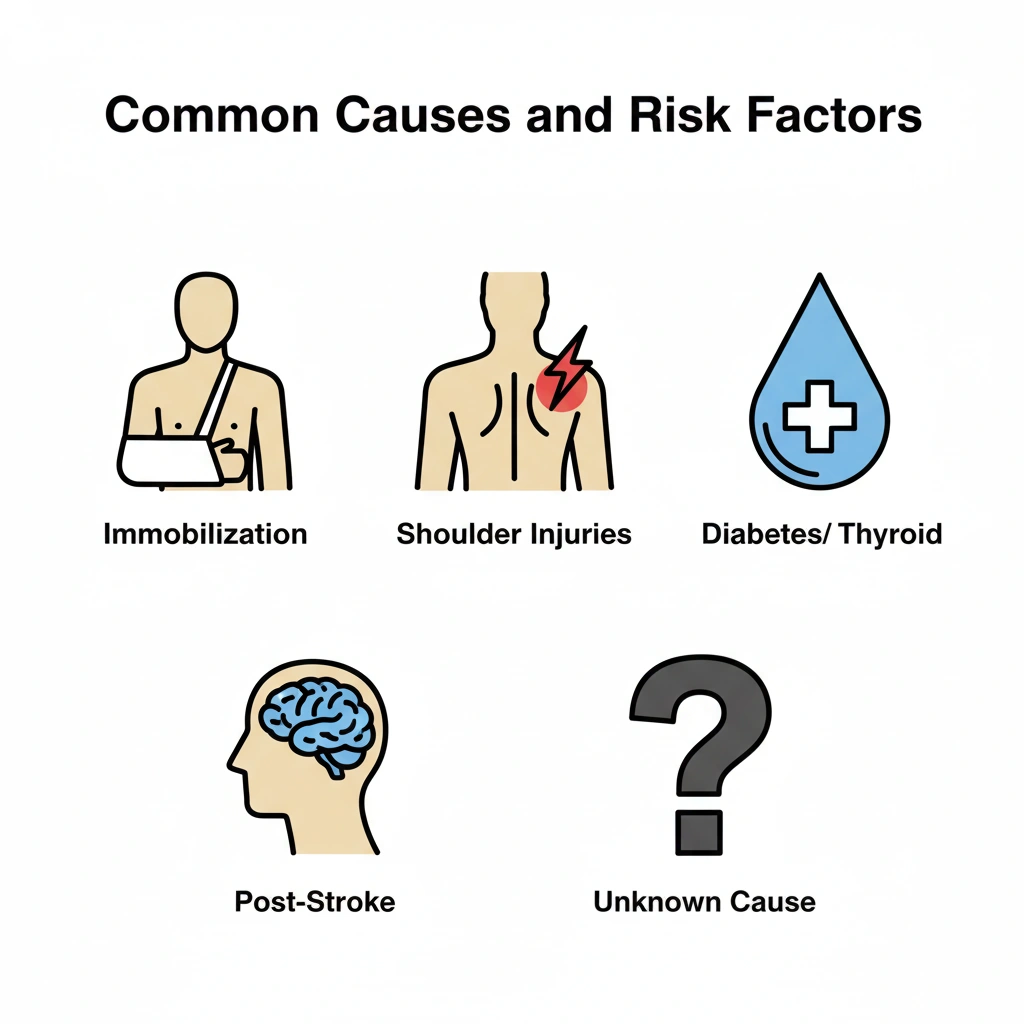
The condition most often affects people in midlife (typically between ages 40 and 60) and is more common in women. It may start after a period of immobilization following injury or surgery, or it can arise with no clear trigger. Diabetes and thyroid disorders are notable risk factors that increase the likelihood of developing adhesive capsulitis.
Frozen shoulder reduces the ability to lift the arm, reach overhead, or perform routine tasks such as dressing, grooming, and reaching into cabinets. Night pain is common and disrupts sleep. The loss of shoulder mobility can make driving, carrying items, or working at a desk uncomfortable.
Emotional fatigue and frustration are normal responses when everyday activities become difficult. Importantly, while recovery is often slow, most people regain significant motion over time with proper treatment and consistent exercise.
Key Symptoms:
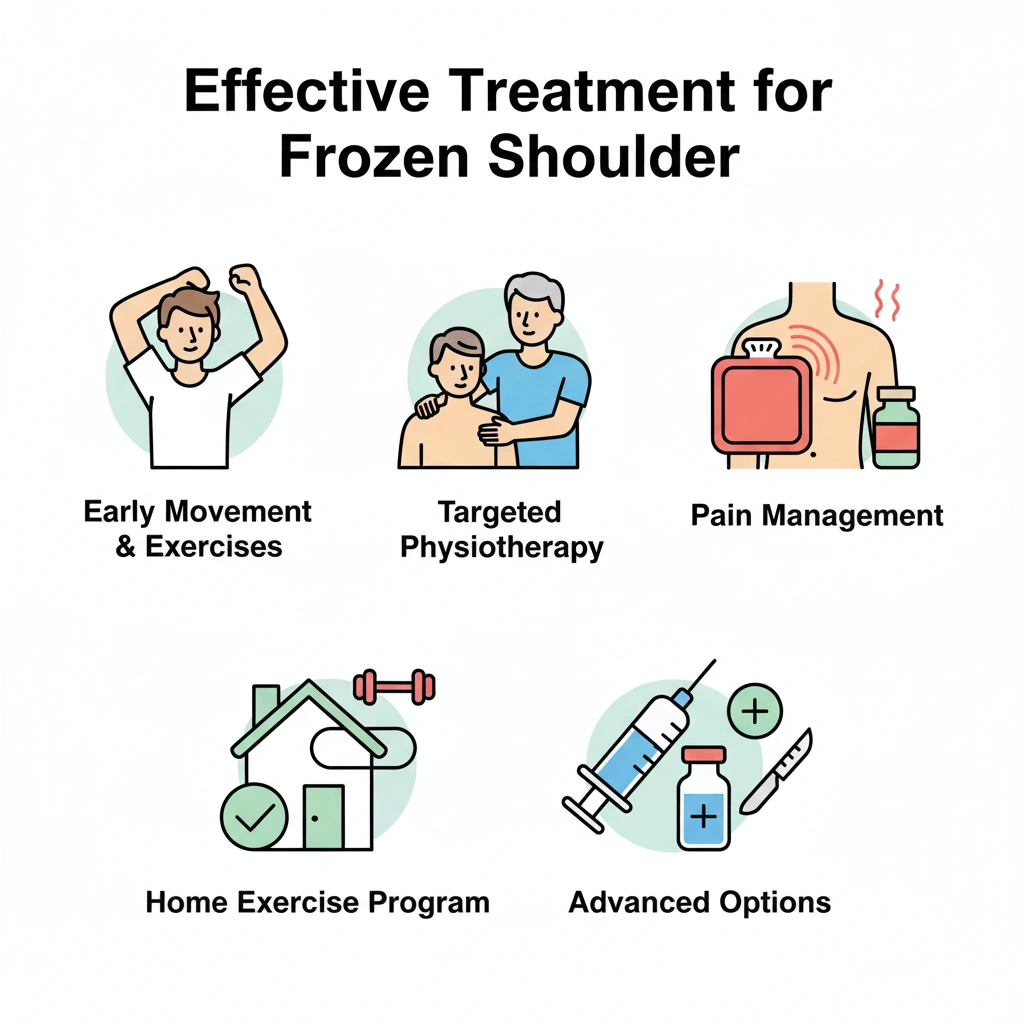
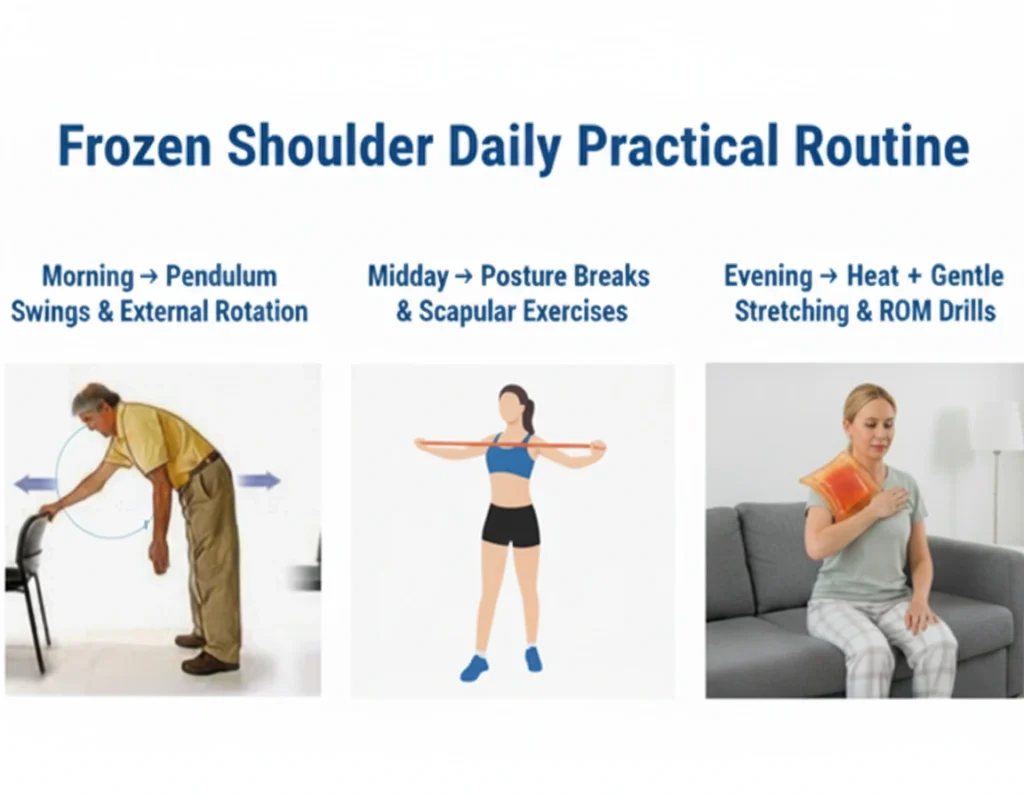
Begin with low-intensity, pain-limited movements and gradually increase range and repetitions. Use heat before stretching to relax muscles and ice afterward if inflammation flares.
Track your exercises daily and avoid aggressive forced stretching that increases sharp pain. Work closely with a physiotherapist to tailor progressions and protect the joint from overload.
Seek medical review if you have severe worsening pain, sudden swelling, fever, or signs of infection at the shoulder. Also see a clinician if you notice progressive weakness, sudden loss of circulation, or symptoms that suggest another diagnosis, such as a significant rotator cuff tear or nerve involvement.
Frozen shoulder is often a prolonged condition. Most patients pass through freezing, frozen, and thawing stages over 6 to 36 months. Early intervention shortens the painful freezing phase for many.
With regular physiotherapy and adherence to home programs, notable improvements in pain and mobility are often seen within weeks to months, with substantial gains by three to six months and continued benefit over a year in many individuals.
Preventing recurrence is realistic. Maintain rotator-cuff and scapular strength, avoid prolonged immobilization after minor injury, and manage systemic risks like diabetes and thyroid disease. Small ergonomic changes – adjusting work height and using supportive posture – reduce strain and help keep the capsule mobile.
Specific Home Exercises to Try
At Healyos, we provide personalized frozen shoulder physiotherapy programs emphasizing early motion, manual therapy, and graduated stretching. Our therapists teach safe home exercises, monitor progress, and advise on when advanced interventions are appropriate. We combine hands-on care with education and follow-up to help patients recover mobility and return to daily activities.
Frozen shoulder is painful and can restrict daily life, but with the right approach – early movement, targeted physiotherapy, and patient persistence – most people regain meaningful function. Understand the stages, follow a structured exercise plan, and seek professional care when progress stalls. With patience and the correct guidance, recovery is likely.