

Waking up with a stiff, aching neck can turn a good morning into a painful ordeal. If you’re struggling with neck pain after sleeping, the solution often lies in adjusting your sleeping position for neck pain and making simple changes to your sleep setup.
The best sleeping position for neck pain is sleeping on your back or side with proper pillow support that maintains your spine’s natural alignment, while avoiding stomach sleeping that forces your neck into awkward rotation. In this comprehensive guide, we’ll explore how to transform your sleep posture, choose the right pillow, and wake up pain-free.
Your neck contains seven delicate vertebrae, supported by muscles, ligaments, and tendons that work continuously to hold up your head—which weighs approximately 10-12 pounds. When you maintain poor posture during the 7-9 hours you spend sleeping, these structures experience unnecessary strain.
Neck pain due to bad sleeping posture occurs when your head, neck, and spine fall out of neutral alignment. This misalignment causes:
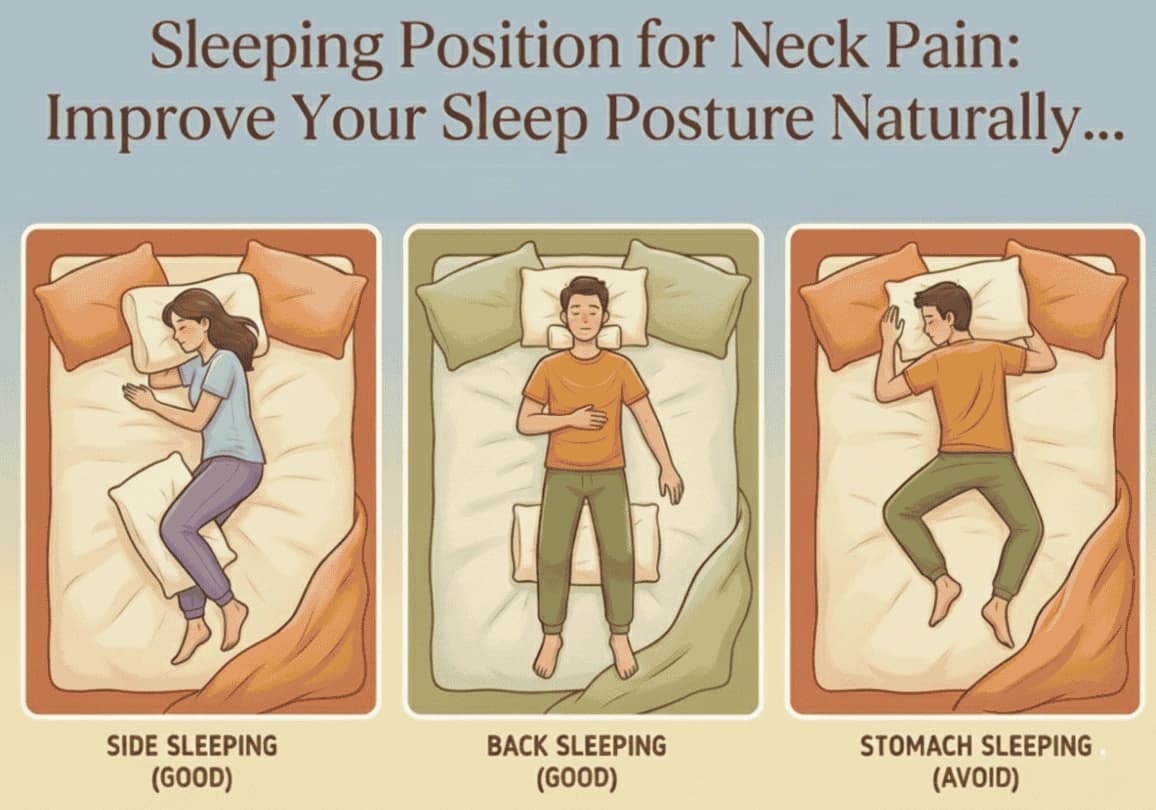
Sleeping on your back is generally considered the best sleeping position for neck pain because it allows your head, neck, and spine to rest in a neutral position. This posture distributes your body weight evenly and minimizes pressure points.
How to optimize back sleeping:
Side sleeping can be excellent for neck and shoulder pain, provided you maintain proper alignment. This is the sleeping position for neck and shoulder pain that many people find most comfortable.
Tips for side sleepers:
Sleeping on your stomach is the worst position for neck health. It forces you to turn your head to one side for extended periods, creating significant neck rotation and strain.
If you’re a committed stomach sleeper, transition gradually by using body pillows to prevent rolling onto your stomach, or try using a very thin pillow under your pelvis while keeping your forehead on a flat, soft pillow.
When you’re already experiencing discomfort, how to sleep to relieve neck pain becomes your primary concern. Here are evidence-based strategies for immediate relief:
Perform these simple neck stretches 30 minutes before bed:
If you’ve already woken up with neck pain from sleeping wrong, don’t panic. Most cases resolve within a few days with proper care.
Immediate relief measures:
When to see a doctor:
Seek medical attention if you experience:
Prevention is always better than treatment. Here’s how to prevent neck pain while sleeping through sustainable lifestyle changes:
Your pillow is crucial for how to sleep to avoid neck pain:
Pillow height matters: Your pillow should keep your nose aligned with the center of your body, not tilted up or down.
A mattress that’s too soft or too firm can contribute to neck pain. Medium-firm mattresses typically provide the best balance of support and comfort for most sleepers. Replace your mattress every 7-10 years or when it shows signs of sagging.
Your daytime habits significantly impact nighttime neck health:
Going to bed and waking up at the same time daily helps regulate your body’s natural rhythms and can improve sleep quality, indirectly benefiting neck health.
How to sleep when you have neck pain may require extra considerations:
Incorporating these exercises into your daily routine can strengthen your neck and improve your sleeping position for neck and shoulder pain:
Chin Tucks (10 repetitions, 2-3 times daily):
Shoulder Blade Squeezes (10 repetitions):
Neck Extensions (10 repetitions):
Q: Can sleeping without a pillow help neck pain?
A: For most people, sleeping without a pillow is not recommended. Your pillow provides crucial support for the natural curve of your cervical spine. However, stomach sleepers might benefit from using no pillow or a very thin one. Back and side sleepers should always use an appropriately sized pillow to maintain proper neck alignment and prevent muscle strain during sleep.
Q: How long does it take to adjust to a new sleeping position?
A: Changing your sleeping position typically takes 2-4 weeks of consistent effort. Your body has developed muscle memory for your current position over many years. To ease the transition, use supportive pillows to prevent rolling into your old position, be patient with initial discomfort, and remind yourself each night of your goal. Many people find the long-term benefits of reduced neck pain well worth the temporary adjustment period.
Q: Are memory foam pillows better than traditional pillows for neck pain?
A: Memory foam pillows often provide superior support for neck pain because they contour to your unique anatomy and maintain consistent support throughout the night. However, the “best” pillow depends on your sleeping position, body size, and personal preferences. Some people prefer the adjustability of water pillows or the natural firmness of buckwheat pillows. The key is choosing a pillow that keeps your spine neutral—test different options to find what works for your specific needs.
Q: Can stress cause neck pain during sleep?
A: Yes, absolutely. Psychological stress causes physical muscle tension, particularly in the neck and shoulder region. When you’re stressed, you may unconsciously clench your jaw, hunch your shoulders, or sleep in tense positions, all of which contribute to morning neck pain. Managing stress through meditation, deep breathing exercises, regular physical activity, and establishing a calming bedtime routine can significantly reduce stress-related neck pain during sleep.
Q: Is it normal for neck pain to be worse in the morning than during the day?
A: Morning neck pain that improves throughout the day typically indicates a sleep posture issue rather than a serious underlying condition. As you move during the day, blood flow increases and muscles loosen, reducing discomfort. If your neck pain consistently worsens in the morning, evaluate your pillow, mattress, sleeping position, and bedtime routine. However, if morning stiffness persists for more than an hour or is accompanied by other symptoms, consult a healthcare provider to rule out conditions like arthritis or cervical spine issues.