

If you’ve dislocated your shoulder, you’re probably wondering when you can get back to normal life — and what exercises will actually help.
The best shoulder dislocation exercises focus on restoring range of motion, rebuilding muscle strength, and preventing future injuries. In short: gentle mobility work first, then progressive shoulder strengthening exercises for dislocation as healing allows.
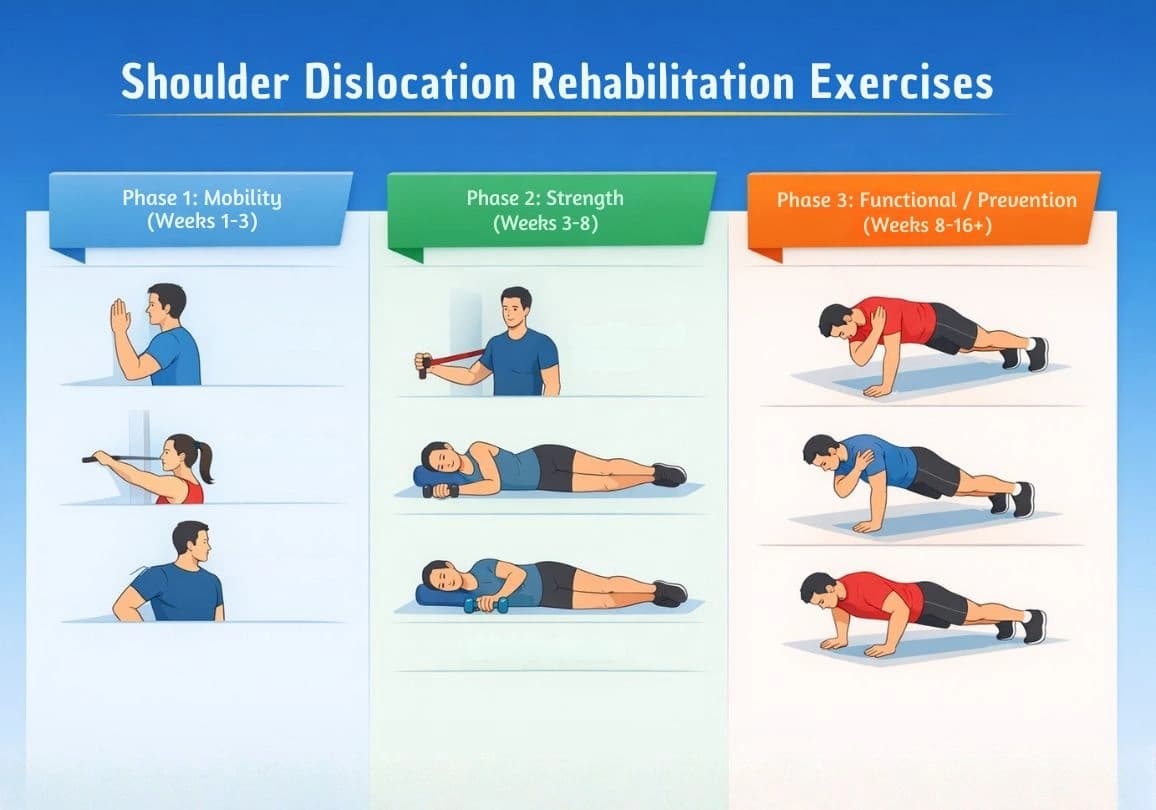
This guide walks you through 9 safe, physio-approved exercises you can begin as part of your dislocated shoulder rehab, along with tips on what to avoid and when to seek professional guidance.
A dislocated shoulder doesn’t just pop out of place — it stretches or tears the surrounding ligaments, tendons, and muscles. Without proper rehabilitation, you’re at high risk of re-dislocation, chronic instability, and stiffness. Structured exercises for shoulder dislocation rehab help restore the joint’s stability, retrain muscle coordination, and rebuild the confidence to use your arm again.
At Healyos Physiotherapy in Pune, we design personalised recovery programs — whether you prefer to come into our clinic or have our physio visit you at home. Recovery is rarely one-size-fits-all, and the exercises below should ideally be guided by a qualified physiotherapist, especially in the early weeks.
Always get medical clearance before starting any dislocated shoulder rehab exercises. Most patients begin gentle movement within the first 1–2 weeks after the shoulder has been relocated, but timelines vary based on:
Never push through sharp pain. Mild discomfort or muscle fatigue is normal — stabbing or joint pain is not.
These exercises restore movement without loading the joint. They’re ideal as your first exercises to strengthen shoulder after dislocation and should feel gentle throughout.
This is one of the first exercise for dislocated shoulder joint recovery that physiotherapists recommend.
How to do it:
Common directions to do: forward, backward, outward, inward and sideways.
This helps the shoulder joint gain stability in it’s socket.
How to do it:
Passive movement helps reclaim overhead range without straining healing tissues.
How to do it:
This activates the postural muscles around the shoulder blade, which are essential for joint stability.
Once pain and swelling reduce, it’s time to introduce shoulder dislocation strengthening exercises that challenge the rotator cuff and stabilising muscles.
Rotator cuff training is the cornerstone of shoulder dislocation prevention exercises, as these muscles act like dynamic stabilisers of the ball-and-socket joint.
External rotation:
Internal rotation:
How to do it:
This isolates the infraspinatus and teres minor — two rotator cuff muscles critical for preventing re-dislocation.
These exercises retrain the lower and mid-trapezius, which stabilise the shoulder blade and reduce joint stress.
How to do it:
These are particularly effective as shoulder rehab exercises after dislocation because they address scapular control, which is often neglected.
Once your range of motion is comfortable and your physio approves, light pressing movements can begin.
How to do it:
Avoid flaring the elbow excessively. If pain occurs at end range, stop short of full overhead extension.
The goal here shifts to exercises to stop shoulder dislocation from recurring by building dynamic stability and proprioception (your body’s awareness of joint position).
How to do it:
This challenges shoulder stability under load in a functional, closed-chain position — excellent for exercises to avoid shoulder dislocation in sport and daily life.
How to do it:
Push-ups in progression rebuild pushing strength while keeping the shoulder joint safe during healing. This is one of the most effective exercises to strengthen shoulder after dislocation before returning to sport or heavy lifting.
Knowing what not to do is just as important as knowing what to do. Avoid the following until your physiotherapist clears you:
At Healyos Physiotherapy, our team of trained physiotherapists in Pune understands that recovery from a shoulder dislocation is both physical and psychological. Many patients fear re-injury, which causes them to guard the shoulder unconsciously — and that compensation can lead to new problems in the neck, elbow, or upper back.
Whether you visit our clinic or prefer a home physiotherapy visit in Pune, we assess your specific shoulder mechanics, provide hands-on manual therapy (joint mobilisation, soft tissue release), and progress your exercise programme safely week by week. Our approach is rooted in evidence-based care, with clear milestones so you always know where you are in your recovery.
Q1. How long does shoulder dislocation recovery typically take?
Recovery varies depending on severity, but most people regain functional use within 6–12 weeks. Athletes returning to contact or overhead sport may need 4–6 months of structured rehab. First-time dislocations with no surgical intervention tend to heal faster than recurrent ones.
Q2. Can I do these exercises at home without seeing a physiotherapist?
Mild cases may be managed with home exercises, but it’s strongly recommended to have at least an initial assessment with a physiotherapist. Without proper technique guidance, you risk aggravating the injury or training the wrong muscles. Healyos offers home visit physiotherapy in Pune, making professional guidance accessible wherever you are.
Q3. Will my shoulder ever be as strong as before the dislocation?
Yes — with consistent rehabilitation, most people achieve full or near-full strength and stability. In fact, structured rehab often leaves patients with better shoulder mechanics than they had before the injury, because the programme addresses underlying weaknesses that may have contributed to the dislocation.
Q4. Is surgery always necessary after a shoulder dislocation?
Not always. First-time dislocations in adults are often treated conservatively with immobilisation followed by physiotherapy. However, young athletes, those with recurrent dislocations, or cases involving significant labral or bone damage (Bankart lesion, Hill-Sachs fracture) may require surgical intervention before rehab begins.
Q5. When is it safe to return to sports after a dislocated shoulder?
Return to sport should only happen when you meet specific criteria: full, pain-free range of motion; equal strength in both shoulders (90–95% symmetry); normal proprioception; and no apprehension with sport-specific movements. A physiotherapist should formally clear you — not just the absence of pain — before you resume competitive activity.