

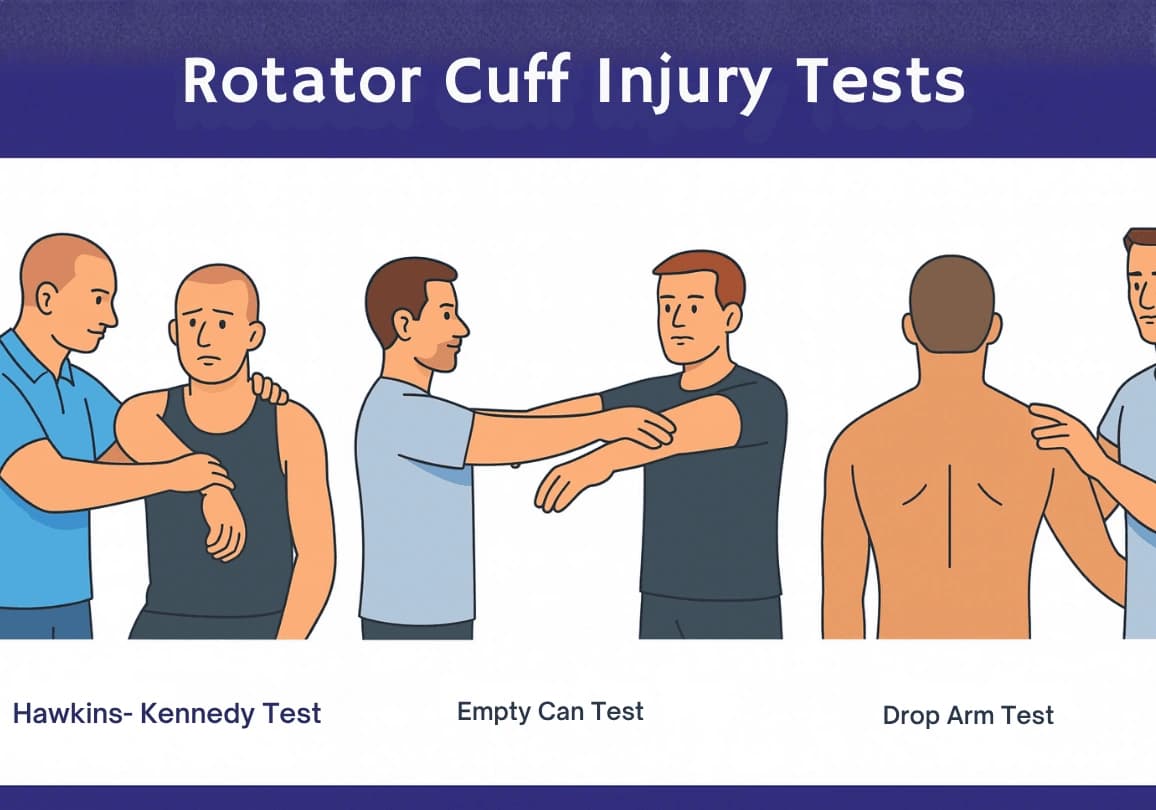
A rotator cuff injury test is a physical examination technique used to identify tears, strains, or inflammation in the shoulder muscles and tendons. These clinical assessments help healthcare providers determine the exact location and severity of your injury without invasive procedures. Accurate diagnosis through various rotator cuff injury tests diagnosis methods ensures you receive the right treatment plan, whether it’s physiotherapy, medication, or surgery. Understanding these tests can help you recognize symptoms early and seek timely medical attention.
The rotator cuff consists of four muscles and their tendons that stabilize your shoulder joint and enable arm movement. Injuries occur due to:
Symptoms include persistent shoulder pain, weakness when lifting your arm, nighttime discomfort, and difficulty reaching behind your back.
Clinical examination through specific rotator cuff injury special test procedures offers several advantages:
Your doctor combines test results with your medical history and symptoms to create an accurate diagnosis.
Understanding how to test for rotator cuff injury involves several specialized maneuvers that target different muscles and tendons.
This rotator cuff injury special test evaluates the supraspinatus muscle, which initiates arm elevation.
Procedure: You raise your arms to shoulder height at a 30-degree angle forward with thumbs pointing down (like emptying a can). The examiner applies downward pressure while you resist.
Positive result: Pain or weakness indicates supraspinatus involvement.
This assessment identifies severe rotator cuff tears affecting your ability to control arm descent.
Procedure: The examiner raises your arm to 90 degrees, then asks you to slowly lower it to your side.
Positive result: Inability to control the descent or sudden dropping suggests a significant tear.
This test checks the infraspinatus and teres minor muscles responsible for rotating your arm outward.
Procedure: With your elbow bent at 90 degrees and held at your side, the examiner rotates your forearm outward and asks you to maintain that position.
Positive result: Your arm drifts inward when released, indicating posterior cuff weakness.
This rotator cuff injury test assesses the subscapularis muscle, which rotates your arm inward.
Procedure: Place your hand behind your back at waist level. The examiner lifts your hand away from your body and asks you to maintain that position.
Positive result: Inability to hold your hand away from your back suggests subscapularis damage.
This maneuver detects impingement, where tendons get pinched between shoulder bones.
Procedure: Your arm is raised to 90 degrees forward, then the examiner rotates your forearm downward.
Positive result: Sharp pain indicates impingement or inflammation.
Another impingement assessment that compresses the supraspinatus tendon.
Procedure: The examiner raises your arm overhead in forward flexion while stabilizing your shoulder blade.
Positive result: Pain during this motion suggests impingement syndrome.
When you visit for shoulder pain, your healthcare provider follows a systematic approach:
No single test is 100% conclusive. Doctors use a combination of maneuvers to increase diagnostic accuracy.
Schedule an evaluation if you experience:
Early diagnosis through proper rotator cuff injury special test techniques prevents minor injuries from worsening.
While clinical tests provide valuable information, imaging studies confirm the diagnosis:
Your treatment plan depends on these combined findings.
Once your rotator cuff injury tests diagnosis confirms the problem, treatment may include:
Conservative approaches:
Surgical intervention:
Most people recover well with physiotherapy alone, especially when detected early.
At Healyos, we offer expert physiotherapy for rotator cuff injury recovery and shoulder rehabilitation. Our therapists use evidence-based exercises, manual therapy, and progressive strengthening protocols to restore shoulder function and reduce pain. With personalized home programs and continuous progress tracking, we help you regain mobility, strength, and confidence through a comprehensive recovery plan.