

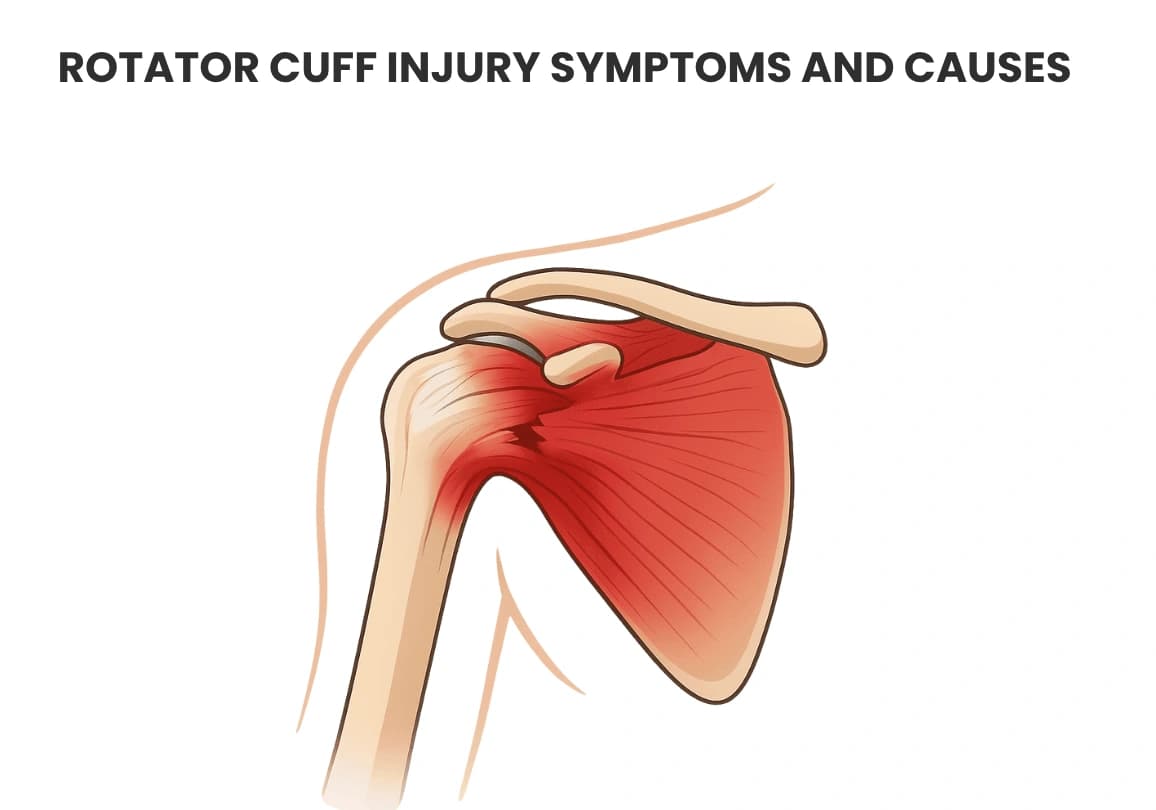
Rotator cuff injuries occur when one or more of the four muscles and tendons surrounding your shoulder joint become damaged, leading to pain, weakness, and limited movement. Common symptoms of rotator cuff injury include shoulder pain that worsens at night, difficulty lifting your arm overhead, and weakness when rotating your arm.
These injuries can result from acute trauma like falls or develop gradually through repetitive overhead activities. Understanding the causes of rotator cuff tears and recognizing early warning signs is crucial for timely treatment and preventing further damage to this essential shoulder structure.
The rotator cuff consists of four muscles (supraspinatus, infraspinatus, teres minor, and subscapularis) and their attached tendons that work together to stabilize your shoulder joint. These structures form a “cuff” around the head of your upper arm bone, enabling you to lift, rotate, and move your arm in various directions.
When any part of this complex system becomes damaged, it can significantly impact your daily activities and quality of life. Rotator cuff injuries range from mild inflammation to complete tears, each presenting unique challenges for patients.
Rotator cuff tendinitis develops when the tendons become inflamed due to overuse or repetitive stress. This condition often affects athletes, manual laborers, and individuals who frequently perform overhead activities. The inflammation causes pain and stiffness but doesn’t involve actual tearing of the tissue.
A rotator cuff tear occurs when one or more tendons partially or completely separate from the bone. These tears are classified as:
Shoulder impingement happens when the rotator cuff tendons become compressed between the shoulder bones during arm movement. This compression leads to inflammation, pain, and potential tendon damage over time.
Recognizing the symptoms of rotator cuff injury early can help prevent further damage and facilitate proper treatment. Key symptoms include:
Understanding the causes of rotator cuff tears helps in both prevention and treatment planning. These injuries typically result from two main factors:
Sudden trauma can cause immediate rotator cuff damage:
Most rotator cuff injuries develop gradually due to:
Age-related wear: As we age, blood supply to the rotator cuff decreases, making the tendons more susceptible to damage. This natural degeneration typically begins after age 40.
Repetitive stress: Activities requiring repeated overhead movements can cause progressive tendon damage:
Bone spurs: Bony overgrowths on the shoulder blade can rub against rotator cuff tendons, causing irritation and eventual tearing.
Poor posture: Slouching forward can narrow the space where tendons move, increasing friction and wear.
Several factors increase your likelihood of experiencing rotator cuff tendon injury:
Don’t ignore persistent shoulder pain or other concerning symptoms. Seek medical evaluation if you experience:
Healthcare providers use various methods to diagnose rotator cuff damage:
Many rotator cuff injuries respond well to non-surgical approaches:
Severe rotator cuff tears may require surgical repair, especially in younger, active patients or when conservative treatment fails.
Protect your shoulders from rotator cuff tendon injury with these preventive measures:
Can I still exercise with a partial rotator cuff tear?
Yes, but you’ll need to modify your routine. Low-impact activities like walking, stationary cycling, and specific physical therapy exercises are usually safe. Avoid overhead movements and heavy lifting until cleared by your healthcare provider.
Why does my rotator cuff injury hurt more at night?
Nighttime pain occurs because lying down reduces blood flow to the shoulder, and the weight of your body compresses the injured tissues. Additionally, inflammatory chemicals accumulate when you’re inactive, intensifying pain sensations.
How long can I wait before getting surgery for a complete tear?
The timing depends on your age, activity level, and tear size. Acute tears in younger patients often benefit from surgery within 3-6 months. However, older patients with chronic tears may try conservative treatment for 6-12 months first.
Will a cortisone injection cure my rotator cuff problem?
Cortisone injections reduce inflammation and provide temporary pain relief but don’t heal the actual tear. They’re most effective when combined with physical therapy and can help you participate in rehabilitation exercises more comfortably.
Can a rotator cuff tear get worse if I keep using my shoulder?
Yes, continued use without proper treatment can enlarge partial tears and worsen symptoms. Small tears can progress to complete tears, and the surrounding muscles may weaken or atrophy, making eventual repair more difficult.