
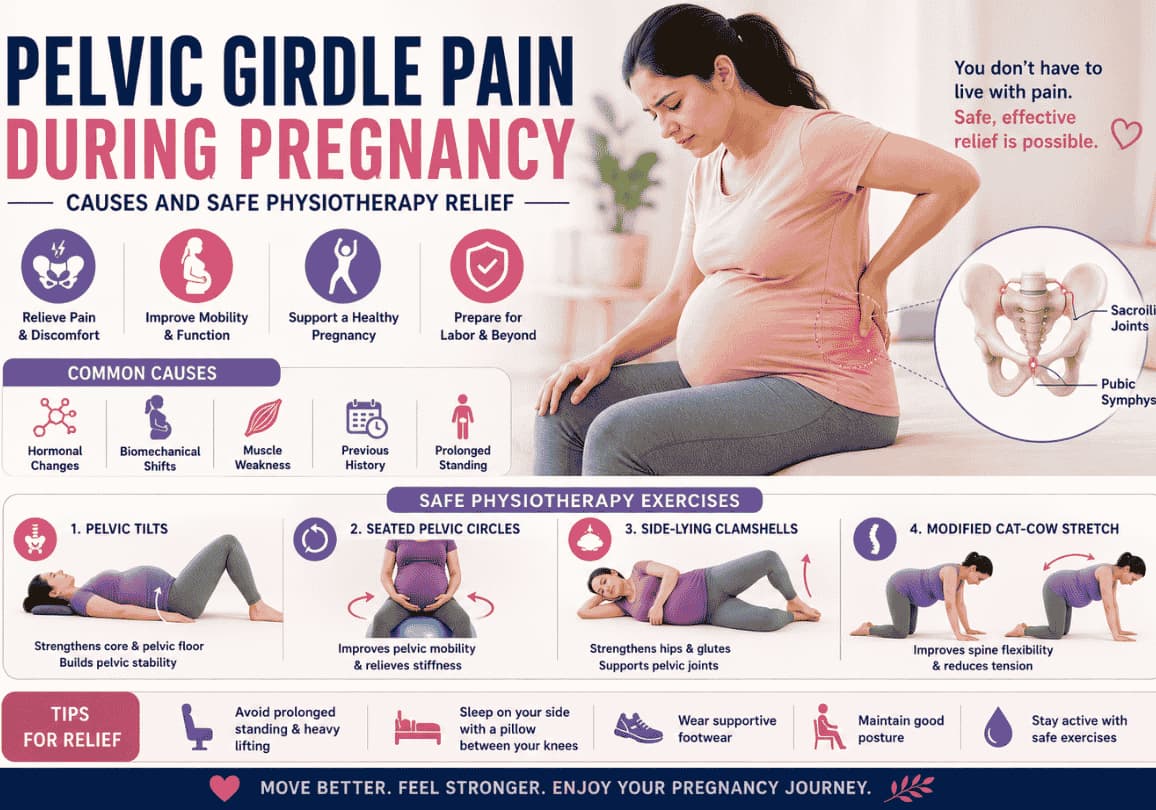
Pregnancy brings countless moments of joy and anticipation, but it can also introduce unexpected physical challenges. For many expectant mothers, pelvic girdle pain during pregnancy (often abbreviated as PGP) becomes a significant hurdle. This common musculoskeletal issue affects mobility, sleep, and daily comfort, yet it is frequently misunderstood or dismissed as “just part of pregnancy.”
At Healyos, we believe every woman deserves to experience pregnancy with confidence and minimal discomfort. Understanding the causes of pelvic girdle pain and exploring safe physiotherapy relief can make a profound difference. With targeted, evidence-based care, most women find substantial relief and can continue to stay active throughout their pregnancy journey.
Pelvic girdle pain refers to discomfort or pain arising from the joints and ligaments of the pelvic girdle—the sacroiliac joints at the back of the pelvis and the pubic symphysis at the front. Unlike general lower back pain, PGP specifically involves the pelvic region and can radiate to the hips, groin, buttocks, or thighs.
It typically develops in the second or third trimester but can appear earlier. Studies show that pelvic girdle pain during pregnancy affects approximately 20–45% of women, depending on the population and diagnostic criteria. For some, the pain is mild and manageable; for others, it significantly limits walking, climbing stairs, or even turning in bed.
Several interconnected factors contribute to PGP:
Recognising these causes is the first step toward effective management.
Typical signs of PGP in pregnancy include:
If pain radiates into the thighs or interferes with daily function, it is important to seek professional guidance rather than simply “waiting it out.”
The good news? Physiotherapy for pelvic girdle pain is safe, effective, and recommended throughout pregnancy. Specialised prenatal physiotherapy focuses on restoring pelvic stability, improving muscle coordination, and reducing inflammation without medication or invasive procedures.
At Healyos, our women’s health physiotherapists conduct a thorough assessment to create a personalised plan tailored to each stage of pregnancy. Treatment may include:
Research consistently supports physiotherapy as a first-line intervention for PGP during pregnancy, helping women maintain mobility and prepare for labour and postpartum recovery.
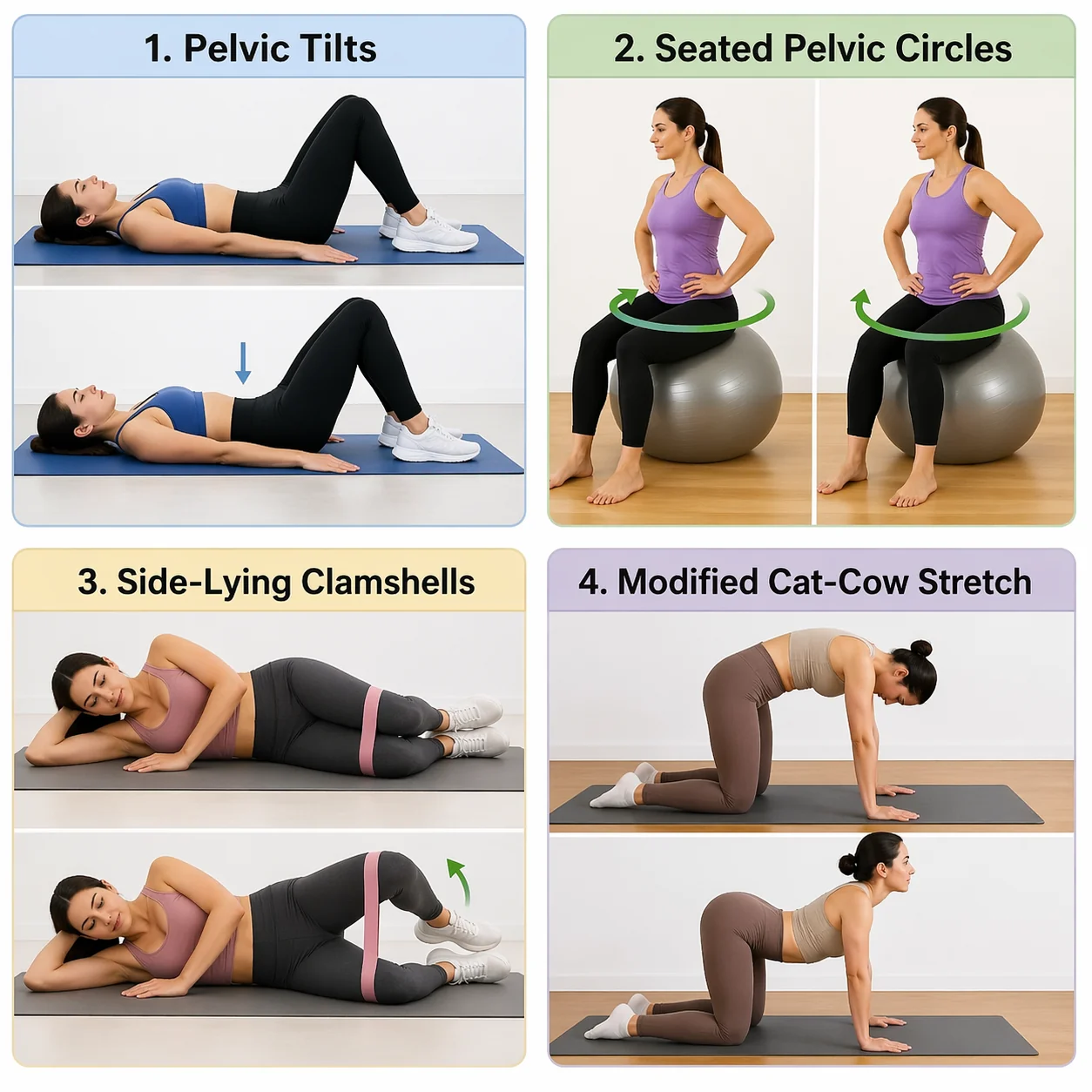
Here are four gentle, pregnancy-safe exercises you can try at home (always consult your physiotherapist first to ensure they suit your individual needs):
Beyond exercises, simple changes help:
Contact a physiotherapist promptly if pain limits your daily activities, affects sleep, or is accompanied by swelling, numbness, or bowel/bladder changes. Early intervention often leads to faster relief and prevents chronic issues.
Q1: Is pelvic girdle pain normal during pregnancy?
Yes, it is a common and recognised condition, though it should never be ignored. With proper physiotherapy, most women can stay active and comfortable.
Q2: Can I continue exercising if I have PGP?
Absolutely, modified, targeted exercises are actually recommended. A prenatal physiotherapist will guide you on safe movements to avoid aggravating symptoms.
Q3: Will pelvic girdle pain go away after birth?
For the majority of women, symptoms improve significantly within weeks of delivery as hormones stabilise and joint laxity decreases. Postpartum physiotherapy can accelerate recovery.
Q4: Are pelvic support belts safe?
Yes, when fitted correctly by a physiotherapist. They provide temporary stability and are particularly helpful during walking or standing for long periods.
Q5: How soon can I start physiotherapy for pelvic girdle pain?
As soon as symptoms appear. There is no need to wait – physiotherapy is safe at any stage of pregnancy.
If you are experiencing pelvic girdle pain during pregnancy, our team at Healyos is here to help. Discover more about pregnancy physiotherapy benefits or book an online consultation through our online physiotherapy services.