
Partial knee replacement (PKR) replaces only the damaged compartment of the knee rather than the entire joint. For many patients, this means less pain after surgery, a smaller incision, and a faster recovery compared with a total knee replacement.
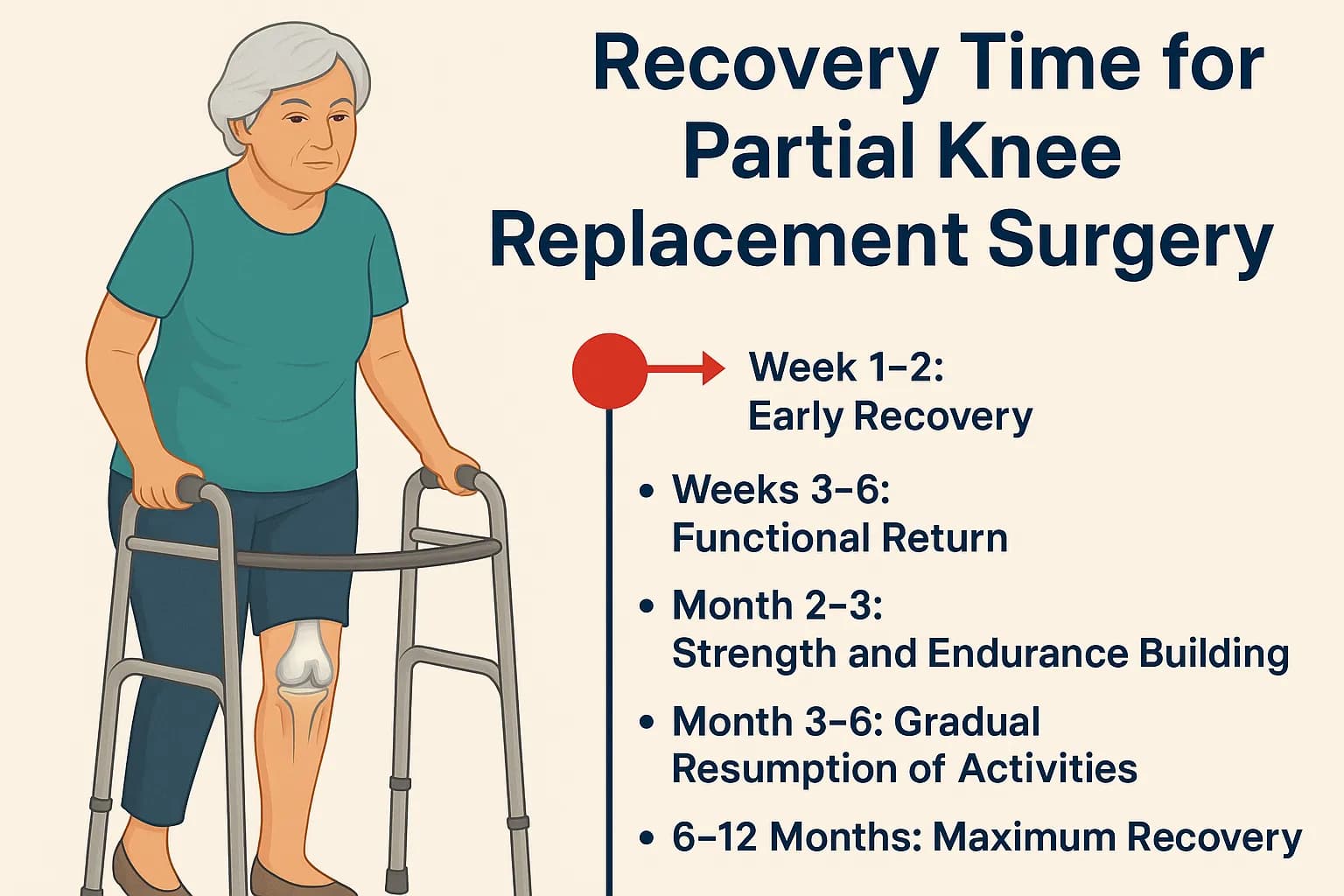
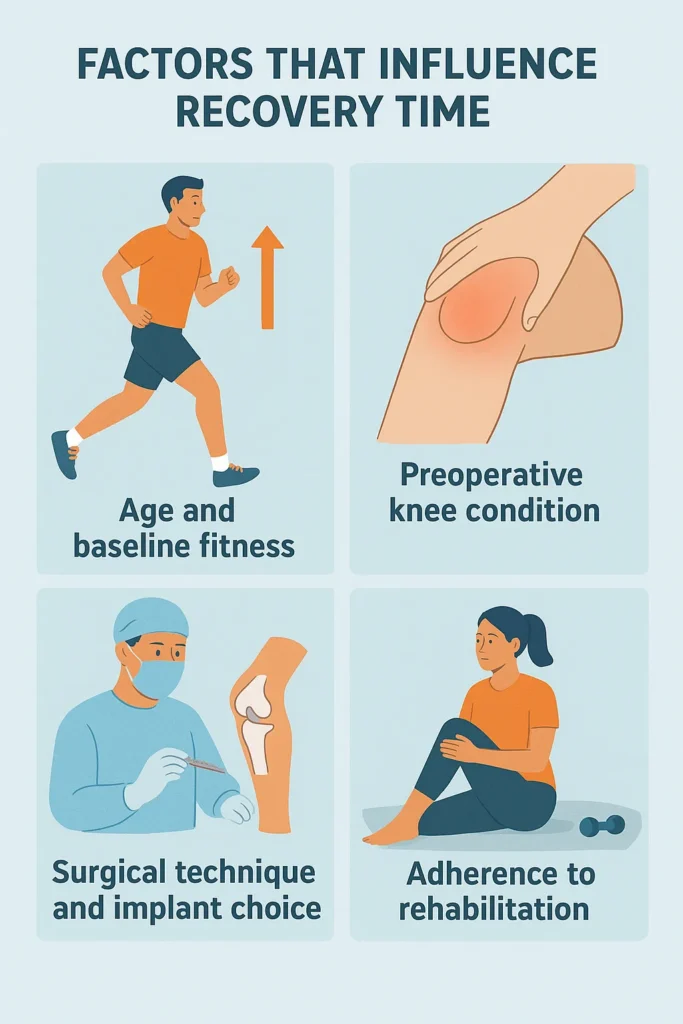
If you’re wondering what is normal recovery time for partial knee replacement or asking what is the recovery time for a partial knee replacement, this guide explains the typical partial knee replacement recovery timeline, what to expect in the days and weeks after surgery, factors that influence healing, and practical steps you can take at home and in PKR physiotherapy to speed safe recovery. If you or a loved one is planning surgery, this piece will help set realistic expectations and outline recovery milestones.
A partial knee replacement (also called unicompartmental knee arthroplasty) targets just one worn compartment – usually the medial (inner) or lateral (outer) part of the knee. The procedure preserves healthy bone, ligaments, and cartilage in the remaining knee. Patients typically experience less blood loss and a faster return to function than with total knee replacement, but individual outcomes vary.
In the early days after surgery, you will rely on assistance with activities that put pressure on the knee, such as stairs, bathing, and dressing. Pain, swelling, and reduced knee motion are expected but usually improve rapidly with pain control and physiotherapy.
By six weeks, many patients resume most normal daily tasks; returning to high-impact sports typically takes longer or may be discouraged. Emotional adjustments and temporary dependence on caregivers are standard and usually resolve as independence returns.
Physical therapy plays a central role in a successful recovery. Expect incremental milestones: by the first two weeks, patients typically achieve minimal knee extension deficits and can perform short, assisted walks. By three to six weeks, most individuals demonstrate improved quadriceps control, reduced reliance on walking aids, and the ability to perform functional tasks, such as climbing a few steps.
Between two and three months, endurance and strength noticeably improve, allowing for longer walks and a return to more sustained household activities. Ongoing therapy, continued through three to six months, consolidates these gains.
Seek immediate medical advice if you notice: increasing redness or drainage from the wound, sudden worsening pain despite medication, fever over 38°C (100.4°F), calf swelling or sudden shortness of breath (possible clot), or new numbness or loss of movement. Early detection of complications reduces long-term problems.
Rehabilitation Example: Weeks 0-8 Plan
Return to Work and Driving
Return-to-work timelines depend on job demands. Desk-based roles may resume in 2-6 weeks, while physically demanding jobs often require 8-12 weeks or more. Driving is usually permitted when you can perform an emergency stop safely and are off opioid pain medicines – commonly around 2-6 weeks, but confirm with your surgeon.
At Healyos, we provide tailored post-operative physiotherapy and home-based rehab plans to optimize partial knee replacement recovery time. Our therapists focus on early mobilization, progressive strengthening, gait training, and practical strategies for returning to activity. We also monitor progress and adapt programs to your goals and any limitations, helping you regain independence more quickly and safely.
Partial knee replacement recovery typically offers a faster path back to daily life compared to total knee replacement, with many patients resuming routine activities within six weeks and continuing to make progress for up to a year.
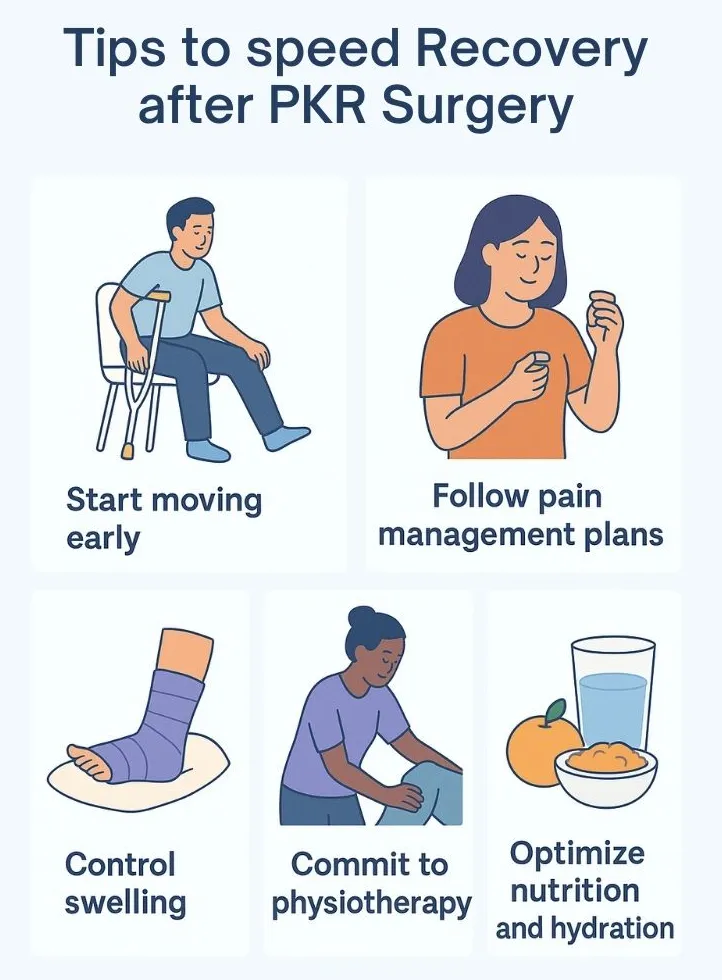
Success depends on early movement, consistent rehabilitation, and attention to managing swelling and pain. Work closely with your surgical and physiotherapy teams to set realistic milestones and return safely to the activities you enjoy, promoting long-term recovery.