

A dislocated shoulder can be intensely painful and incredibly disruptive to your everyday routine, especially when it comes to getting a good night’s sleep. As your shoulder heals, finding a safe and comfortable sleeping position with a dislocated shoulder becomes essential to avoid further injury and promote recovery.
In this blog, we cover everything you need to know about how to sleep with dislocated shoulder pain, including the best sleeping positions for dislocated shoulder, tips for minimizing discomfort at night, and ways to protect your shoulder while you rest.
A shoulder dislocation occurs when the upper arm bone (humerus) pops out of the socket in the shoulder blade (glenoid). Shoulder dislocation causes include trauma, sports injuries, or even sleeping in awkward positions. It damages soft tissues like ligaments, tendons, and sometimes nerves – all of which need rest and proper positioning to heal.
While daytime management is often easier, night-time brings a new challenge: pain and poor posture while lying down can slow recovery, disrupt sleep cycles, and increase the risk of re-injury.
If you’re wondering how to sleep with a dislocated shoulder, start by understanding your body’s natural alignment and respecting your healing limitations.
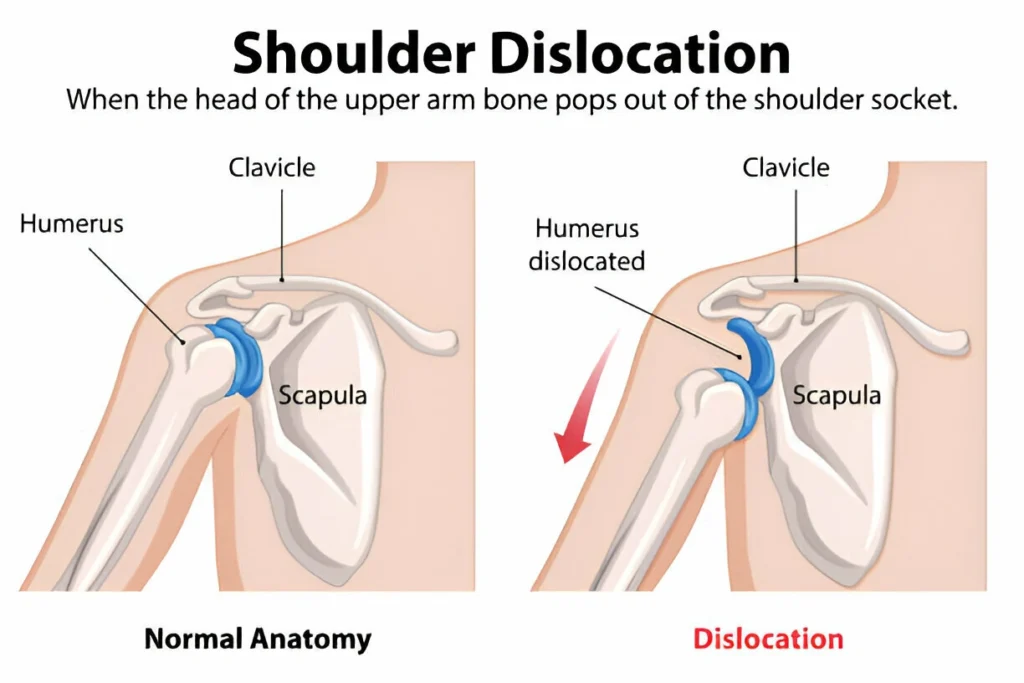
Sleep can be difficult with a dislocated shoulder for several reasons:
That’s why choosing the right sleeping position with a dislocated shoulder is crucial to supporting your rest and recovery.
The ideal sleeping position for dislocated shoulder recovery minimizes strain while supporting the joint. Here are the safest and most comfortable options:
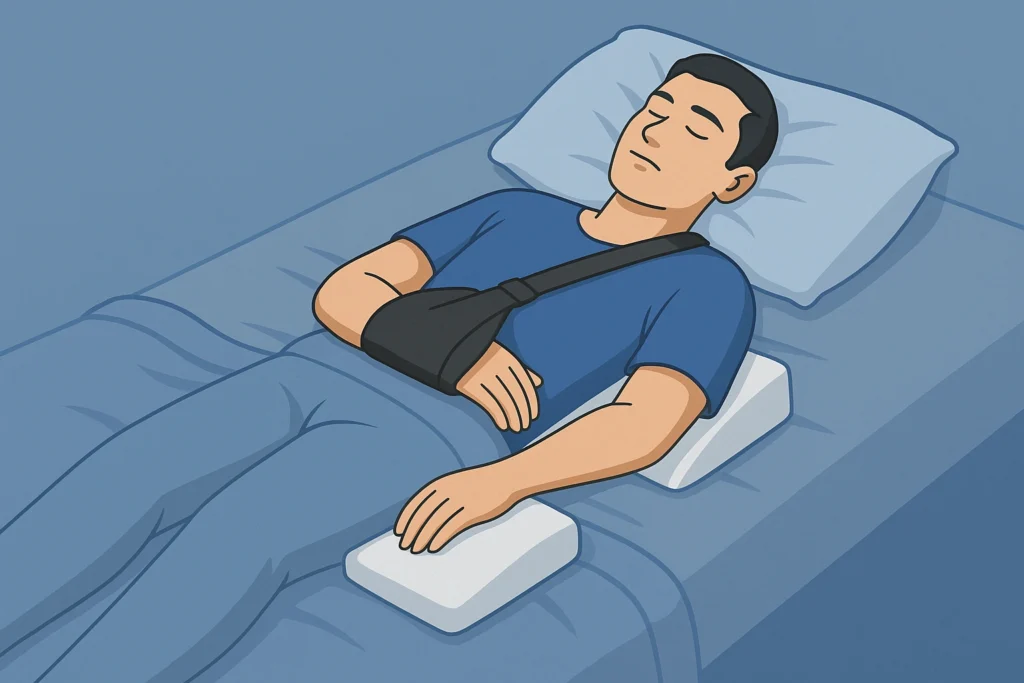
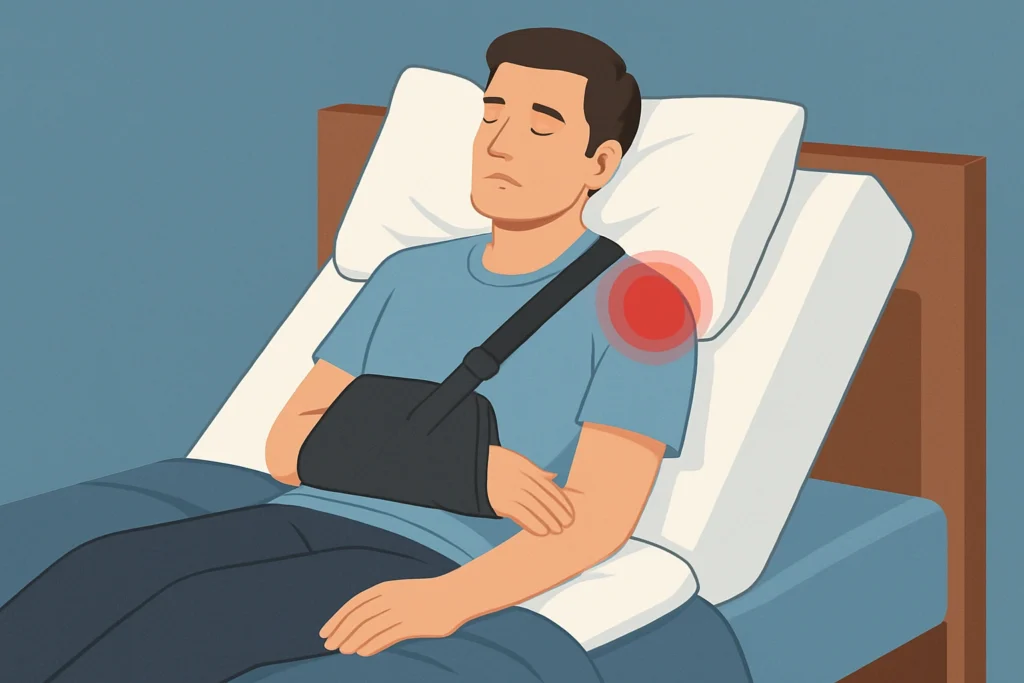
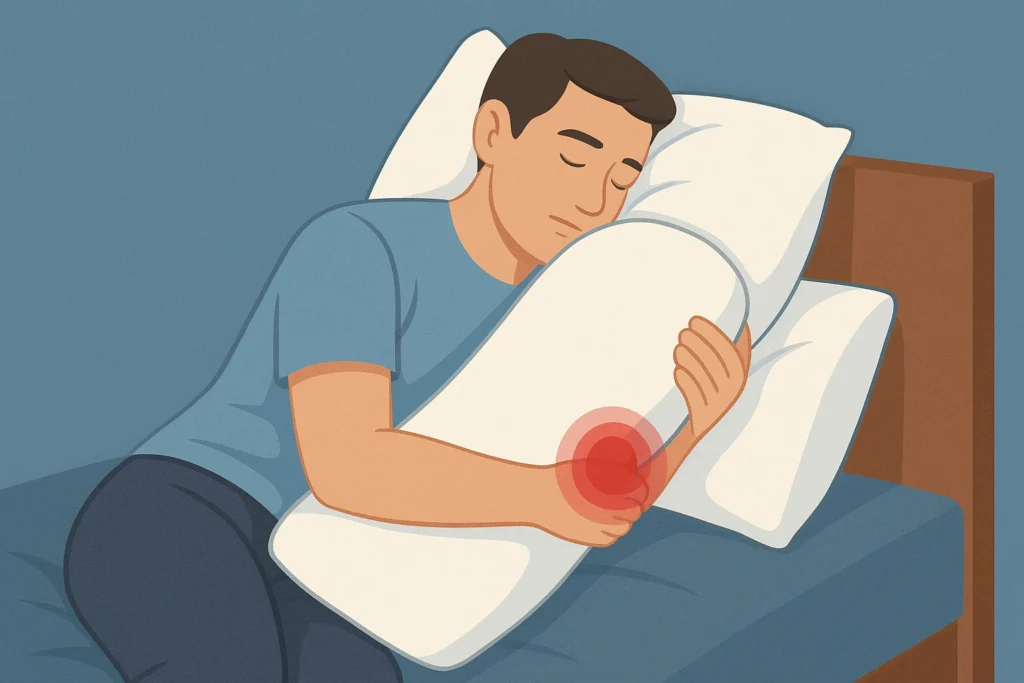
Avoid sleeping on your stomach or the injured side—these positions put unnecessary strain on the shoulder and can interfere with healing.
Here are some actionable tips for anyone trying to figure out how to sleep after dislocated shoulder injury:
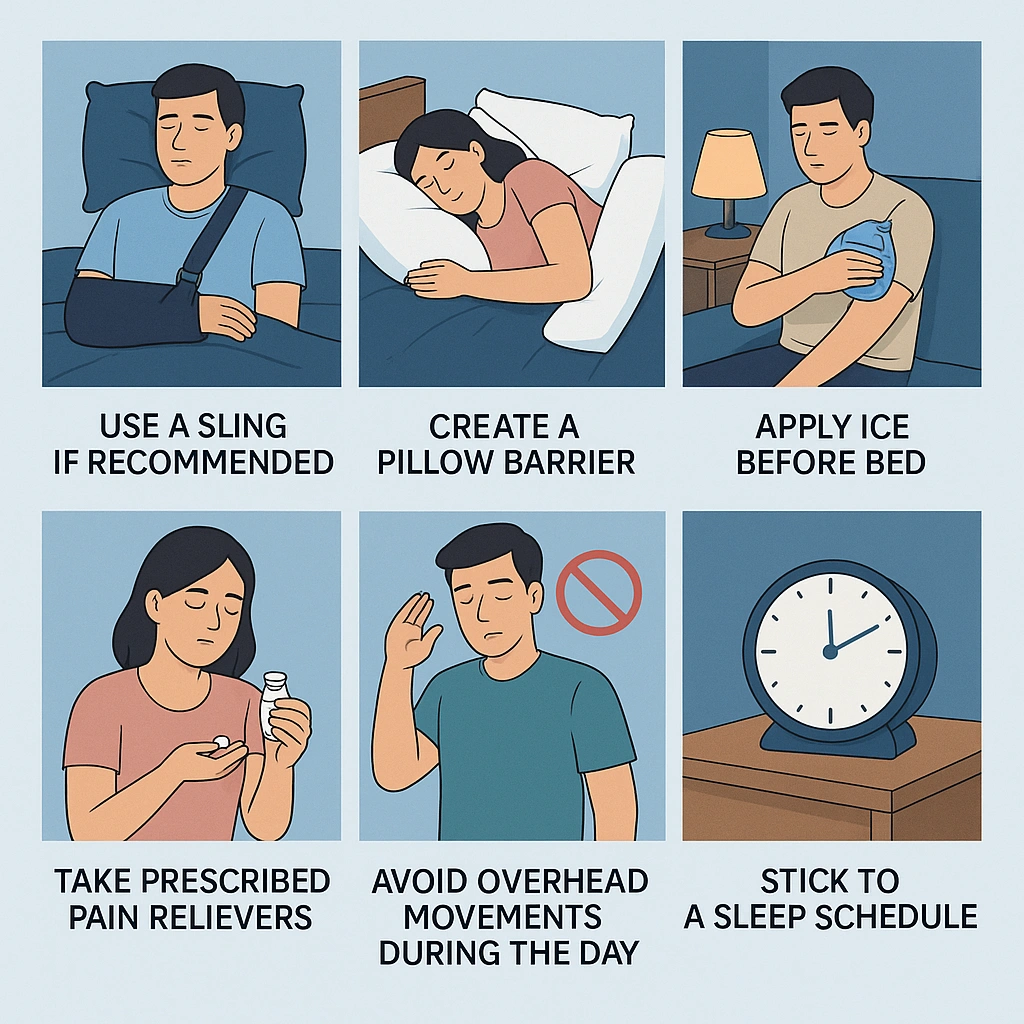
Sleeping after a shoulder dislocation should never worsen your condition. Here are some red flags to keep in mind:
If these issues persist, talk to a physiotherapist or orthopedic specialist. Adjusting your sleep position or using additional support can make a significant difference.
Yes, it can. Although rare, some individuals may re-dislocate their shoulder in their sleep, especially if they’ve had previous injuries or the joint is unstable. This usually happens when rolling onto the injured side or sleeping with the arm in an awkward overhead position.
That’s why consistent use of supportive sleeping positions and a sling (if advised) is critical.
If you suspect a shoulder dislocation while sleeping, don’t attempt to pop it back into place yourself. Seek immediate medical help.
In the first few weeks, sleeping comfortably may be difficult. But as healing progresses, mobility improves, and pain lessens. Here’s a general guide:
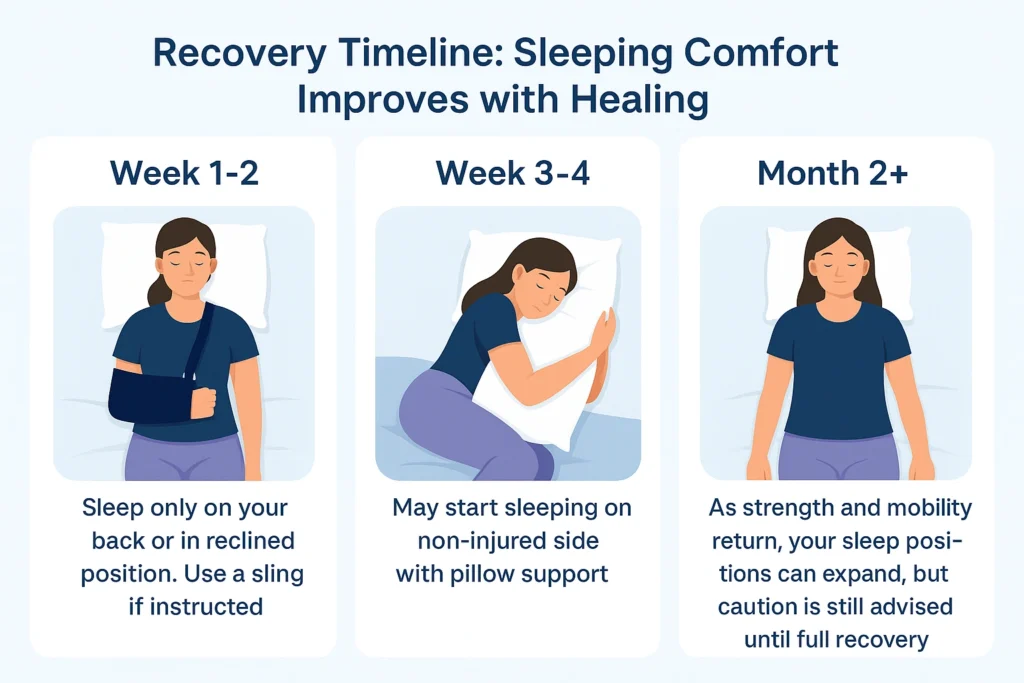
Consult your doctor before making changes to your sleeping setup.
At Healyos, we understand that recovery doesn’t stop when the sun sets. Our expert physiotherapists help patients navigate not just daytime mobility, but also nighttime comfort and safety.
From helping you find the best sleeping position for dislocated shoulder recovery to teaching safe movements and stretches, we offer comprehensive care tailored to your needs.
If you’re struggling with sleep due to a shoulder injury, let our team guide you toward restful, healing nights.
Finding the right sleeping position with a dislocated shoulder is essential to healing. Sleep supports tissue repair, reduces inflammation, and restores energy. Whether you’re adjusting your bed, using pillows strategically, or modifying your sleep routine, these changes can dramatically improve your comfort.
Remember, your recovery starts with rest. And with the right position and support, sleep can become part of your treatment plan.