

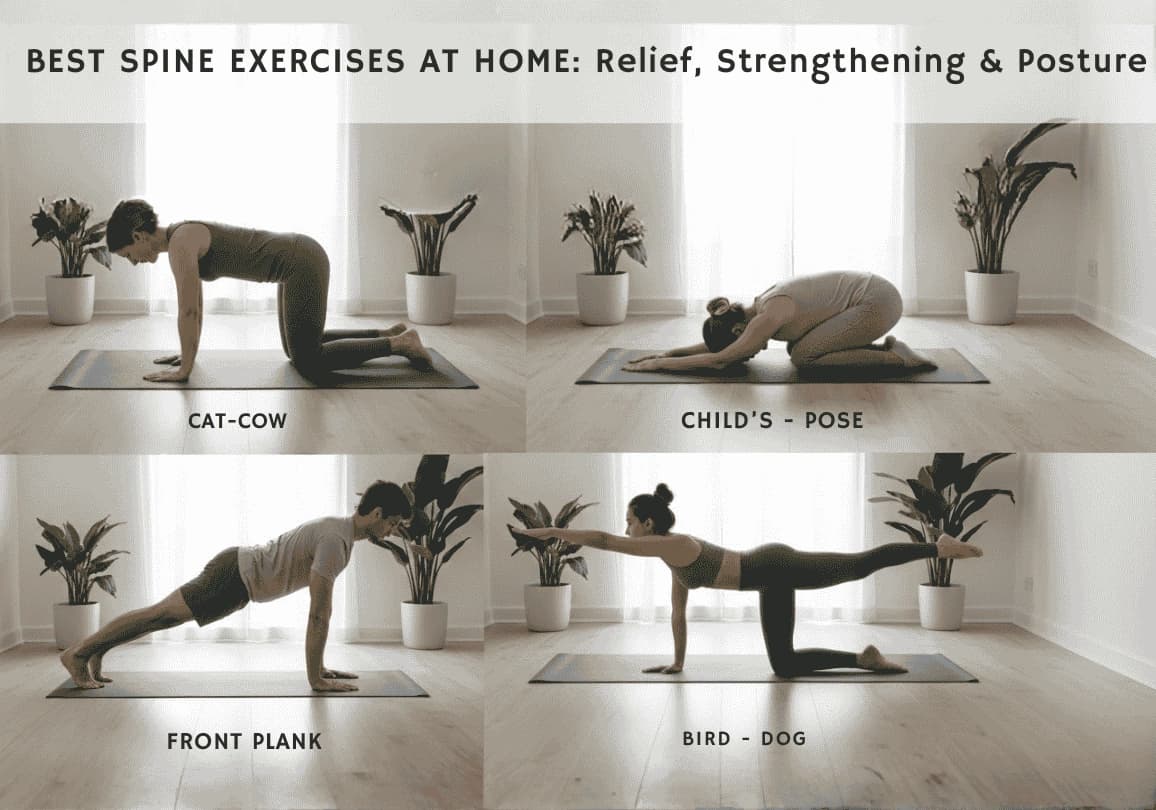
If you prefer practical routines, this guide shows simple, effective spine exercises at home that ease pain and improve posture. Daily stretching and strengthening reduce stiffness, build support around the spine, and help you move with less discomfort. These exercises are designed for most adults and can be adapted for different fitness levels.
Start gently and focus on consistent practice rather than intensity. Use this guide to learn spine stretching exercises and spine strengthening exercises that complement each other, and to understand when to progress, modify, or seek professional help. Follow clear cues for technique and safety to get steady improvements without overdoing it. Practice for at least 10 minutes daily and track your progress weekly to stay motivated.
Understanding the spine and common pain patterns helps you choose the right moves. The spine relies on mobile segments and strong supporting muscles to distribute load. Weakness or stiffness in the core, glutes, and upper back increases strain on spinal discs and joints, leading to aches and compensations. A balanced program targets mobility, core and back strength, and posture control to reduce symptoms and improve function.
Spine pain affects daily life by limiting bending, lifting, sitting, and standing. Chronic stiffness reduces activity tolerance and may disturb sleep. Addressing spinal health helps people return to work, chores, and exercise with less discomfort and lower risk of flare-ups.
Below are practical spine stretching exercises and spine strengthening exercises you can do at home. Each entry includes why it helps, how to perform it, and a simple dosage guideline.
How to apply these exercises safely
How to apply these exercises safely: begin with mobility work before strength sessions, use pain-free ranges, and progress in small steps. Aim for two to three short strength sessions per week and daily mobility. Track soreness and reduce load if pain increases.
Seek medical review if you experience numbness, progressive weakness, loss of bladder or bowel control, or severe worsening pain. These symptoms require urgent assessment.
Sample daily routine: morning mobility (Cat-Cow, child’s pose, thoracic rotation), mid-day posture drills (chin tucks, wall angels), and evening strength (plank, bird dog, bridge). Spend 10-20 minutes on the sequence, gradually building to 20 minutes daily.
Tracking progress: Use simple measures – minutes of pain-free movement, number of plank seconds, and daily step counts – to monitor improvement. Aim for gradual weekly gains (for example, adding 10-20% more hold time or five extra repetitions) rather than sudden jumps.
Small, consistent improvements compound over months, leading to better posture and less pain.
Desk worker modifications: Many people develop a hunched upper back from prolonged sitting. Set hourly reminders to stand and perform chin tucks, wall angels, or thoracic rotations for one to two minutes to interrupt rounding.
Ensure your monitor is at eye level, use a lumbar roll if needed, and practise a brief mobility sequence upon rising from your chair to reset posture and relieve spinal strain.
Breathing and core connection: Efficient breathing supports spinal stability. Practice diaphragmatic breathing – slow inhalation into the belly with gentle core bracing on exhale – during planks and activation drills.
This subtle engagement protects the spine during daily tasks and exercise.
For people with stiff hips, prioritise hip flexor and hamstring stretches before intensive lumbar work. If you have neck-dominant pain, emphasise chin tucks and thoracic extension rather than forward flexion. For postoperative cases, follow your surgeon’s advice and reintroduce movements gradually under physiotherapy supervision.
Healyos can help by delivering personalised spine exercises at home programs that combine manual guidance, progressive strengthening, and ergonomic advice. Our physiotherapists tailor programs to your diagnosis and monitor progress to keep you safe and improving.
Start with small daily sessions and gradually build consistency. Practising a balanced routine of mobility and strength is the safest route; use sensible progressions to avoid overload. A focused exercise for spine pain approach combines targeted stretches, activation drills and progressive strength that reduces symptoms and improves function. Performing spine exercises at home regularly reinforces posture and makes daily tasks easier. If pain increases, pause and consult a physiotherapist for tailored modifications. Track simple metrics such as pain-free minutes and plank hold time, and adjust training week by week to ensure steady, safe improvement over the long term, and celebrate small weekly wins during recovery as well.