

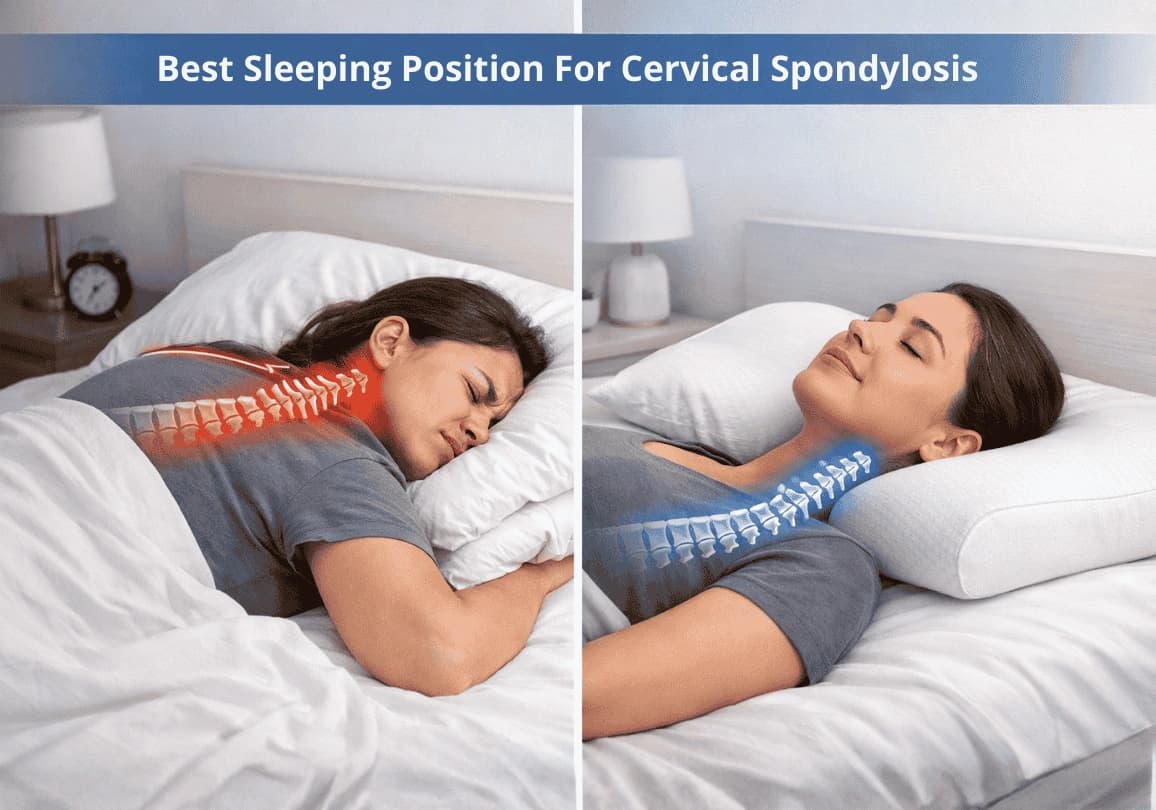
If you’re dealing with neck pain, stiffness, or radiating arm discomfort due to cervical spondylosis, the best sleeping position for cervical spondylosis is on your back with a cervical pillow that supports the natural curve of your neck — or on your side with your spine in a neutral alignment. Poor sleep posture can worsen symptoms significantly, making it one of the most important yet overlooked aspects of managing this condition.
At Healyos Physiotherapy, we work with patients across Pune — both in our clinic and through home visit services — and sleep posture is one of the first things we address during cervical spondylosis treatment.
Cervical spondylosis is age-related wear and tear of the cervical spine (neck region), involving disc degeneration, bone spurs, and narrowing of spaces between vertebrae. It commonly causes neck pain, stiffness, headaches, and sometimes tingling or numbness in the arms.
During sleep, your spine goes into recovery mode. If your neck is poorly positioned for 6–8 hours every night, it undoes much of the progress made through physiotherapy, medication, or exercises. Choosing the right sleeping position for cervical spondylosis isn’t just about comfort — it’s a part of your treatment.
Sleeping on your back is widely considered the best position to sleep with cervical spondylosis. It allows your neck and spine to rest in a neutral position, distributing weight evenly and reducing pressure on the cervical discs.
Tips for back sleeping:
Side sleeping is the second-best spondylosis sleeping position, provided you maintain proper spinal alignment.
Tips for side sleeping:
Some sleeping positions can aggravate cervical spondylosis symptoms and should be avoided:
Pillow selection is just as important as your sleep position. Here’s what to look for:
The ideal pillow keeps your cervical spine in the same neutral alignment you’d have standing upright.
Many of our patients in Pune have both cervical and lumbar spondylosis, so it’s worth addressing both. The sleeping position for lumbar spondylosis follows similar principles — back sleeping with a pillow under the knees is ideal, as it reduces lumbar disc pressure. Side sleeping with a pillow between the knees is also effective for lower back support.
The key difference is pillow placement: for cervical spondylosis, the focus is neck support; for lumbar spondylosis, it shifts to the lower back and hip alignment.
Good sleep positioning works best when combined with other healthy habits:
Managing cervical spondylosis goes beyond sleeping positions. At Healyos Physiotherapy, our trained physiotherapists in Pune offer:
Whether you visit our clinic or book a home session, our goal is to help you manage pain effectively and improve your quality of life.
Q1. How many pillows should I use if I have cervical spondylosis?
Ideally, just one well-designed cervical pillow. Using multiple pillows tends to push the neck into excessive forward flexion, which increases pressure on the cervical discs and can worsen symptoms overnight.
Q2. Can my mattress make cervical spondylosis worse?
Yes. A mattress that is too soft allows your body to sink unevenly, forcing your neck and spine out of alignment. A medium-firm mattress is generally the best choice for people with cervical or lumbar spondylosis.
Q3. Is it okay to sleep without a pillow if I have cervical spondylosis?
Not usually. Sleeping without a pillow on your back leaves the neck unsupported, which can strain muscles and joints. However, stomach sleepers are sometimes advised to use a very flat pillow or none at all — though switching away from stomach sleeping entirely is the better solution.
Q4. How long does it take to notice improvement after changing sleep positions?
Many patients notice reduced morning stiffness and neck pain within 1–2 weeks of consistently sleeping in a better position and using a proper pillow. Combined with physiotherapy, improvements can be felt even sooner.
Q5. Can physiotherapy help if my sleep posture has already caused nerve pain?
Absolutely. If cervical spondylosis has progressed to the point of causing nerve compression or radiating arm pain, physiotherapy — including manual therapy, specific exercises, and postural correction — is one of the most effective non-surgical treatments available. Our team at Healyos Physiotherapy in Pune can assess your condition and design a recovery plan suited to your needs.