Bell’s Palsy Causes and Early Symptoms: Signs You Should Know
Bell’s palsy is a sudden, temporary weakness or paralysis of the facial muscles, typically affecting one side of the face. Understanding the bell’s palsy causes and recognizing bell’s palsy early symptoms can help you seek prompt medical attention and improve your chances of complete recovery. While the exact cause remains unclear in many cases, viral infections and inflammation of the facial nerve are often suspected culprits. This comprehensive guide explores what triggers this condition, how to identify warning signs, and why early intervention matters for optimal outcomes.
What Is Bell’s Palsy?
Bell’s palsy is a form of temporary facial paralysis resulting from damage or inflammation to the facial nerve (cranial nerve VII). This nerve controls the muscles responsible for facial expressions, eyelid movement, and even some taste sensations. When the nerve becomes inflamed or compressed, it disrupts the signals from your brain to your facial muscles, leading to sudden weakness or drooping on one side of your face.
The condition typically develops rapidly, with symptoms appearing over 48 to 72 hours. Most people with Bell’s palsy experience significant improvement within weeks to months, though some may have lingering effects.
Bell’s Palsy Causes: What Triggers This Condition?
While the precise causes of Bell’s palsy remain incompletely understood, researchers have identified several factors that may contribute to its development. The condition is bell’s palsy caused by inflammation and swelling of the facial nerve, but what triggers this inflammation is often the key question.
Viral Infections
The most widely accepted theory suggests that Bell’s palsy is caused by viral infections. Several viruses have been linked to the condition:
Herpes simplex virus (HSV-1): The virus responsible for cold sores is the most commonly suspected culprit
Varicella-zoster virus: The virus that causes chickenpox and shingles
Epstein-Barr virus: Known for causing mononucleosis
Cytomegalovirus: A common virus in the herpes family
Adenovirus: Associated with respiratory infections
Rubella: The virus that causes German measles
Mumps virus: Though less common due to vaccination
These viral infections may cause the facial nerve to swell and become inflamed, leading to compression within the narrow bony canal through which it passes.
Other Potential Causes of Bells Palsy
Beyond viral infections, several other factors have been identified as potential causes for bells palsy:
Immune System Response: An autoimmune reaction where your body mistakenly attacks the facial nerve tissue may contribute to inflammation.
Bacterial Infections: Lyme disease, caused by tick bites, is a known bacterial infection that can lead to facial nerve paralysis.
Trauma or Injury: Physical trauma to the head or face, including skull fractures or facial injuries, can damage the facial nerve.
Tumors or Growths: Rarely, tumors pressing on the facial nerve can produce symptoms similar to Bell’s palsy.
Chronic Middle Ear Infections: Persistent ear infections can potentially spread to the facial nerve.
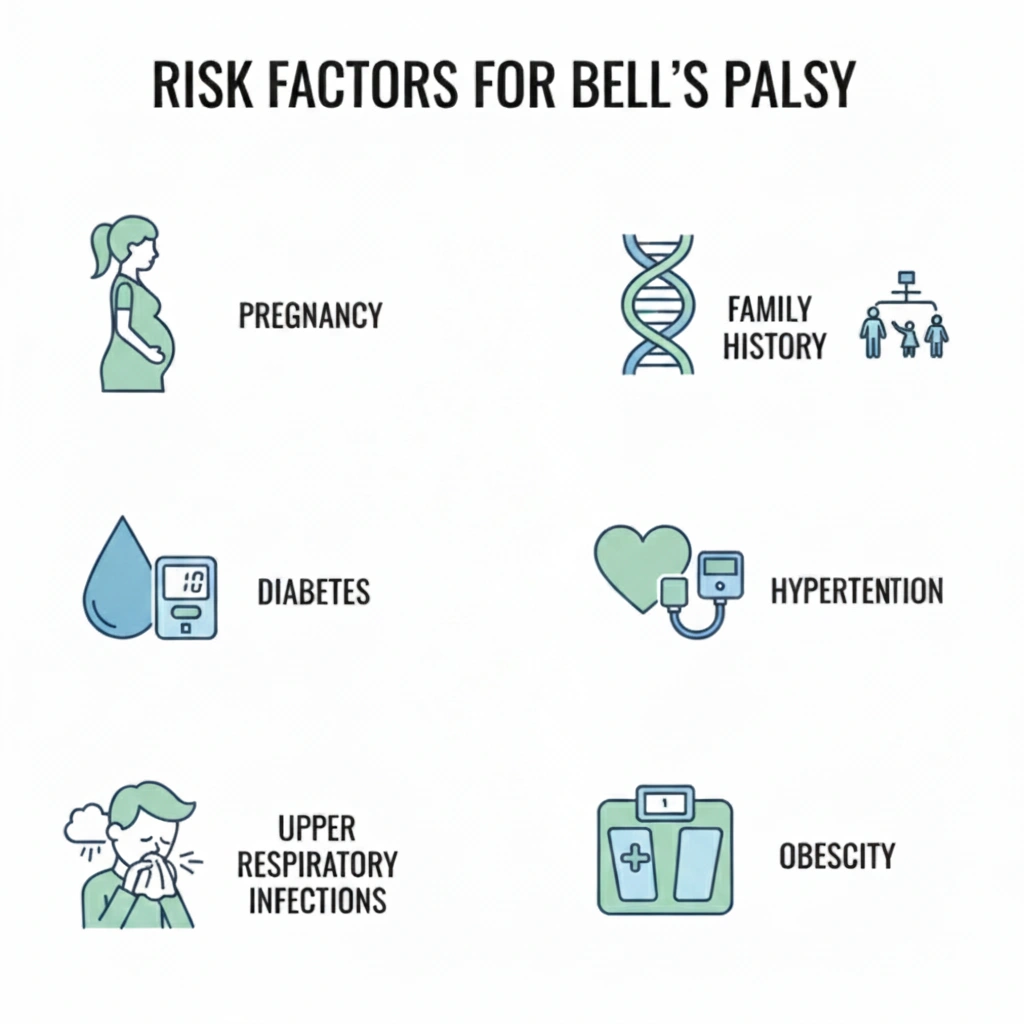
Causes of Bell’s Palsy in Adults: Risk Factors
While anyone can develop Bell’s palsy, certain factors increase susceptibility, particularly the causes of bell’s palsy in adults:
Pregnancy: Women in their third trimester or during the first week postpartum have a higher risk
Diabetes: People with diabetes are more susceptible to nerve damage and inflammation
Upper respiratory infections: Recent colds or flu-like illnesses may precede Bell’s palsy
Family history: Genetic predisposition may play a role in some cases
Hypertension: High blood pressure may increase risk
Obesity: Higher body weight has been associated with increased incidence
Bell’s Palsy Symptoms: Recognizing the Warning Signs
Understanding the bell’s palsy signs and symptoms is crucial for early detection and treatment. The condition typically affects only one side of the face and develops suddenly.
Bell’s Palsy Early Symptoms
The bell’s palsy early symptoms may appear suddenly or develop over several hours to days. Early warning signs include:
Mild facial weakness that progressively worsens
Pain or discomfort around the jaw or behind the ear on the affected side
Increased sensitivity to sound (hyperacusis) in one ear
Headache or general feeling of being unwell
Changes in taste perception on the front two-thirds of the tongue
Decreased tear and saliva production on the affected side
Complete Signs and Symptoms of Bells Palsy
As the condition progresses, the signs and symptoms of bells palsy become more pronounced and may include:
Facial Muscle Weakness or Paralysis
Inability to close one eye completely
Drooping of the eyelid and corner of the mouth
Difficulty making facial expressions (smiling, frowning, raising eyebrows)
Loss of the nasolabial fold (the crease running from nose to mouth)
Eye-Related Symptoms
Excessive tearing or dry eye on the affected side
Inability to blink normally
Eye irritation or redness
Difficulty keeping the eye closed during sleep
Oral and Eating Difficulties
Drooling from one side of the mouth
Difficulty eating or drinking
Food getting trapped between cheek and gums
Speech changes, particularly with certain consonants
Sensory Changes
Loss of taste on the front portion of the tongue
Pain around the ear
Sensitivity to loud sounds on the affected side
Facial numbness or tingling sensation
When to Seek Medical Attention
Recognizing bell’s palsy symptoms early and seeking prompt medical care is essential. You should contact a healthcare provider immediately if you experience:
Sudden onset of facial weakness or paralysis
Drooping on one side of your face
Difficulty closing one eye or blinking
Any symptoms that could indicate a stroke (facial weakness accompanied by arm weakness, speech difficulties, or sudden confusion)
Important: Facial paralysis can also be a sign of a stroke or other serious conditions. Emergency evaluation is crucial to rule out life-threatening causes and ensure appropriate treatment.
Diagnosis and Medical Evaluation
When you present with bell’s palsy signs and symptoms, your healthcare provider will perform a comprehensive evaluation including:
Physical examination: Assessment of facial muscle strength and function
Neurological examination: Testing cranial nerve function
Medical history review: Discussion of recent illnesses or potential exposure to viruses
Imaging studies: MRI or CT scans may be ordered to rule out other causes
Blood tests: To check for viral infections, Lyme disease, or diabetes
Electromyography (EMG): In some cases, to assess nerve and muscle function
Treatment and Management Options
While many cases of Bell’s palsy resolve spontaneously, early treatment can improve outcomes:
Medications
Corticosteroids (like prednisone) to reduce inflammation
Antiviral medications if viral infection is suspected
Eye drops or ointments to prevent corneal damage
Physical Therapy
Facial exercises to maintain muscle tone
Massage techniques to stimulate the facial nerve
Neuromuscular retraining exercises
Eye Protection
Artificial tears during the day
Eye ointment at night
Eye patches or moisture chambers
Protective eyewear
Prognosis and Recovery
Most people with Bell’s palsy begin to show improvement within two weeks, with complete recovery occurring in 70-80% of cases within three to six months. Factors affecting recovery include:
Severity of initial paralysis
Age of the patient
Presence of complete versus partial paralysis
Timing of treatment initiation
Underlying health conditions
Key Takeaways
Bell’s palsy is a temporary facial paralysis caused by inflammation of the facial nerve, often linked to viral infections
The causes of bells palsy include viral infections (particularly herpes simplex virus), immune responses, and inflammatory conditions
Causes of bell’s palsy in adults are influenced by risk factors like pregnancy, diabetes, and recent respiratory infections
Bell’s palsy early symptoms include mild facial weakness, pain behind the ear, and changes in taste
Complete bell’s palsy symptoms involve facial drooping, inability to close one eye, drooling, and difficulty with facial expressions
Recognizing the signs and symptoms of bells palsy early and seeking immediate medical attention improves treatment outcomes
Most people recover completely within 3-6 months with appropriate treatment
Emergency evaluation is essential to rule out stroke or other serious conditions
Treatment typically includes corticosteroids, eye protection, and physical therapy
Causes for bells palsy vary, but prompt diagnosis and treatment significantly enhance recovery prospects
Healyos: How We Help
At Healyos, we offer expert physiotherapy for Bell’s palsy recovery and facial nerve rehabilitation. Our therapists use evidence-based exercises, gentle massage, and neuromuscular retraining to restore muscle function and facial symmetry. With personalized home programs and continuous progress tracking, we help you regain control, confidence, and a natural smile through a comprehensive recovery plan.