 +919325609388

 +919325609388
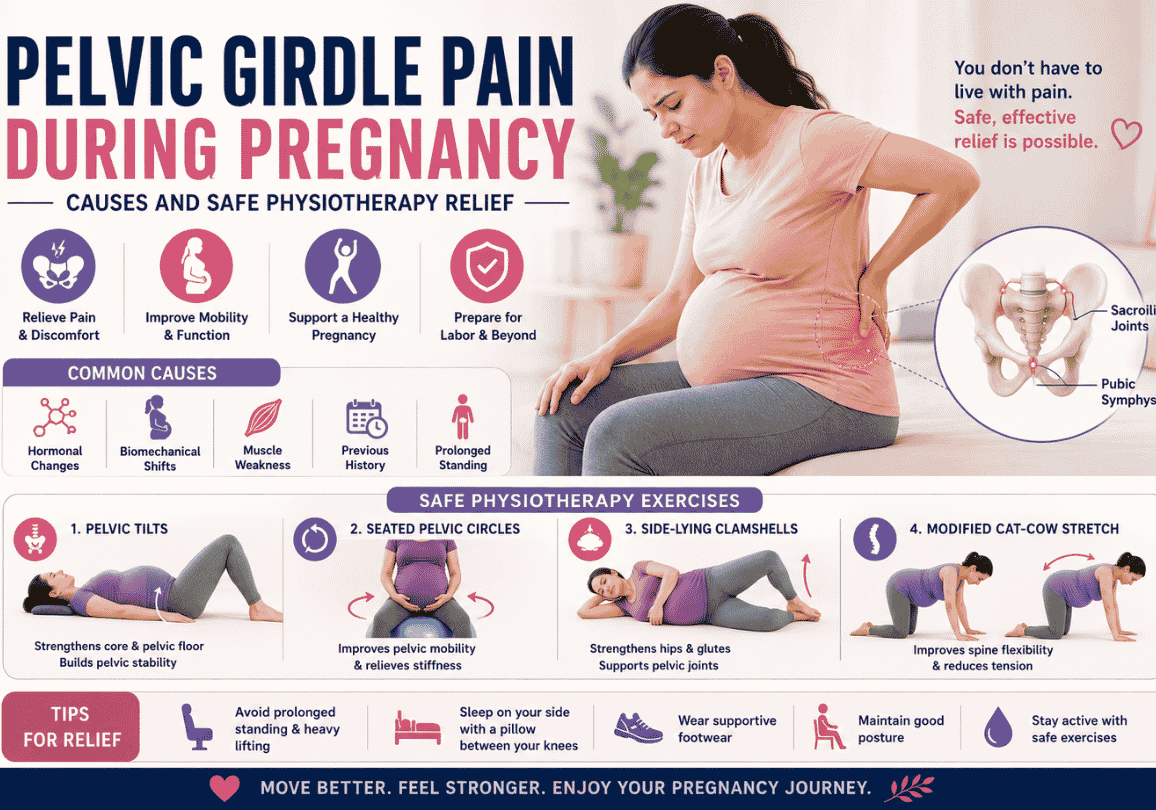
Pelvic Girdle Pain During Pregnancy: Causes and Safe Physiotherapy Relief
Pregnancy brings countless moments of joy and anticipation, but it can also introduce unexpected physical challenges. For many expectant mothers, pelvic girdle pain during pregnancy (often abbreviated as PGP) becomes a significant hurdle. This common musculoskeletal issue affects mobility, sleep, and daily comfort, yet it is frequently misunderstood or dismissed as “just part of pregnancy.”
At Healyos, we believe every woman deserves to experience pregnancy with confidence and minimal discomfort. Understanding the causes of pelvic girdle pain and exploring safe physiotherapy relief can make a profound difference. With targeted, evidence-based care, most women find substantial relief and can continue to stay active throughout their pregnancy journey.
What Is Pelvic Girdle Pain?
Pelvic girdle pain refers to discomfort or pain arising from the joints and ligaments of the pelvic girdle—the sacroiliac joints at the back of the pelvis and the pubic symphysis at the front. Unlike general lower back pain, PGP specifically involves the pelvic region and can radiate to the hips, groin, buttocks, or thighs.
It typically develops in the second or third trimester but can appear earlier. Studies show that pelvic girdle pain during pregnancy affects approximately 20–45% of women, depending on the population and diagnostic criteria. For some, the pain is mild and manageable; for others, it significantly limits walking, climbing stairs, or even turning in bed.
Common Causes of Pelvic Girdle Pain During Pregnancy
Several interconnected factors contribute to PGP:
- Hormonal changes: During pregnancy, the body releases relaxin and other hormones that soften ligaments to prepare the pelvis for childbirth. While essential, this increased laxity can cause the pelvic joints to move unevenly, leading to instability and inflammation.
- Biomechanical shifts: As the baby grows, the centre of gravity shifts forward, increasing stress on the lower back and pelvis. Postural changes, such as an exaggerated lumbar curve, further strain the sacroiliac joints and pubic symphysis.
- Muscle imbalances and weakness: The growing uterus places extra demand on the core, pelvic floor, and gluteal muscles. If these muscles are underactive or fatigued, they fail to provide adequate support to the unstable pelvic joints.
- Previous history: Women with a prior episode of pelvic girdle pain, lower back pain, or multiple pregnancies face higher risk. Other contributing factors include prolonged standing, asymmetrical movement patterns, or pre-existing joint issues.
Recognising these causes is the first step toward effective management.
Recognising the Symptoms
Typical signs of PGP in pregnancy include:
- Sharp or aching pain over the pubic bone, lower back, or buttocks.
- Pain that worsens with weight-bearing activities like walking, standing on one leg, or climbing stairs.
- Discomfort when turning in bed, getting in or out of a car, or spreading the legs (for example, during dressing).
- A clicking, grinding, or “catching” sensation in the pelvic joints.
If pain radiates into the thighs or interferes with daily function, it is important to seek professional guidance rather than simply “waiting it out.”
Safe Physiotherapy Relief: The Evidence-Based Approach
The good news? Physiotherapy for pelvic girdle pain is safe, effective, and recommended throughout pregnancy. Specialised prenatal physiotherapy focuses on restoring pelvic stability, improving muscle coordination, and reducing inflammation without medication or invasive procedures.
At Healyos, our women’s health physiotherapists conduct a thorough assessment to create a personalised plan tailored to each stage of pregnancy. Treatment may include:
- Pelvic support belts: Worn low on the pelvis, these provide gentle compression and stability during daily activities.
- Manual therapy: Gentle joint mobilisations and soft-tissue techniques to ease muscle tension and improve alignment.
- Targeted exercises: Designed to strengthen the deep core, pelvic floor, and gluteal muscles while maintaining flexibility.
- Postural and ergonomic advice: Practical strategies for sitting, standing, and sleeping that minimise strain.
Research consistently supports physiotherapy as a first-line intervention for PGP during pregnancy, helping women maintain mobility and prepare for labour and postpartum recovery.
Safe and Effective Exercises for Pelvic Girdle Pain
Here are four gentle, pregnancy-safe exercises you can try at home (always consult your physiotherapist first to ensure they suit your individual needs):
- Pelvic Tilts: Lie on your back with knees bent (or sit/stand if lying is uncomfortable). Gently tilt your pelvis to flatten your lower back against the floor or chair. Hold for 5 seconds, then release. Repeat 10–15 times. This activates the deep abdominal and pelvic floor muscles, improving stability.
- Seated Pelvic Circles: Sit on a stability ball or firm chair. Gently circle your hips in small, controlled movements (clockwise then anticlockwise). Perform 5–10 circles each way. This promotes mobility without overloading the joints.
- Side-Lying Clamshells Lie on your side with knees bent. Keeping feet together, lift the top knee while keeping the pelvis stable. Lower slowly. Do 10 repetitions per side. This strengthens the glute medius, a key stabiliser of the pelvis.
- Modified Cat-Cow Stretch: Gently arch and round your back while coordinating with your breath. Move slowly and avoid deep extension. This improves spinal mobility and releases tension.

Additional low-impact activities like swimming or prenatal yoga can complement these exercises. Our dedicated blog on pregnancy exercises at home offers more safe movement options.
Lifestyle Tips and Prevention
Beyond exercises, simple changes help:
- Avoid prolonged standing or asymmetrical positions (e.g., crossing legs).
- Sleep with a pillow between your knees.
- Maintain good posture and use supportive footwear.
- Stay hydrated and practise regular pelvic floor exercises (Kegels).
When to Seek Professional Help
Contact a physiotherapist promptly if pain limits your daily activities, affects sleep, or is accompanied by swelling, numbness, or bowel/bladder changes. Early intervention often leads to faster relief and prevents chronic issues.
Key Takeaways
- Pelvic girdle pain during pregnancy is common but highly manageable with the right approach.
- Hormonal laxity combined with biomechanical changes is the primary cause—early physiotherapy addresses both.
- Safe exercises, pelvic belts, and postural corrections provide effective, drug-free relief.
- Personalised care from a women’s health physiotherapist can significantly improve comfort and mobility.
- Most women experience substantial improvement with consistent management, and symptoms often resolve after delivery.
Frequently Asked Questions (FAQs)
Q1: Is pelvic girdle pain normal during pregnancy?
Yes, it is a common and recognised condition, though it should never be ignored. With proper physiotherapy, most women can stay active and comfortable.
Q2: Can I continue exercising if I have PGP?
Absolutely, modified, targeted exercises are actually recommended. A prenatal physiotherapist will guide you on safe movements to avoid aggravating symptoms.
Q3: Will pelvic girdle pain go away after birth?
For the majority of women, symptoms improve significantly within weeks of delivery as hormones stabilise and joint laxity decreases. Postpartum physiotherapy can accelerate recovery.
Q4: Are pelvic support belts safe?
Yes, when fitted correctly by a physiotherapist. They provide temporary stability and are particularly helpful during walking or standing for long periods.
Q5: How soon can I start physiotherapy for pelvic girdle pain?
As soon as symptoms appear. There is no need to wait – physiotherapy is safe at any stage of pregnancy.
If you are experiencing pelvic girdle pain during pregnancy, our team at Healyos is here to help. Discover more about pregnancy physiotherapy benefits or book an online consultation through our online physiotherapy services.

Leave a Reply