 +919325609388

 +919325609388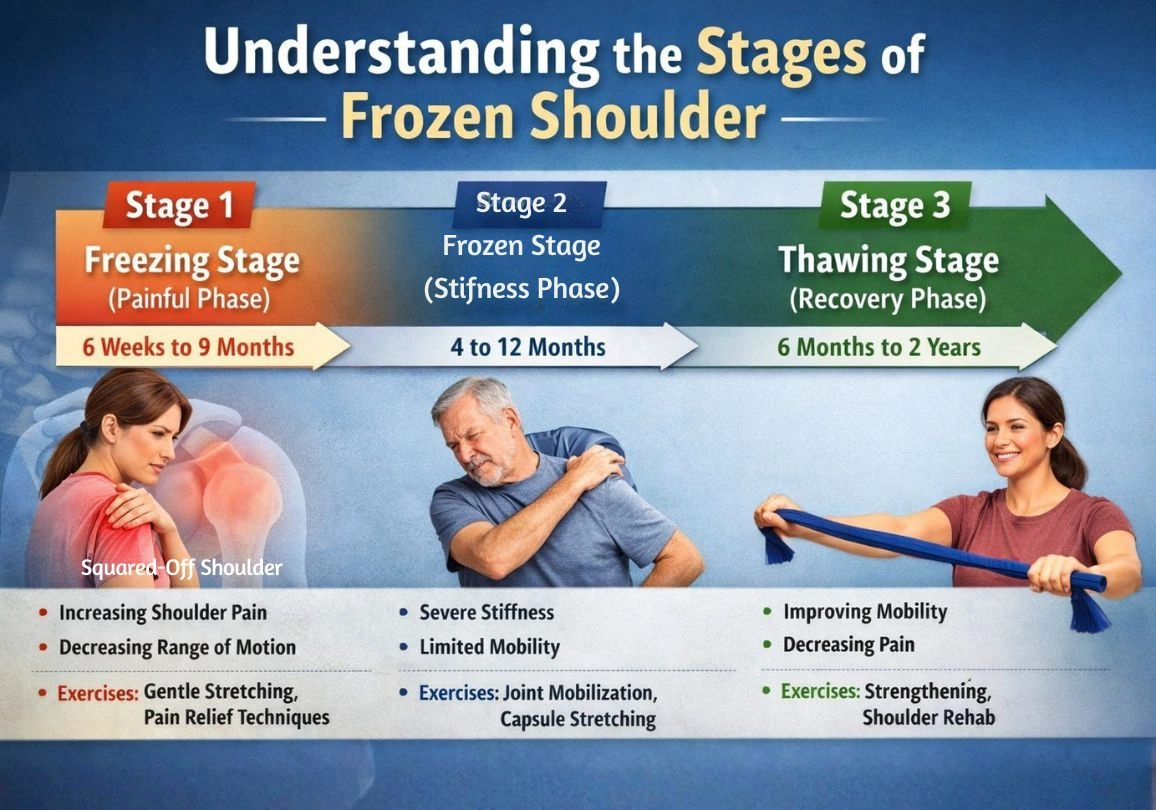
Understanding the Stages of Frozen Shoulder
Frozen shoulder, medically known as adhesive capsulitis, progresses through 3 to 4 distinct frozen shoulder stages — the Freezing, Frozen, and Thawing phases. In short, each stage brings its own pattern of pain, stiffness, and recovery, and the entire journey can last anywhere from 1 to 3 years. Understanding which stage you’re in is the first step toward getting the right treatment at the right time.
What Is a Frozen Shoulder?
Frozen shoulder occurs when the tissue surrounding your shoulder joint — called the joint capsule — becomes inflamed, thickened, and scarred. Over time, the capsule tightens and restricts your shoulder’s movement, causing pain and stiffness that gradually worsen.
It most commonly affects people between 40 and 60 years of age, especially women and individuals with diabetes. At HealYos Physiotherapy, we regularly see patients in Pune who have quietly managed this pain for months before finally seeking help — and early intervention always leads to better outcomes.
Frozen Shoulder Stages: What You Need to Know
The frozen shoulder stages timeline can stretch from 1 to 3 years without treatment. With consistent physiotherapy, however, that timeline can be significantly shortened. Here’s a breakdown of each stage.
Stage 1: The Freezing Stage (Painful Phase)
Duration: 6 weeks to 9 months
This is the beginning of the condition. The joint capsule starts to inflame, and you’ll notice a gradual increase in pain — particularly at night and during movements like reaching overhead or behind your back. Most people mistake this for a simple muscle strain and delay seeking help.
Some clinicians further divide this into an early “pre-freezing” phase (pain present, motion nearly normal) and a later “freezing” phase (motion begins to drop), which gives rise to the 4 stages of frozen shoulder model you may have come across.
Common symptoms at this stage:
- Dull, aching pain around the shoulder that worsens with movement
- Pain radiating down the upper arm
- Difficulty sleeping on the affected side
- Early loss of shoulder range of motion
What we recommend: At HealYos, this is the ideal stage to begin physiotherapy. We focus on reducing inflammation, easing pain, and slowing down the freezing process through manual therapy and gentle joint mobilisation. Our at-home service in Pune is particularly helpful here, since travelling with shoulder pain can be uncomfortable.
Stage 2: The Frozen Stage (Stiffness Phase)
Duration: 4 to 12 months
This is typically the most limiting stage. Stage 2 frozen shoulder is defined by a significant loss of movement in all directions — forward, sideways, and rotation. Interestingly, the pain may start to ease a little during this phase, but the stiffness becomes the dominant problem.
Everyday tasks like combing your hair, reaching into the back seat of a car, or lifting objects become genuinely difficult. Most patients reach us at this stage, having hoped the problem would resolve on its own.
Common symptoms at this stage:
- Severe stiffness and restricted shoulder movement
- Difficulty with daily activities like dressing and driving
- Muscle weakness from altered movement patterns
- Frustration, disrupted sleep, and reduced work capacity
What we recommend: This is where consistent, structured physiotherapy makes the biggest difference. At HealYos, we use progressive joint mobilisation, shoulder capsule stretching, and targeted strengthening. For patients who can’t travel regularly, our at-home physiotherapy visits in Pune keep recovery moving between clinic sessions.
Stage 3: The Thawing Stage (Recovery Phase)
Duration: 6 months to 2 years
The thawing stage is when your shoulder gradually starts to loosen up. Pain reduces further, movement slowly returns, and you begin regaining function. It can feel slow, but this is the stage where consistent effort really pays off.
The frozen shoulder stage’s duration for this phase is the most variable of all three. Patients with diabetes or those who skipped treatment during earlier stages tend to experience a longer thawing period.
Common signs of recovery:
- Gradual improvement in range of motion
- Less pain at night and better sleep
- Improving ability to reach overhead and across the body
- Returning strength and confidence in the shoulder
What we recommend: In the thawing stage, we shift from mobilisation to rebuilding strength and restoring full function. Rotator cuff strengthening, scapular stability training, and functional movement exercises become the focus. Many of our Pune patients transition to a home exercise programme during this stage, with regular check-ins at our clinic or via home visits.
Frozen Shoulder Stages Duration: A Quick Reference
| Stage | Name | Typical Duration |
| Stage 1 | Freezing / Painful | 6 weeks – 9 months |
| Stage 2 | Frozen / Stiff | 4 – 12 months |
| Stage 3 | Thawing / Recovery | 6 months – 2 years |
Note: These are general estimates. Your personal frozen shoulder stages timeline depends on factors like age, diabetes management, and how early you began physiotherapy.
When Should You See a Physiotherapist?
The earlier, the better. If you notice any of the following, don’t wait:
- Gradual shoulder pain without any obvious injury
- Pain that disturbs your sleep
- Difficulty reaching overhead or behind your back
- A history of diabetes or thyroid issues
- Shoulder stiffness that has been gradually worsening
At HealYos Physiotherapy, we offer both clinic and at-home sessions across Pune, so you can access quality care without having to push through pain just to get to an appointment.
Key Takeaways
- Frozen shoulder moves through 3 main stages — Freezing, Frozen, and Thawing — sometimes described as 4 stages of frozen shoulder when the early painful phase is split.
- The complete frozen shoulder stages timeline can last 1–3 years without treatment, but physiotherapy shortens this significantly.
- Stage 2 frozen shoulder is the most functionally limiting phase and is when most people first seek help.
- Starting physiotherapy early — ideally in Stage 1 — gives you the best chance of a faster, more complete recovery.
- HealYos Physiotherapy provides expert physiotherapy at our Pune clinic and through at-home visits, making consistent care accessible at every stage.
Frequently Asked Questions
1. Can frozen shoulder come back after it has healed?
Recurrence in the same shoulder is uncommon. However, if you’ve had it in one shoulder, there’s a higher chance of developing it in the opposite shoulder — especially if risk factors like diabetes remain unmanaged. A good preventive exercise programme after recovery helps reduce this risk.
2. Is it safe to exercise during the frozen stage?
Yes, but the type of exercise matters. Aggressive stretching during Stage 2 can actually worsen things. Gentle, guided physiotherapy exercises designed specifically for this stage are safe and necessary. Always work with a qualified physiotherapist rather than following generic online videos.
3. Does diet affect frozen shoulder recovery?
There’s growing evidence that an anti-inflammatory diet — including omega-3 rich foods, turmeric, leafy greens, and adequate vitamin D — can support recovery. For diabetic patients especially, managing blood sugar levels is closely linked to how severe and prolonged the condition becomes.
4. Will I need surgery for frozen shoulder?
Around 90% of cases resolve with physiotherapy and conservative management. Surgery (such as manipulation under anaesthesia) is only considered when consistent treatment over 12–18 months hasn’t brought adequate improvement.
5. How is frozen shoulder different from a rotator cuff injury?
A rotator cuff injury causes pain in specific movements, with relatively normal range in others. Frozen shoulder causes global stiffness — the shoulder loses motion in all directions. A proper clinical assessment is needed to tell the two apart accurately.

Leave a Reply