 +919325609388

 +919325609388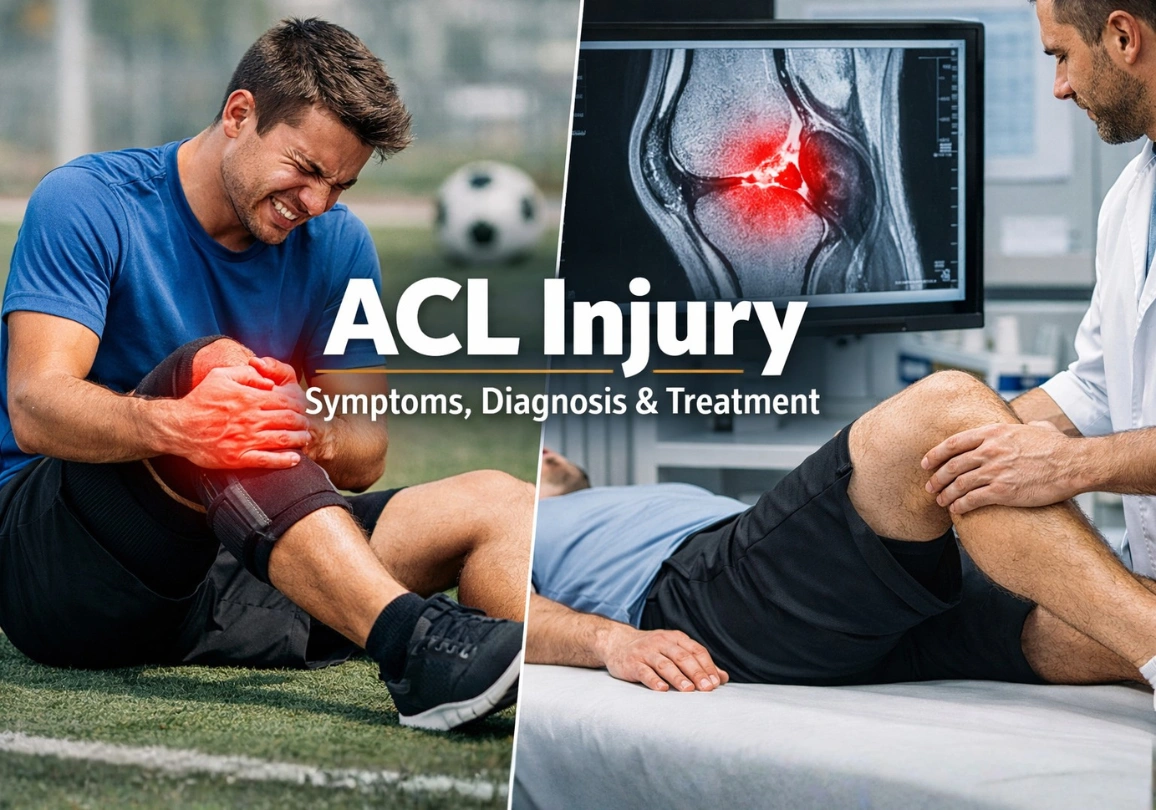
ACL Injury: Symptoms, Diagnosis, and Treatment – What You Need to Know
An ACL knee injury is one of the most common and painful sports-related injuries — and it doesn’t just affect athletes. Whether you’ve twisted your knee during a game of football or taken a wrong step on the stairs, understanding your injury early can make a big difference in recovery.
This blog covers everything you need to know about ACL ligament injury — from how it happens, what it feels like, how it’s diagnosed, and what treatment looks like, including how physiotherapy can help you get back on your feet.
What Is the ACL and Why Does It Matter?
The Anterior Cruciate Ligament (ACL) is one of the four major ligaments that stabilise your knee joint. It runs diagonally through the middle of the knee, connecting your thigh bone (femur) to your shin bone (tibia). Its main job is to control rotational movement and prevent the shin bone from sliding forward.
When this ligament is stretched, partially torn, or completely ruptured, it can significantly affect your ability to walk, run, or even stand comfortably.
Common ACL Injury Mechanisms — How Does It Happen?
Understanding the ACL injury mechanism helps in both prevention and early recognition. The injury typically occurs without any direct contact with another person. Common causes include:
- Sudden change in direction or pivoting with the foot planted
- Stopping abruptly while running
- Landing awkwardly after a jump
- A direct blow or collision to the knee (common in contact sports)
- Hyperextension of the knee joint
Sports like football, basketball, badminton, and kabaddi — all popular in Pune — see a high incidence of ACL injuries due to these movements.
ACL Injury Symptoms — What to Watch Out For
Recognising ACL injury symptoms early is crucial. Most people describe a very specific set of experiences right after the injury:
- A loud “pop” sound or sensation at the moment of injury
- Sudden, severe pain in the knee
- Rapid swelling within the first few hours
- A feeling of instability or the knee “giving way”
- Difficulty bearing weight or walking normally
- Limited range of motion
It’s worth noting that swelling and pain may reduce after a few days, but that doesn’t mean the injury has healed. Ignoring these signs and returning to activity too soon is one of the most common mistakes people make.
ACL Injury Grades — Understanding the Severity
Not all ACL injuries are the same. ACL injury grades help classify the severity of the damage and guide the treatment plan:
Grade 1 — The ligament is mildly stretched but still intact. There’s minor pain and swelling, and the knee remains relatively stable.
Grade 2 — A partial tear. The ligament is stretched and weakened. The knee may feel loose or unstable at times. This is relatively less common.
Grade 3 — A complete tear of the ligament. The knee is significantly unstable, and this is the most serious grade. Most ACL injuries that require surgery fall into this category.
Knowing your grade helps your physiotherapist and doctor create the right plan for you — whether that’s conservative management or surgical intervention.
How Is an ACL Injury Diagnosed?
A proper ACL injury diagnosis involves more than just an X-ray. Here’s what the process typically looks like:
Physical Examination: Your doctor or physiotherapist will perform specific clinical tests such as the Lachman Test, Anterior Drawer Test, and Pivot Shift Test. These tests assess the stability and integrity of the ACL.
Imaging:
- X-rays are done to rule out any bone fractures
- An MRI scan is the gold standard for confirming an ACL tear — it provides detailed images of the soft tissues, including the ligament, cartilage, and surrounding structures
At Healyos Physiotherapy, our team conducts a thorough clinical assessment and coordinates with orthopaedic specialists in Pune to ensure an accurate diagnosis before beginning any treatment.
ACL Injury Treatment — What Are Your Options?
ACL injury treatment depends on the grade of injury, your age, activity level, and personal goals. There are two primary pathways:
Conservative (Non-Surgical) Treatment
For Grade 1 and some Grade 2 injuries, or for individuals with lower physical demands, non-surgical management can be effective. This typically includes:
- Rest and activity modification in the initial phase
- Ice application to manage swelling
- Compression and elevation (RICE protocol)
- ACL injury physiotherapy to restore strength, stability, and range of motion
- Use of a knee brace for support during recovery
Surgical Treatment
For complete tears (Grade 3), especially in younger, active individuals or athletes, ACL reconstruction surgery is often recommended. The torn ligament is replaced with a graft (usually taken from the patellar tendon or hamstring). Surgery is typically followed by an intensive physiotherapy rehabilitation programme lasting 6–9 months.
Role of ACL Injury Physiotherapy in Recovery
Whether you go the surgical or non-surgical route, ACL injury physiotherapy is the backbone of a successful recovery. A well-structured rehab programme helps you:
- Regain full range of motion in the knee
- Rebuild strength in the quadriceps, hamstrings, and calf muscles
- Improve proprioception (your body’s sense of joint position and balance)
- Gradually return to sport-specific activities
- Reduce the risk of re-injury
At Healyos Physiotherapy, we offer both clinic-based and at-home physiotherapy services across Pune. Our experienced physiotherapists design personalised ACL rehabilitation protocols based on your specific injury grade, fitness level, and recovery goals — whether you’re a weekend sportsperson or a professional athlete.
Our at-home service is particularly beneficial during the early stages of recovery when mobility is limited and visiting a clinic can be challenging.
Key Takeaways
- The ACL is a critical stabilising ligament in the knee, and injuries are common in active individuals
- The most frequent ACL injury mechanism involves sudden pivoting, landing, or stopping movements
- Symptoms like a loud pop, rapid swelling, and knee instability are red flags that need medical attention
- Injuries are classified into ACL injury grades 1, 2, and 3 — each requiring a different treatment approach
- Diagnosis involves clinical tests and an MRI scan for accuracy
- Treatment can be surgical or non-surgical depending on severity, but physiotherapy is essential in both cases
- Early and consistent physiotherapy leads to the best long-term outcomes
Frequently Asked Questions (FAQs)
1. Can an ACL injury heal on its own without surgery?
A partial tear (Grade 2) or mild stretch (Grade 1) can sometimes heal with proper physiotherapy and rest. However, a complete tear (Grade 3) rarely heals on its own and often requires surgery, particularly if you want to return to high-demand physical activities.
2. How long does ACL recovery take?
Recovery time varies. For non-surgical treatment, it can range from 3–6 months. After ACL reconstruction surgery, the rehabilitation process typically takes 6–9 months before returning to sport, though full recovery can take up to a year.
3. Is it safe to walk with an ACL injury?
Walking with a mild ACL injury is generally possible, but it depends on the grade and severity. With a complete tear, walking may be painful and unstable. It’s important to get a proper assessment before putting weight through the joint to avoid further damage.
4. What happens if an ACL injury is left untreated?
Leaving an ACL injury untreated can lead to chronic knee instability, increased risk of damage to surrounding structures like the meniscus and cartilage, and eventually early-onset arthritis. This is why timely diagnosis and treatment are so important.
5. Can physiotherapy alone replace surgery for ACL injuries?
For many patients with Grade 1 or Grade 2 injuries and for older adults with lower activity demands, physiotherapy alone can restore good knee function. However, for young athletes or those with Grade 3 tears, surgery followed by physiotherapy usually gives the best outcomes. Your physiotherapist and orthopaedic doctor will guide you to the right decision based on your individual case.

Leave a Reply