 +919325609388

 +919325609388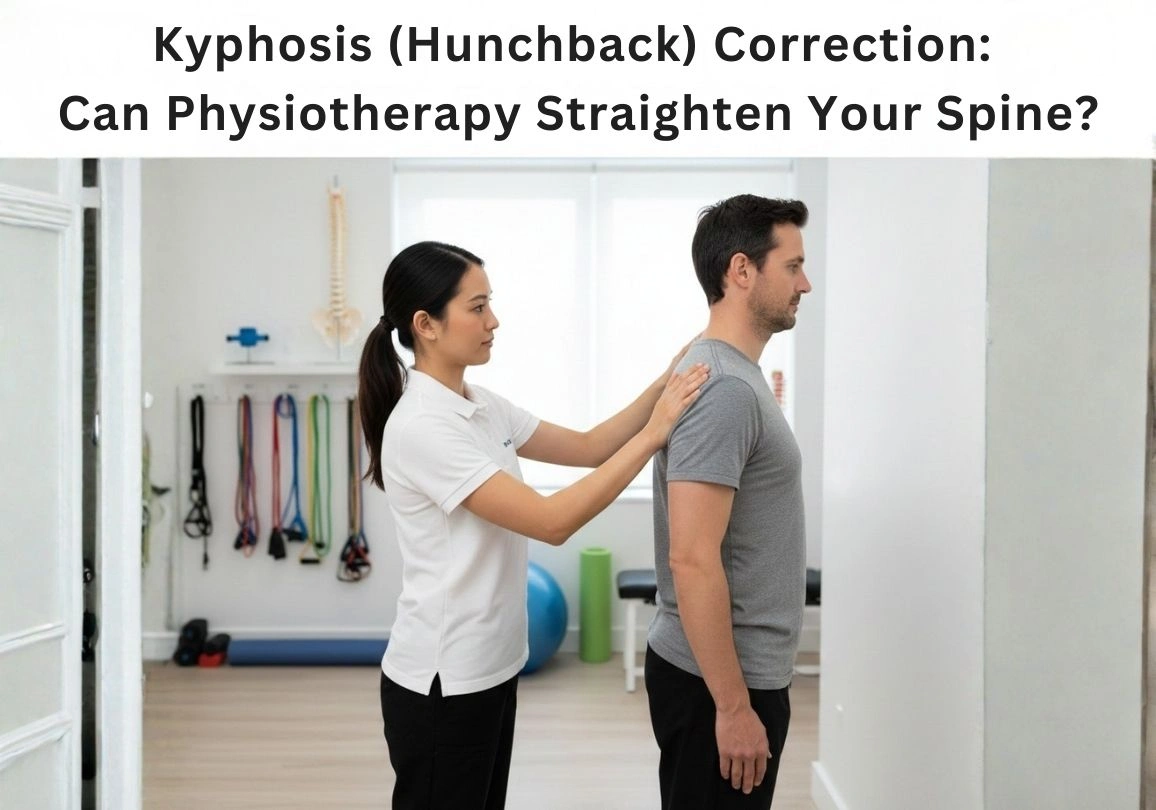
Kyphosis (Hunchback) Correction: Can Physiotherapy Straighten Your Spine?
If you’ve noticed a rounded upper back or forward-slouching posture, you might be dealing with kyphosis—commonly known as hunchback. The good news? Physiotherapy can significantly improve kyphosis, especially in mild to moderate cases, by strengthening muscles, improving posture, and increasing spinal flexibility.
While severe structural kyphosis may require additional interventions, physical therapy remains a cornerstone of treatment for most people seeking to correct their spinal curvature and reduce associated pain.
What Is Kyphosis?
Kyphosis refers to an excessive outward curvature of the upper spine (thoracic region), creating a rounded or hunched appearance. While everyone has a natural curve in their upper back, kyphosis becomes problematic when this curve exceeds 40-45 degrees, leading to visible postural changes and potential discomfort.
Types of Kyphosis
Understanding the type of kyphosis you have is crucial for determining the best treatment approach:
- Postural kyphosis: The most common type, caused by poor posture and slouching. This type typically responds well to physiotherapy and postural correction.
- Scheuermann’s kyphosis: A structural condition that develops during adolescence, causing wedge-shaped vertebrae. This requires more intensive treatment but can still benefit from physical therapy.
- Congenital kyphosis: Present from birth due to abnormal spinal development.
- Age-related kyphosis: Results from degenerative changes, osteoporosis, or compression fractures in older adults.
- Post-traumatic kyphosis: Develops after spinal injury or fracture.
Can Physiotherapy Really Straighten Your Spine?
The answer depends on the severity and type of your kyphosis. Here’s what you need to know:
For mild to moderate postural kyphosis: Yes, physiotherapy can significantly reduce the curvature and improve your spinal alignment. Through targeted exercises, manual therapy, and postural training, many patients see noticeable improvements in their posture and reduction in the hunchback appearance.
For structural kyphosis: While physiotherapy may not completely “straighten” a structurally curved spine, it can still provide substantial benefits by strengthening supporting muscles, reducing pain, improving flexibility, and preventing further progression of the curve.
For severe kyphosis (curves exceeding 70-75 degrees): Conservative treatment like physiotherapy may be combined with bracing or, in some cases, surgical intervention may be necessary. However, physical therapy remains an essential component of both pre- and post-surgical care.
How Does Physiotherapy Help Correct Kyphosis?
Physiotherapy for kyphosis uses a multi-faceted approach to address the underlying causes of spinal curvature and improve overall posture.
1. Postural Re-education
Poor posture is often the primary culprit behind postural kyphosis. A physiotherapist will:
- Assess your current posture and movement patterns
- Teach you proper sitting, standing, and sleeping positions
- Provide ergonomic recommendations for your workspace
- Help you develop body awareness to maintain correct alignment throughout the day
2. Strengthening Exercises
Weak back muscles contribute significantly to kyphosis. Physiotherapy focuses on strengthening:
- Upper back muscles (rhomboids, middle trapezius): These pull your shoulders back and support proper spinal alignment
- Lower back muscles (erector spinae): Provide stability to the entire spine
- Core muscles: Strong abdominals and deep core muscles support your spine from the front
- Shoulder blade stabilizers: Help maintain proper shoulder position
3. Stretching and Flexibility Work
Tight chest muscles and shortened structures in the front of your body can pull you forward into a hunched position. Your physiotherapist will guide you through:
- Chest and pectoral stretches
- Hip flexor stretches
- Thoracic spine mobility exercises
- Neck and shoulder stretches
4. Manual Therapy Techniques
Hands-on treatment can provide immediate relief and improve spinal mobility:
- Spinal mobilization to improve joint movement
- Soft tissue massage to release tight muscles
- Myofascial release techniques
- Trigger point therapy for pain relief
5. Breathing Exercises
Many people with kyphosis develop restricted breathing patterns. Diaphragmatic breathing exercises can improve lung capacity and support better posture.
Effective Exercises for Kyphosis Correction
While you should always consult with a physiotherapist before starting any exercise program, here are some commonly recommended exercises for kyphosis:
Strengthening Exercises
- Prone Y’s and T’s: Lie face down and lift your arms into Y or T positions, squeezing your shoulder blades together
- Rows: Using resistance bands or weights, pull your elbows back while squeezing your shoulder blades
- Wall angels: Stand against a wall and move your arms up and down while keeping contact with the wall
- Superman holds: Lie face down and lift your chest and legs off the ground simultaneously
Stretching Exercises
- Doorway chest stretch: Place your forearm on a doorframe and gently turn your body away
- Cat-cow stretch: On hands and knees, alternate between arching and rounding your spine
- Child’s pose: A gentle stretch for the entire back
- Thoracic extension over foam roller: Lie back over a foam roller placed under your upper back
Posture Exercises
- Chin tucks: Pull your chin back to align your neck properly
- Scapular squeezes: Squeeze your shoulder blades together and hold
- Wall posture holds: Stand with your back against a wall, maintaining proper alignment
How Long Does Kyphosis Correction Take?
The timeline for seeing results from physiotherapy varies depending on several factors:
- Type and severity of kyphosis: Mild postural cases may improve within 6-12 weeks, while structural kyphosis requires longer-term management
- Consistency with exercises: Daily practice yields faster results than sporadic effort
- Age: Younger individuals typically respond more quickly
- Overall health: Conditions like osteoporosis may slow progress
Most patients begin noticing improvements in pain and posture within 4-8 weeks of consistent physiotherapy. However, significant structural changes may take 3-6 months or longer.
Additional Treatment Options
While physiotherapy is often the first line of treatment, other interventions may be recommended:
Bracing
For adolescents with Scheuermann’s kyphosis or curves between 50-75 degrees, bracing during growth periods may prevent progression.
Pain Management
Your physiotherapist may recommend:
- Heat or ice therapy
- TENS (transcutaneous electrical nerve stimulation)
- Ultrasound therapy
- Anti-inflammatory medications (prescribed by your doctor)
Lifestyle Modifications
- Maintaining a healthy weight to reduce spinal stress
- Choosing supportive mattresses and pillows
- Taking regular breaks from prolonged sitting
- Incorporating regular physical activity
Surgery
Reserved for severe cases (typically curves over 75 degrees) causing significant pain, neurological problems, or respiratory compromise. Spinal fusion is the most common surgical procedure for kyphosis correction.
Preventing Kyphosis from Worsening
Whether you’re currently undergoing treatment or want to prevent kyphosis from developing, these strategies can help:
- Practice good posture during all activities
- Strengthen your back and core muscles regularly
- Stretch tight chest and hip muscles daily
- Ensure adequate calcium and vitamin D intake for bone health
- Avoid prolonged periods of slouching or hunching
- Use ergonomic furniture and proper workstation setup
- Stay physically active with weight-bearing exercises
When to See a Healthcare Professional
Consult a physiotherapist or doctor if you experience:
- Visible increase in upper back rounding
- Back pain that doesn’t improve with rest
- Stiffness or reduced spine flexibility
- Difficulty breathing or chest pain
- Numbness, tingling, or weakness in your legs
- Rapid progression of spinal curvature
Key Takeaways
- Physiotherapy can effectively improve kyphosis, especially mild to moderate postural cases, through strengthening, stretching, and postural re-education
- The success of treatment depends on the type, severity, and underlying cause of your kyphosis
- A comprehensive physiotherapy program includes postural training, targeted exercises, manual therapy, and lifestyle modifications
- Consistency with your exercise program is crucial—most patients see noticeable improvements within 2-3 months
- While physiotherapy may not completely “straighten” severe structural curves, it can significantly reduce pain, improve function, and prevent progression
- Early intervention offers the best outcomes, so don’t delay seeking professional help if you notice increasing spinal curvature
- Combining physiotherapy with good ergonomics, proper nutrition, and regular exercise provides the best long-term results
Frequently Asked Questions
Q: Can yoga help with kyphosis correction?
Yes, yoga can be beneficial for kyphosis when practiced correctly. Specific poses like cobra, locust, and bridge can strengthen back muscles while stretches like camel pose open the chest. However, avoid excessive forward bending poses that may worsen the curve. It’s best to work with a yoga instructor familiar with spinal conditions who can modify poses appropriately. Yoga works well as a complement to a comprehensive physiotherapy program.
Q: Is sleeping position important for kyphosis?
Absolutely. Sleeping on your back with a small pillow under your knees is generally best for kyphosis, as it maintains natural spinal alignment. If you sleep on your side, place a pillow between your knees. Avoid sleeping on your stomach, which can strain your neck and upper back. Using a supportive mattress that’s not too soft is also important. Some people with kyphosis benefit from a small rolled towel placed under the thoracic spine while lying on their back for 10-15 minutes daily.
Q: Can kyphosis come back after successful treatment?
Yes, kyphosis can recur if you return to poor postural habits or stop maintaining the strength and flexibility gained through physiotherapy. This is why ongoing maintenance exercises and postural awareness are crucial even after your symptoms improve. Think of it like maintaining fitness—you need to continue the healthy habits to preserve the results. Most physiotherapists recommend continuing a modified exercise routine 3-4 times weekly indefinitely to prevent regression.
Q: Are there any exercises I should avoid if I have kyphosis?
Certain exercises may worsen kyphosis and should be avoided or modified. These include exercises that encourage forward rounding like crunches performed with excessive flexion, heavy overhead lifting without proper form, and exercises that collapse the chest forward. Activities involving prolonged flexion (bending forward) can also be problematic. Always consult your physiotherapist before starting new exercise programs, and focus on extension-based exercises that open the chest and strengthen the back rather than movements that round the spine forward.
Q: Does kyphosis affect life expectancy?
Mild to moderate kyphosis typically does not affect life expectancy. However, severe untreated kyphosis (especially curves exceeding 80-90 degrees) can occasionally impact respiratory function by compressing the lungs, potentially affecting quality of life and, in rare cases, longevity. Age-related kyphosis associated with osteoporotic fractures may indicate increased fracture risk elsewhere.

Leave a Reply