 +919325609388

 +919325609388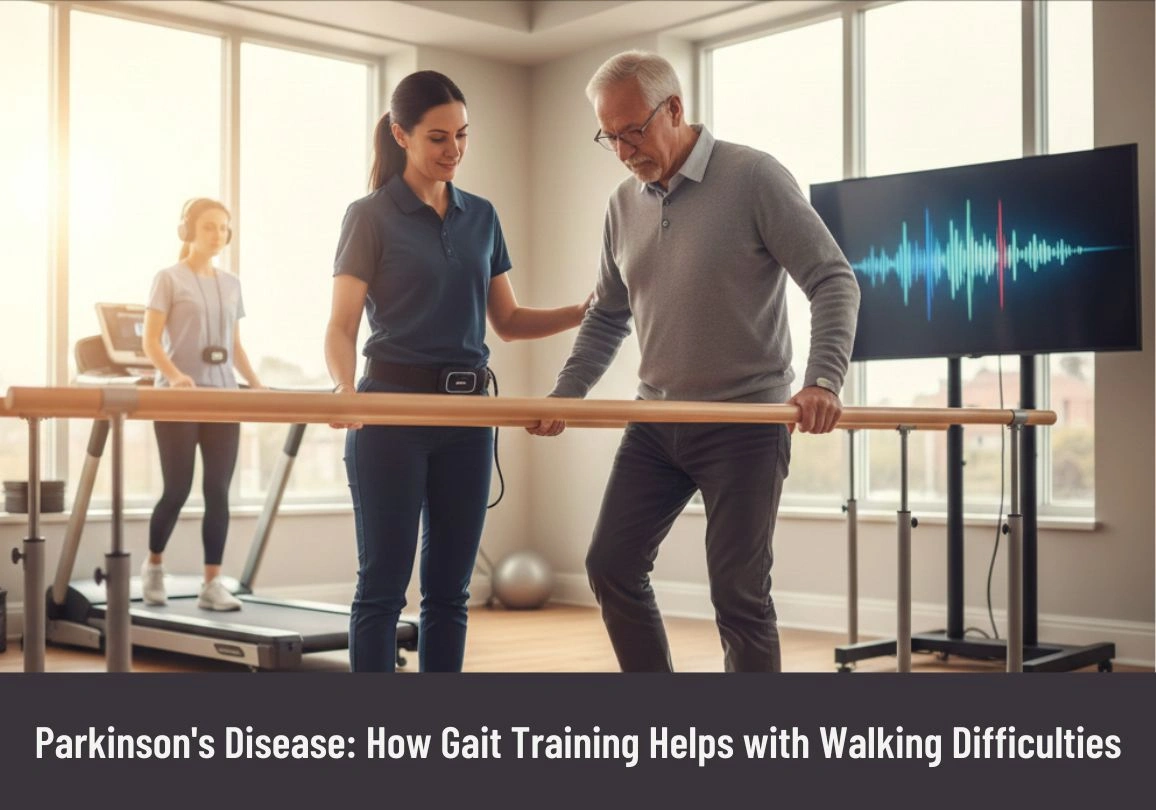
Parkinson’s Disease: How Gait Training Helps with Walking Difficulties
If you or a loved one has been diagnosed with Parkinson’s disease, you’ve likely noticed how walking becomes increasingly challenging over time. The good news? Gait training for Parkinson’s disease is a proven physiotherapy approach that can significantly improve walking difficulties, enhance balance, reduce fall risk, and help you maintain independence longer.
Through specialized exercises and techniques, physiotherapy offers hope and practical solutions for managing the mobility challenges that come with this progressive neurological condition.
Understanding Parkinson’s Disease and Its Impact on Walking
Parkinson’s disease is a progressive neurological disorder that affects movement control. It occurs when nerve cells in the brain that produce dopamine—a chemical messenger crucial for coordinating movement—begin to deteriorate or die.
As the disease progresses, people with Parkinson’s typically experience several movement-related symptoms that directly affect their ability to walk safely and confidently:
- Bradykinesia: Slowness of movement that makes every step feel effortful
- Rigidity: Muscle stiffness that reduces the natural arm swing and stride length
- Tremor: Shaking that can affect balance and coordination
- Postural instability: Difficulty maintaining balance, especially when turning or changing direction
- Freezing of gait: Sudden, temporary inability to move the feet forward
These symptoms combine to create a distinctive Parkinson’s gait pattern characterized by shuffling steps, reduced stride length, stooped posture, and increased risk of falls.
What Are Walking Difficulties in Parkinson’s Disease?
Walking difficulties in Parkinson’s disease go beyond simply moving slower. Patients often describe feeling “stuck” or experiencing a disconnect between their brain’s intention to move and their body’s ability to respond.
Common walking difficulties include:
- Shuffling gait: Taking small, dragging steps instead of lifting feet properly, which increases tripping risk.
- Reduced arm swing: Arms remain close to the body rather than swinging naturally, affecting balance and momentum.
- Festination: An involuntary quickening of steps that makes it difficult to stop, often leading to falls.
- Freezing episodes: Feet feel glued to the floor, particularly when starting to walk, turning, or approaching doorways.
- Poor balance: Difficulty adjusting to uneven surfaces or unexpected obstacles.
These challenges don’t just affect mobility—they impact confidence, independence, and quality of life. Many people with Parkinson’s disease begin limiting their activities out of fear of falling, which unfortunately leads to deconditioning and further mobility decline.
What Is Gait Training and How Does It Work?
Gait training is a specialized form of physiotherapy designed to improve walking patterns, balance, and mobility. For people with Parkinson’s disease, gait training focuses on retraining the brain and body to overcome movement difficulties through repetitive, purposeful practice.
At Healyos Physiotherapy, our gait training programs are customized to each individual’s specific challenges and stage of Parkinson’s disease. We combine evidence-based techniques with personalized attention, whether you prefer treatment at our Pune clinic or the convenience of at-home services.
The science behind gait training for Parkinson’s involves neuroplasticity—the brain’s ability to form new neural connections. Through consistent, targeted practice, patients can develop compensatory strategies that bypass damaged neural pathways and improve movement quality.
Key Components of Effective Gait Training for Parkinson’s Disease
Visual Cues
Visual cues help overcome freezing episodes and improve step length. We use:
- Floor markers or lines: Stepping over marked lines encourages larger, more deliberate steps
- Laser pointers: Providing a moving target to step toward
- Visual pathways: Creating visible guides that help initiate and maintain walking
Research shows that external visual cues can bypass the basal ganglia (the brain region affected by Parkinson’s) and activate alternative neural pathways for movement control.
Auditory Cues
Rhythmic auditory stimulation helps regulate walking pace and reduce freezing:
- Metronome training: Walking in time with a steady beat
- Music therapy: Using rhythmic music to facilitate smoother movement
- Verbal counting: Counting steps aloud to maintain rhythm
Many patients find that auditory cues help them maintain a more consistent walking pattern and reduce the anxiety associated with freezing episodes.
Cognitive Strategies
Gait training incorporates mental techniques to improve movement:
- Attention strategies: Focusing consciously on specific aspects of walking (heel strike, knee lift, arm swing)
- Mental rehearsal: Visualizing successful walking before attempting movement
- Action observation: Watching videos of normal gait patterns to reinforce proper movement
Dual-Task Training
Since Parkinson’s disease makes it difficult to walk while performing other tasks (talking, carrying objects), we incorporate dual-task exercises that gradually build this capacity:
- Walking while counting backwards
- Carrying objects while navigating obstacles
- Conversing while walking
This training is crucial for real-world mobility, where multitasking is often necessary.
Specific Gait Training Exercises for Parkinson’s Disease
Our physiotherapists at Healyos incorporate various exercises into your gait training program:
- High-Step Marching: Lifting knees high while marching in place or forward helps counter the shuffling gait pattern and improves hip flexor strength.
- Heel-to-Toe Walking: Walking in a straight line with heel touching toe on each step improves balance and coordination.
- Backward Walking: Practicing backward walking activates different neural pathways and improves overall gait control.
- Side-Stepping: Lateral movements strengthen hip muscles crucial for balance and turning.
- Obstacle Course Training: Navigating around cones, stepping over objects, and changing directions builds confidence and adaptability.
- Treadmill Training: Treadmill walking provides consistent speed and rhythm, helping establish more regular gait patterns. Some research suggests that treadmill training may have additional neuroplastic benefits.
Benefits of Gait Training for Parkinson’s Patients
Consistent gait training offers numerous benefits for people with Parkinson’s disease:
- Improved walking speed and stride length: Patients often increase their step size by 20-30% with regular training.
- Enhanced balance and stability: Reducing fall risk and increasing confidence in daily activities.
- Reduced freezing episodes: Learning strategies to prevent or overcome freezing when it occurs.
- Better posture: Addressing the forward-bent posture common in Parkinson’s disease.
- Increased independence: Maintaining the ability to walk safely in various environments.
- Improved quality of life: Greater confidence to participate in social activities and maintain active lifestyles.
- Delayed disease progression effects: While gait training doesn’t stop Parkinson’s disease, it can help maintain function longer.
Why Choose Physiotherapy for Parkinson’s Walking Difficulties?
While medication management is essential for Parkinson’s disease, physiotherapy addresses aspects of movement that medications alone cannot fully resolve. Here’s why gait training should be part of every Parkinson’s treatment plan:
- Non-invasive and drug-free: Physiotherapy complements medical treatment without side effects.
- Personalized approach: Each program is tailored to your specific symptoms, stage of disease, and goals.
- Empowerment through education: You learn strategies you can use independently at home.
- Long-term benefits: Skills learned through gait training provide lasting improvements.
- Holistic care: Addressing not just walking, but also balance, strength, flexibility, and confidence.
Healyos Physiotherapy: Your Partner in Managing Parkinson’s Disease
At Healyos Physiotherapy, we understand the unique challenges that Parkinson’s disease presents. Our specialized team has extensive experience working with Parkinson’s patients throughout Pune, offering both clinic-based and at-home physiotherapy services.
Our Approach
We begin with a comprehensive assessment of your:
- Current gait pattern and walking difficulties
- Balance and postural stability
- Muscle strength and flexibility
- Freezing frequency and triggers
- Fall history and risk factors
- Personal goals and lifestyle needs
Based on this assessment, we develop a customized gait training program that evolves with you as your needs change.
Key Takeaways
- Parkinson’s disease causes specific walking difficulties including shuffling gait, freezing, reduced stride length, and balance problems
- Gait training is a specialized physiotherapy approach that uses visual cues, auditory cues, cognitive strategies, and specific exercises to improve walking
- Regular gait training can increase walking speed, reduce freezing episodes, improve balance, and enhance quality of life
- Physiotherapy complements medication management and addresses aspects of movement that drugs alone cannot fully resolve
- Early intervention with gait training provides the best outcomes, but patients at any stage can benefit
- Healyos Physiotherapy offers specialized Parkinson’s care with both clinic and at-home services throughout Pune
- Consistency is key—regular practice of gait training exercises provides the most significant improvements
Frequently Asked Questions
Q: How long does it take to see improvements from gait training in Parkinson’s disease?
A: Most patients begin noticing improvements within 4-6 weeks of consistent gait training, though this varies based on disease stage and training frequency. Some benefits, like increased confidence and reduced freezing through cueing strategies, may be noticed even sooner. However, maintaining improvements requires ongoing practice—Parkinson’s disease is progressive, so gait training is typically a long-term commitment rather than a short-term fix.
Q: Can gait training help if I’m in advanced stages of Parkinson’s disease?
A: Yes, gait training can benefit patients at all stages of Parkinson’s disease, though goals may differ. In advanced stages, training may focus more on maintaining current function, preventing falls, and learning compensatory strategies rather than significant improvement. Even small gains in stability or learning to overcome freezing can meaningfully impact quality of life and independence. Our physiotherapists adapt techniques to match your current abilities and realistic goals.
Q: Is gait training covered by insurance for Parkinson’s disease treatment?
A: Insurance coverage for physiotherapy varies significantly depending on your specific policy and provider. Many insurance plans in India do cover physiotherapy when prescribed by a physician as part of Parkinson’s disease management. We recommend checking with your insurance provider about coverage for neurological physiotherapy. Our team at Healyos can provide the necessary documentation to support insurance claims and can discuss payment options during your initial consultation.
Q: What’s the difference between gait training and regular exercise for Parkinson’s?
A: While general exercise is beneficial for overall fitness and health in Parkinson’s disease, gait training is specifically focused on addressing walking patterns and mobility challenges unique to the condition. Gait training incorporates specialized techniques like external cueing, cognitive strategies, and task-specific practice that target the neurological aspects of movement control. Regular exercise (like swimming, cycling, or yoga) is excellent for cardiovascular health, flexibility, and strength, but it doesn’t specifically retrain walking patterns. Ideally, a comprehensive program includes both gait training and general exercise.
Q: Should I continue gait training even when my Parkinson’s medications are working well?
A: Absolutely. Gait training works synergistically with medication and addresses different aspects of movement dysfunction. While medications help manage dopamine levels and reduce symptoms, gait training teaches your brain alternative strategies for movement control and helps maintain neural pathways. Many mobility improvements from gait training—like improved balance, posture awareness, and cueing strategies—persist even during “off” periods when medication effectiveness decreases. Think of medication and physiotherapy as complementary approaches that together provide better outcomes than either alone.

Leave a Reply