 +919325609388

 +919325609388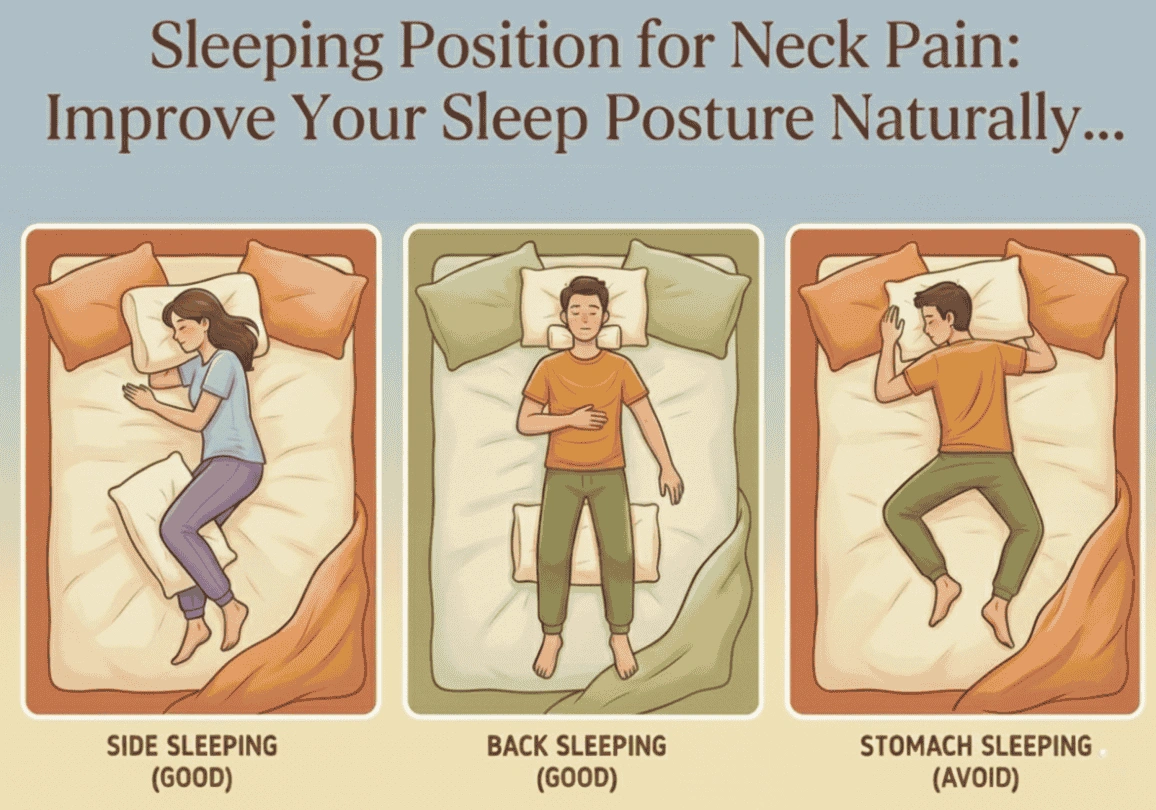
Sleeping Position for Neck Pain: Improve Your Sleep Posture Naturally
Waking up with a stiff, aching neck can turn a good morning into a painful ordeal. If you’re struggling with neck pain after sleeping, the solution often lies in adjusting your sleeping position for neck pain and making simple changes to your sleep setup.
The best sleeping position for neck pain is sleeping on your back or side with proper pillow support that maintains your spine’s natural alignment, while avoiding stomach sleeping that forces your neck into awkward rotation. In this comprehensive guide, we’ll explore how to transform your sleep posture, choose the right pillow, and wake up pain-free.
Understanding Neck Pain from Poor Sleep Posture
Your neck contains seven delicate vertebrae, supported by muscles, ligaments, and tendons that work continuously to hold up your head—which weighs approximately 10-12 pounds. When you maintain poor posture during the 7-9 hours you spend sleeping, these structures experience unnecessary strain.
Neck pain due to bad sleeping posture occurs when your head, neck, and spine fall out of neutral alignment. This misalignment causes:
- Muscle tension and spasms
- Nerve compression
- Reduced blood flow to neck tissues
- Increased pressure on intervertebral discs
- Joint stiffness and inflammation
Best Sleeping Positions for Neck and Shoulder Pain
Back Sleeping: The Gold Standard
Sleeping on your back is generally considered the best sleeping position for neck pain because it allows your head, neck, and spine to rest in a neutral position. This posture distributes your body weight evenly and minimizes pressure points.
How to optimize back sleeping:
- Use a cervical pillow or a moderately firm pillow that supports the natural curve of your neck
- Place a small pillow or rolled towel under your knees to reduce lower back strain
- Avoid using multiple pillows that push your head too far forward
- Ensure your pillow fills the gap between your neck and the mattress
Side Sleeping: A Close Second
Side sleeping can be excellent for neck and shoulder pain, provided you maintain proper alignment. This is the sleeping position for neck and shoulder pain that many people find most comfortable.
Tips for side sleepers:
- Choose a thicker pillow that keeps your head level with your spine
- Place a pillow between your knees to maintain hip and spine alignment
- Avoid tucking your chin toward your chest
- Keep your shoulders relaxed and not hunched toward your ears
- Consider a contoured pillow designed specifically for side sleepers
Stomach Sleeping: The Position to Avoid
Sleeping on your stomach is the worst position for neck health. It forces you to turn your head to one side for extended periods, creating significant neck rotation and strain.
If you’re a committed stomach sleeper, transition gradually by using body pillows to prevent rolling onto your stomach, or try using a very thin pillow under your pelvis while keeping your forehead on a flat, soft pillow.
How to Sleep to Relieve Neck Pain: Immediate Relief Strategies
When you’re already experiencing discomfort, how to sleep to relieve neck pain becomes your primary concern. Here are evidence-based strategies for immediate relief:
Apply Heat or Cold Therapy Before Bed
- Use a heating pad for 15-20 minutes before sleep to relax tight muscles
- Apply ice if inflammation is present (wrapped in a towel for 10-15 minutes)
- Consider alternating between heat and cold for chronic issues
Gentle Stretching and Relaxation
Perform these simple neck stretches 30 minutes before bed:
- Neck tilts: Slowly tilt your head toward each shoulder, holding for 10 seconds
- Chin tucks: Pull your chin back gently, creating a “double chin” to strengthen neck muscles
- Shoulder rolls: Roll your shoulders backward and forward to release tension
- Neck rotations: Slowly turn your head left and right within a comfortable range
Create an Optimal Sleep Environment
- Keep your bedroom cool (60-67°F or 15-19°C)
- Minimize noise and light disruptions
- Ensure your mattress provides adequate support (not too soft or too firm)
- Replace pillows every 1-2 years as they lose support
How to Relieve Neck Pain from Sleeping Wrong
If you’ve already woken up with neck pain from sleeping wrong, don’t panic. Most cases resolve within a few days with proper care.
Immediate relief measures:
- Gentle movement: Avoid staying completely still; gentle movement promotes blood flow and healing
- Over-the-counter pain relief: NSAIDs like ibuprofen can reduce inflammation and pain
- Massage therapy: Self-massage or professional treatment can release muscle knots
- Posture correction: Be mindful of your neck position throughout the day
- Avoid sudden movements: Turn your whole body instead of just your head when looking around
When to see a doctor:
Seek medical attention if you experience:
- Severe pain lasting more than a week
- Pain radiating down your arms
- Numbness, tingling, or weakness in your hands
- Difficulty walking or maintaining balance
- Fever accompanying neck pain
How to Prevent Neck Pain When Sleeping: Long-Term Solutions
Prevention is always better than treatment. Here’s how to prevent neck pain while sleeping through sustainable lifestyle changes:
Choose the Right Pillow
Your pillow is crucial for how to sleep to avoid neck pain:
- Memory foam pillows: Contour to your neck’s shape and provide consistent support
- Cervical pillows: Designed with a curved shape that maintains neck alignment
- Water pillows: Allow customizable firmness by adjusting water levels
- Buckwheat pillows: Moldable and provide firm, natural support
Pillow height matters: Your pillow should keep your nose aligned with the center of your body, not tilted up or down.
Invest in a Supportive Mattress
A mattress that’s too soft or too firm can contribute to neck pain. Medium-firm mattresses typically provide the best balance of support and comfort for most sleepers. Replace your mattress every 7-10 years or when it shows signs of sagging.
Maintain Good Daytime Posture
Your daytime habits significantly impact nighttime neck health:
- Position computer screens at eye level
- Take frequent breaks from desk work every 30-60 minutes
- Avoid prolonged phone use with your head bent forward (“text neck”)
- Strengthen your neck and upper back muscles through regular exercise
- Practice stress management techniques, as tension often manifests as neck tightness
Establish a Consistent Sleep Routine
Going to bed and waking up at the same time daily helps regulate your body’s natural rhythms and can improve sleep quality, indirectly benefiting neck health.
Additional Tips for Sleeping with Neck Pain
How to sleep when you have neck pain may require extra considerations:
- Use a neck brace sparingly: Only use if recommended by a healthcare provider, and not for extended periods
- Try sleeping in a recliner temporarily: The elevated position may provide relief for acute pain
- Practice progressive muscle relaxation: This technique helps release physical tension before sleep
- Consider your phone and reading habits: Avoid looking down at devices or books in bed
- Stay hydrated: Proper hydration helps maintain disc health in your spine
Exercises to Support Better Sleep Posture
Incorporating these exercises into your daily routine can strengthen your neck and improve your sleeping position for neck and shoulder pain:
Chin Tucks (10 repetitions, 2-3 times daily):
- Sit or stand with shoulders relaxed
- Draw your chin straight back, keeping your eyes level
- Hold for 5 seconds, then release
Shoulder Blade Squeezes (10 repetitions):
- Sit upright with arms at your sides
- Squeeze your shoulder blades together
- Hold for 5 seconds, then relax
Neck Extensions (10 repetitions):
- Sit or stand with proper posture
- Gently tilt your head back, looking toward the ceiling
- Hold for 3 seconds, return to neutral
Key Takeaways
- The best sleeping position for neck pain is on your back or side with proper pillow support, avoiding stomach sleeping
- Neck pain after sleeping is often caused by poor spinal alignment during the night
- Choose a pillow that maintains your neck’s natural curve and keeps your spine aligned
- Replace pillows every 1-2 years and mattresses every 7-10 years
- Gentle stretching before bed and maintaining good daytime posture can prevent neck pain when sleeping
- Most sleep-related neck pain improves within a few days with proper positioning and self-care
- Seek medical attention for severe or persistent pain, numbness, or pain radiating to your arms
Frequently Asked Questions
Q: Can sleeping without a pillow help neck pain?
A: For most people, sleeping without a pillow is not recommended. Your pillow provides crucial support for the natural curve of your cervical spine. However, stomach sleepers might benefit from using no pillow or a very thin one. Back and side sleepers should always use an appropriately sized pillow to maintain proper neck alignment and prevent muscle strain during sleep.
Q: How long does it take to adjust to a new sleeping position?
A: Changing your sleeping position typically takes 2-4 weeks of consistent effort. Your body has developed muscle memory for your current position over many years. To ease the transition, use supportive pillows to prevent rolling into your old position, be patient with initial discomfort, and remind yourself each night of your goal. Many people find the long-term benefits of reduced neck pain well worth the temporary adjustment period.
Q: Are memory foam pillows better than traditional pillows for neck pain?
A: Memory foam pillows often provide superior support for neck pain because they contour to your unique anatomy and maintain consistent support throughout the night. However, the “best” pillow depends on your sleeping position, body size, and personal preferences. Some people prefer the adjustability of water pillows or the natural firmness of buckwheat pillows. The key is choosing a pillow that keeps your spine neutral—test different options to find what works for your specific needs.
Q: Can stress cause neck pain during sleep?
A: Yes, absolutely. Psychological stress causes physical muscle tension, particularly in the neck and shoulder region. When you’re stressed, you may unconsciously clench your jaw, hunch your shoulders, or sleep in tense positions, all of which contribute to morning neck pain. Managing stress through meditation, deep breathing exercises, regular physical activity, and establishing a calming bedtime routine can significantly reduce stress-related neck pain during sleep.
Q: Is it normal for neck pain to be worse in the morning than during the day?
A: Morning neck pain that improves throughout the day typically indicates a sleep posture issue rather than a serious underlying condition. As you move during the day, blood flow increases and muscles loosen, reducing discomfort. If your neck pain consistently worsens in the morning, evaluate your pillow, mattress, sleeping position, and bedtime routine. However, if morning stiffness persists for more than an hour or is accompanied by other symptoms, consult a healthcare provider to rule out conditions like arthritis or cervical spine issues.

Leave a Reply